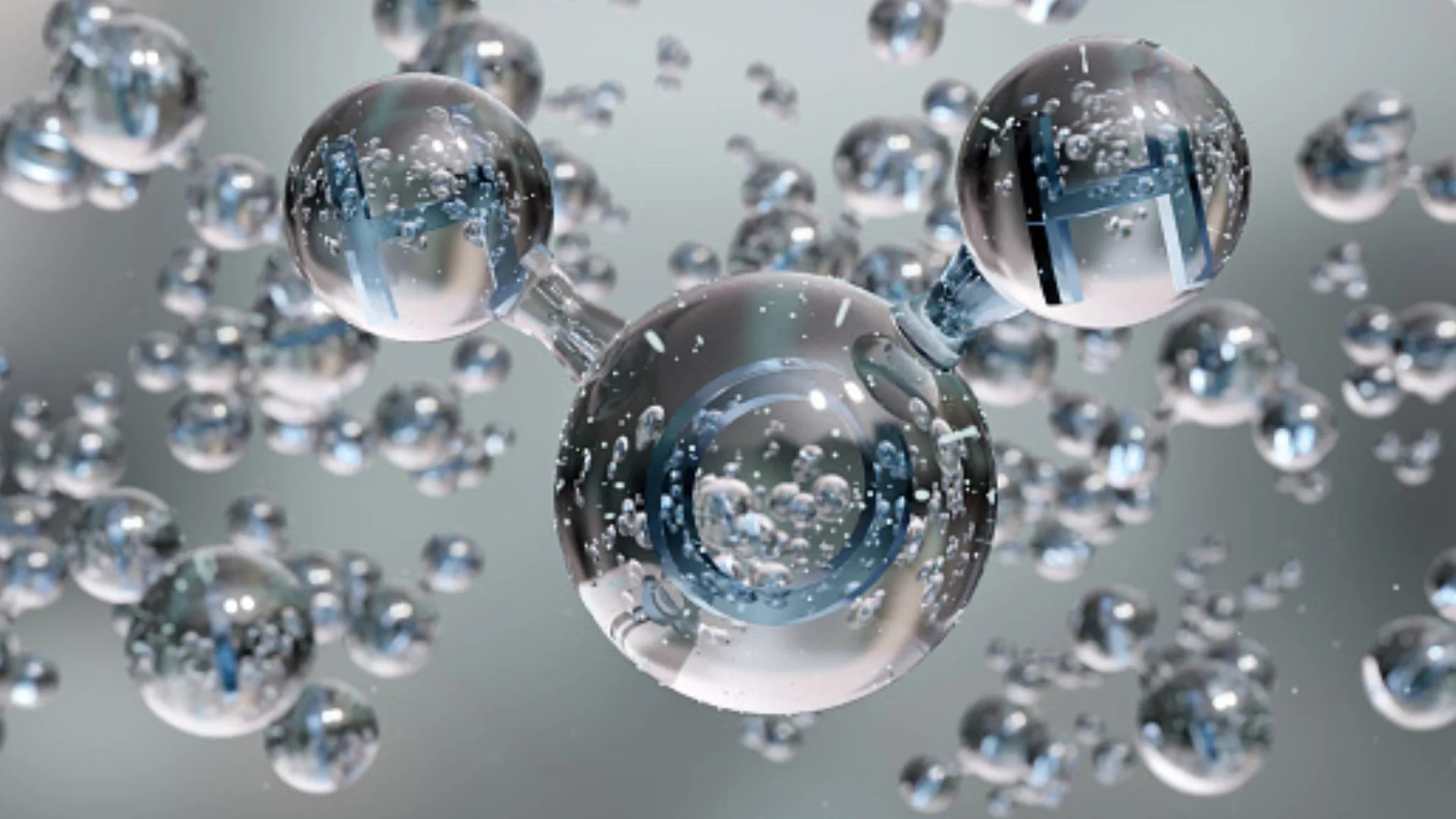
Scientists have spent decades trying to understand why water shows many unusual physical properties. A new study published in Nature Physics provides fresh evidence that water molecules constantly switch between two different liquid states at the molecular level.
The research combines artificial intelligence with advanced computer simulations to reveal details that scientists had not previously been able to observe.
The study was led by researchers from the City University of Hong Kong. Physical chemist Xiao Cheng Zeng and his team focused on testing the long-discussed two-state hypothesis of water. This idea suggests that liquid water contains both a denser structure and a less dense structure that continuously change into one another.
Although scientists have discussed this theory for many years, direct molecular evidence has remained difficult to obtain. Water molecules move extremely quickly, making these tiny structural changes hard to capture with traditional methods. Earlier studies found indirect signs of this behavior but could not clearly show how the transition happens.
Zeng said he became interested in the question after reading scientific papers that described the two-state hypothesis. He explained that researchers had many discussions about the idea but lacked clear evidence to support it. That challenge inspired his team to search for a different way to study water.
READ ALSO: New ETH Zurich Pixel Sees and Displays at Once, Redefining How Light Is Used
Water is already known for behaving differently from most liquids. It becomes denser as it cools until about 4 degrees Celsius, but below that temperature it begins to expand rather than continue to shrink. This unusual behavior allows ice to float on liquid water rather than sink.
Scientists have also found that water stores heat more effectively than many similar liquids. Under certain pressure conditions, its viscosity, or resistance to flow, also changes in unexpected ways. Researchers believe these unusual properties are related and may share a common underlying cause.
Water Molecules Never Settle
The two-state hypothesis has long been considered one possible explanation for these strange behaviors. According to the theory, water molecules constantly reorganize themselves into either a tightly packed structure or a more open arrangement. These continuous changes influence how water behaves under different temperatures and pressures.
Zeng first began studying water during his postdoctoral research in the late 1990s. He became more interested in the two-state hypothesis around 2006 after hearing discussions at scientific conferences. Even then, he believed the problem would be extremely difficult to solve using existing methods.
The project gained new momentum about 2.5 years ago. Zeng asked postdoctoral researcher Liwen Li to investigate the problem using modern artificial intelligence techniques. Instead of relying on traditional analysis, Li suggested using unsupervised deep learning.
READ ALSO: Cornell Students Build Community Bridges Through Engineering Course That Delivers Real Impact
Unlike many AI systems, unsupervised learning does not receive predefined answers during training. Instead, it searches for hidden patterns within large amounts of information on its own. This makes it useful for studying complex scientific data that humans cannot easily organize.
The research team conducted extensive molecular dynamics simulations using the GROMACS package. These simulations tracked the movement and interaction of hundreds of thousands of water molecules over time. The work generated tens of millions of individual data points for analysis.
Without artificial intelligence, examining such a huge amount of information would have required many researchers and several years of work. Zeng estimated that traditional analysis might have taken close to a decade. Using AI, the main analysis was completed in about 18 months.
WATCH ALSO: NASA rover discovered ancient microbial life signature on Mars
The AI system identified what scientists call reaction coordinates. These are a small set of variables that describe how water molecules change from one local structure to another. They provide a simple way to understand an extremely complicated molecular process.
Researchers then mapped how water molecules crossed energy barriers during these structural changes. An energy barrier is like a small hill that molecules must climb before settling into a different arrangement. Measuring these barriers helped scientists understand how the transitions occur.