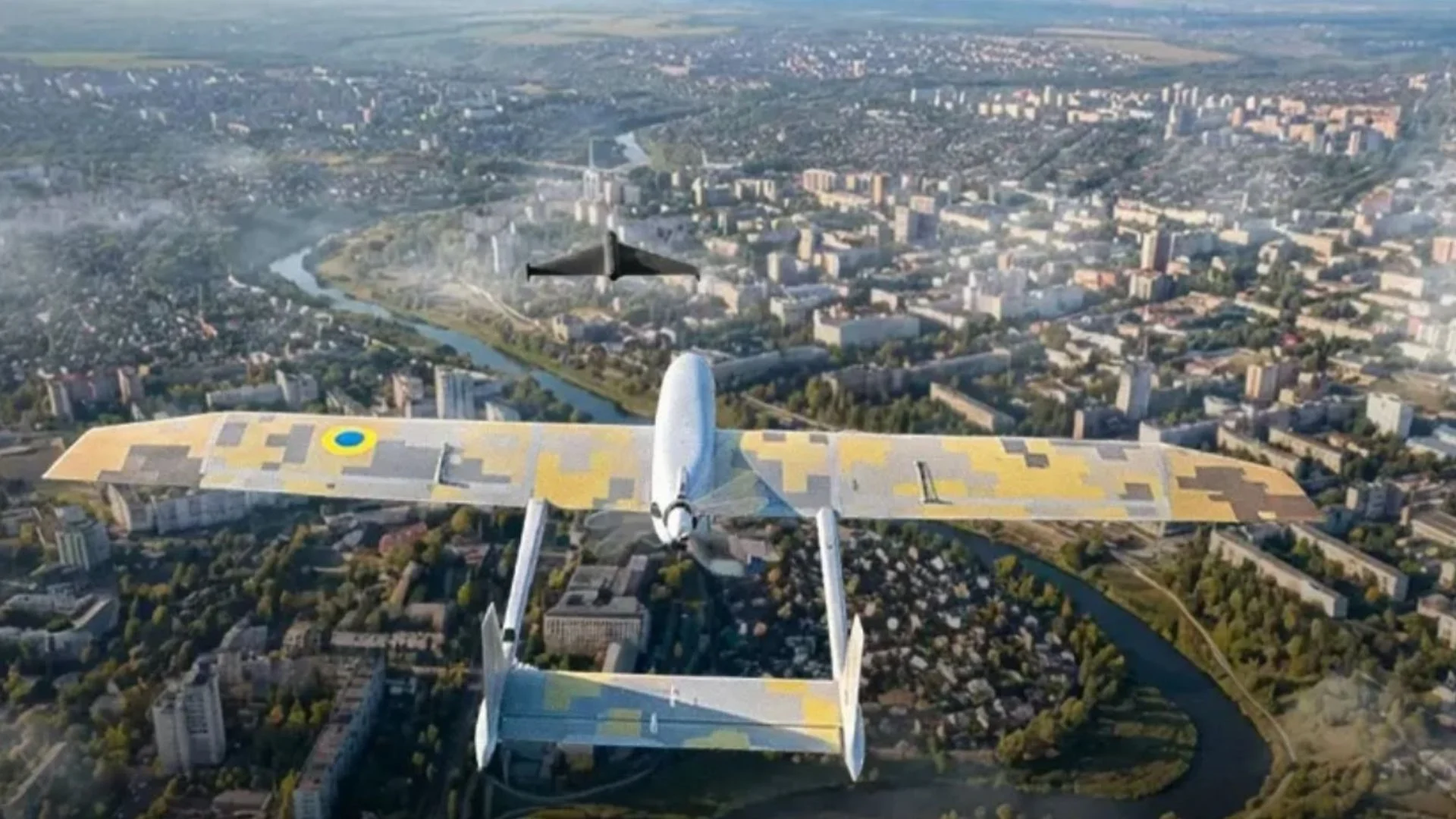
Ukraine has unveiled a new counter-drone system that automates 95 percent of the drone interception process, significantly reducing response times against incoming aerial threats.
The technology is designed to help air defense units respond faster to aerial threats. Officials say it has already demonstrated its effectiveness during combat operations.
The system reduces the workload on human operators. Personnel are primarily responsible for detecting targets and confirming threats in real time. After that, the software manages nearly every stage of the interception process, including guiding an interceptor toward the incoming drone.
Recently released footage showed the system successfully identifying and destroying a Shahed drone.
READ ALSO: Robotic “Dogs” Train for Mars in New Mexico’s Desert
Shahed drones, originally developed in Iran, have been used extensively by Russia during attacks on Ukrainian cities and infrastructure. Their relatively low cost and long range have made them a persistent challenge for Ukraine’s air defense network.
Automated Air Defense Speeds Up Response Time
Ukrainian Defense Minister Mykhailo Fedorov announced the development through social media.
He said autonomous technologies have become a major focus of modern air defense efforts. According to Fedorov, automation allows forces to react more quickly during large-scale drone attacks.
The growing use of drones in warfare has increased pressure on air defense systems worldwide. Traditional interception methods often require significant human involvement and coordination. Automated systems aim to reduce reaction times and improve the chances of successfully neutralizing threats.
Ukraine has faced repeated waves of drone attacks since the start of the conflict. In many cases, air defense crews must track multiple targets simultaneously. Automating most of the interception sequence allows operators to focus on decision-making rather than manual control.
Automated Drone Interception System Tested
The new system completed combat testing in Ukraine’s Kharkiv region, in the country’s northeast. Officials said the technology performed under real battlefield conditions before entering operational service. The testing phase helped validate its effectiveness against actual aerial threats.
The project was supported by Brave1, a Ukrainian government-backed platform that helps develop military technologies.
Brave1 works with defense startups, engineers, and technology companies to accelerate innovation. The platform has become an important part of Ukraine’s effort to rapidly field new battlefield capabilities.
According to Fedorov, the developer moved from an early prototype to an operational system in less than a year. Such a timeline highlights the fast pace of wartime technology development. Rapid innovation has become a key feature of Ukraine’s defense sector.
WATCH ALSO: Chinese humanoid robot plays basketball with almost human-like accuracy
Why the Tech Matters
The introduction of automated air defense systems reflects a broader shift in modern warfare. Military forces are increasingly using artificial intelligence, automation, and autonomous technologies to improve speed and efficiency. Air defense is one area where these capabilities can deliver immediate operational benefits.
As drone attacks continue to evolve, countries are looking for faster and more cost-effective ways to defend critical infrastructure and population centers.
Ukraine’s new system demonstrates how automation can strengthen air defense without completely removing human oversight. Its future deployment could play an important role in protecting cities while shaping the next generation of counter-drone technology.