NASA has selected space mobility company Lunar Outpost as one of two providers under its Lunar Terrain Vehicle Services contract.
The award supports the Artemis program, which aims to return astronauts to the Moon and establish long-term operations on the lunar surface. Lunar Outpost’s new vehicle, Pegasus, will help astronauts move across difficult terrain near the Moon’s south pole.
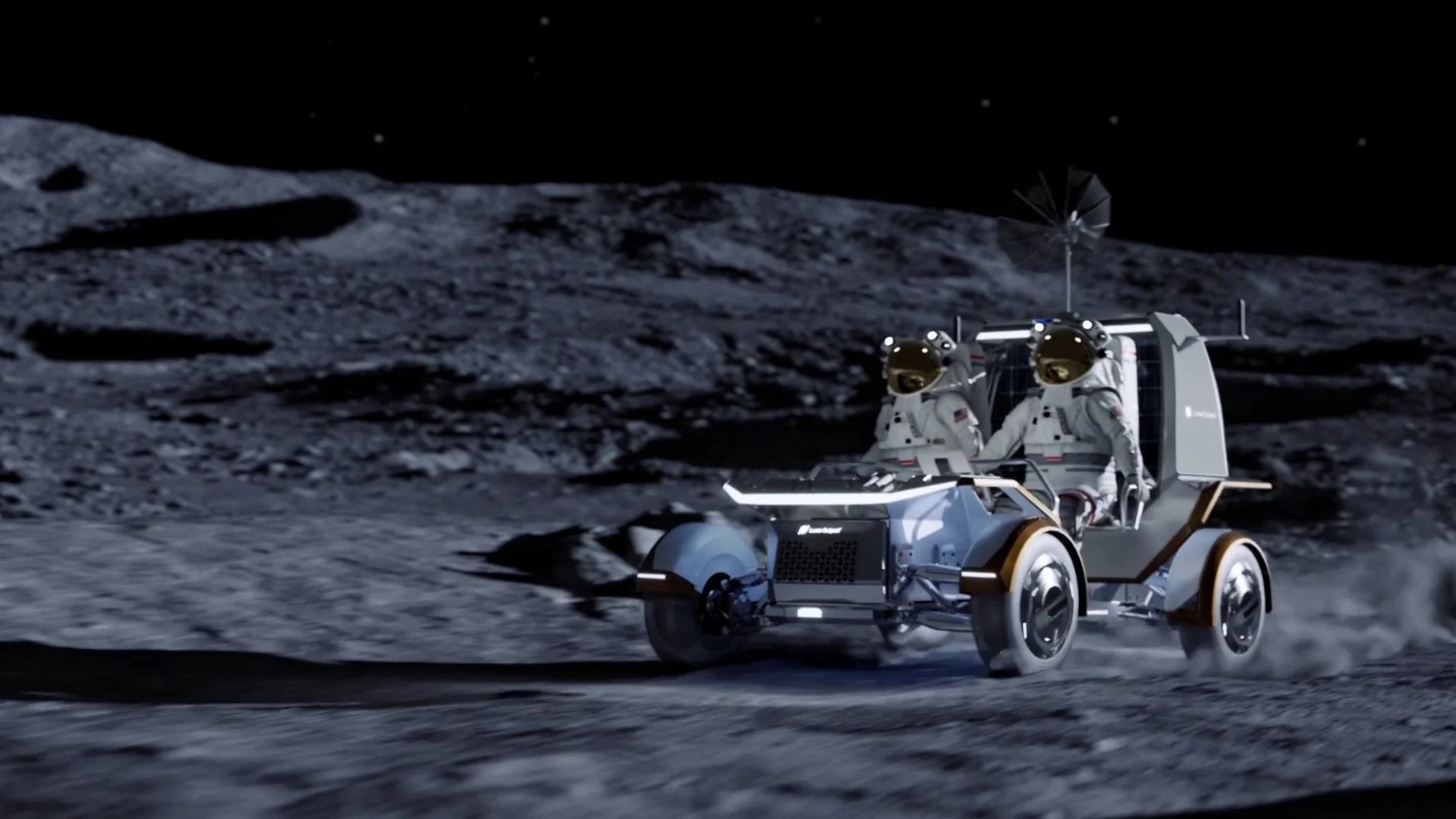
The announcement marks another major step in NASA’s effort to create a permanent human presence on the Moon. Pegasus is designed to transport astronauts, equipment, and scientific tools across long distances on the lunar surface. The rover will also support exploration, scientific studies, and preparation work for future Moon base infrastructure.
Pegasus Rover for Harsh Lunar Conditions
Pegasus is built to operate in one of the harshest environments in space. Temperatures on the Moon can swing from extreme heat to deep cold within short periods. Lunar Outpost said the rover uses advanced thermal management systems to keep its equipment and batteries functioning during these severe conditions.
The rover can carry two astronauts seated side by side. Its low-profile design takes inspiration from the Lunar Roving Vehicle used during NASA’s Apollo missions in the 1970s. However, Pegasus includes modern systems for navigation, automation, and remote operations that were not available during the Apollo era.
READ ALSO: Adani Green Operationalizes 3.37 GWh Battery Storage at Khavda, Largest Outside China
NASA plans to use the vehicle near the Moon’s south pole, a region that has become a major focus for future exploration. Scientists believe the area contains water ice hidden inside permanently shadowed craters. Water ice is considered important because it can support astronauts by providing drinking water, oxygen, and even fuel for future missions.
Pegasus can operate in several modes depending on mission needs. Astronauts can drive the rover directly, while teams on Earth can also control it remotely through teleoperation systems. The rover is also capable of autonomous operations, allowing it to move and perform tasks without constant human control.
The vehicle includes livestreaming capabilities from the lunar surface. This feature will allow scientists, engineers, and the public to follow missions in near real time. NASA has increasingly focused on public engagement during Artemis missions as interest in lunar exploration continues to grow worldwide.
Artemis’s Moon Plans
The Artemis program is NASA’s flagship human exploration effort for the coming decade. Unlike the Apollo missions, which focused on short visits, Artemis is designed for repeated missions and long-term infrastructure development. NASA aims to use the Moon as a testing ground for future crewed missions to Mars.
Lunar Outpost said Pegasus will help astronauts travel farther and work longer on the Moon. Greater mobility is considered essential because astronauts will need to transport tools, collect samples, and build infrastructure across wide areas. Walking long distances in bulky spacesuits limits both speed and productivity during lunar operations.
The company also stated that Pegasus draws from lessons learned during earlier robotic missions. Technologies from Lunar Outpost’s MAPP and Owl missions helped shape the rover’s systems and operational design. These earlier projects focused on robotic mobility and autonomous exploration technologies.
Several major industry partners contributed to the development of Pegasus. General Motors worked on electrification systems and space-rated battery technologies for the rover. Goodyear supported tire development, while Leidos contributed engineering and human spaceflight expertise.
GM Defense President Steve duMont said adapting electric vehicle technology for the Moon presented a major engineering challenge. Lunar vehicles must operate in low gravity, sharp dust-filled terrain, and extreme temperatures. Unlike Earth vehicles, lunar rovers cannot rely on normal atmospheric cooling systems or easy maintenance support.
Growing Competition in Lunar Exploration
NASA’s selection of Lunar Outpost highlights growing private-sector involvement in space exploration. In recent years, NASA has increasingly partnered with commercial companies to reduce costs and speed up development timelines. The agency has followed a similar model in cargo and crew transportation missions to the International Space Station.
Lunar Outpost said the new contract adds to its growing list of lunar and cislunar missions planned before 2030. The company currently has nine contracted missions related to mobility, infrastructure, and robotic systems. These projects are part of a wider commercial push to support future lunar industries and exploration activities.
WATCH ALSO: SpaceX rocket sends 11,000 pounds of scientific investigations, cargo to space station
Interest in lunar transportation systems has increased globally as several countries prepare new Moon missions. The US, China, India, and private companies are all investing heavily in lunar technologies. Reliable surface mobility is considered a key requirement for maintaining human operations beyond Earth.
NASA’s Artemis missions are expected to shape the next phase of space exploration during the coming decade. Vehicles like Pegasus will play an important role in helping astronauts live and work on the Moon for longer periods.