Researchers at Osaka Metropolitan University have developed a new light-powered system that rapidly collects bacteria and microscopic particles into a single small area for faster detection.
The technology uses a gold-coated optical fiber and laser light to collect targets from liquid samples within 60 seconds. Scientists say the method can improve early disease diagnosis and support future medical and environmental testing.
The study was published in Communications Physics. The research was led by Takuya Iida from the university’s Graduate School of Science and the Research Institute for Light-induced Acceleration System(RILACS). The team focused on finding a faster, more efficient way to detect harmful bacteria at very low levels.
Many dangerous bacteria can cause severe illness even at low concentrations. One example is E. coli O157, which can spread quickly and create serious health risks if not detected early. Current laboratory methods often require several days to grow bacterial samples before identification is possible.
READ ALSO: Turkish Spray-On Stealth Coating Cuts Drone Radar Signature by 43 Decibels in Tests
Some modern diagnostic systems, including antibody-based tests, can deliver results more quickly than traditional cultures. However, these methods still take several hours and often depend on expensive equipment. Researchers wanted a simpler solution that combines speed, sensitivity, and compact design.
How Gold-Coated Fiber Works
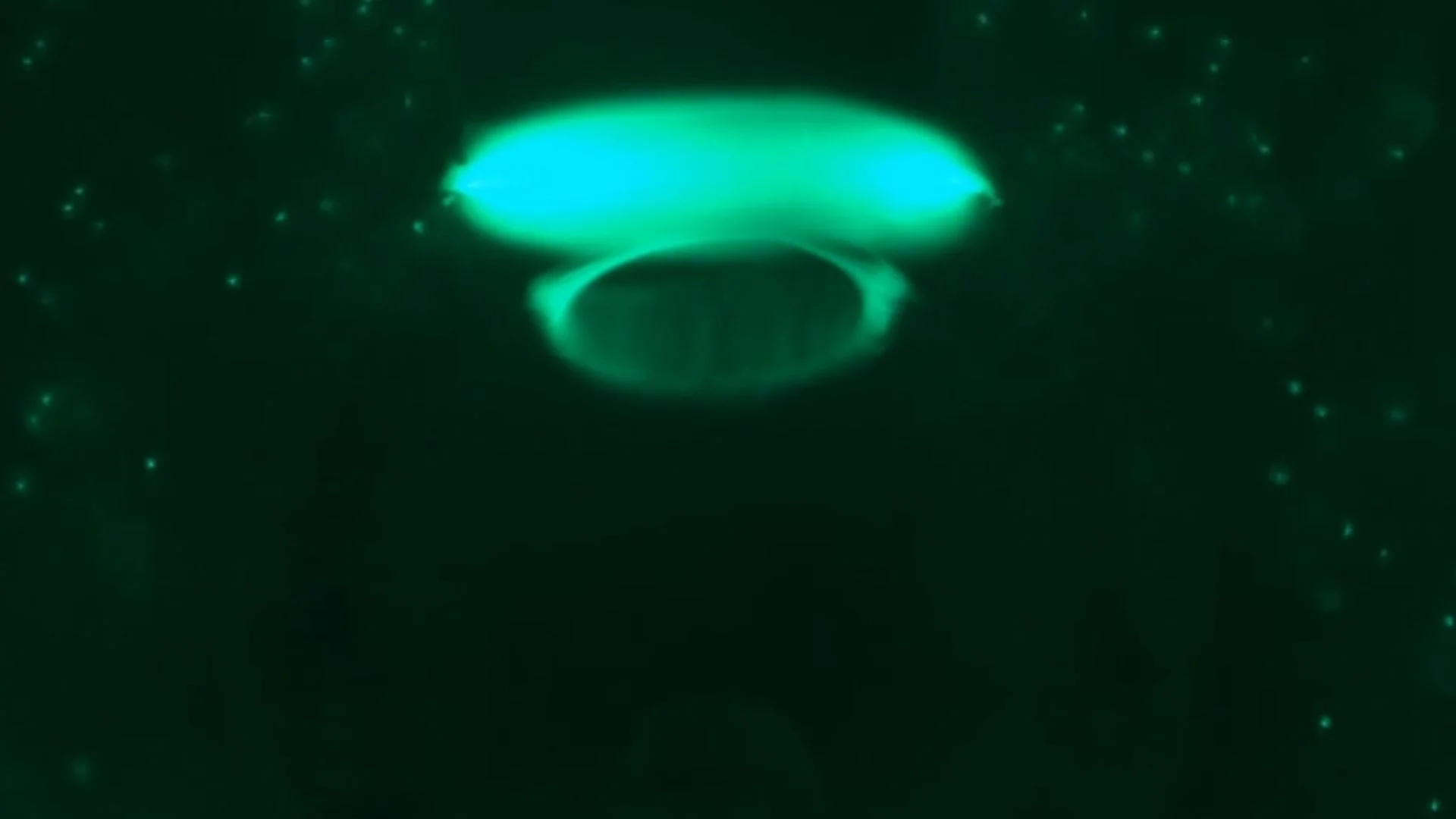
The new system uses a thin optical fiber coated with a metallic gold film. A laser beam travels through the fiber and reaches the coated tip. The gold absorbs the laser light and converts it into localized heat.
The heating creates movement inside the surrounding liquid sample. Tiny bubbles form near the tip and generate fluid circulation around the fiber. These circular flows pull bacteria and microscopic particles toward a single collection point.
Researchers said the technology works differently from many existing photothermal systems. Older techniques mainly gather particles along flat surfaces or in narrow regions. The new fiber-based method captures targets from all directions inside the liquid.
The research team tested the device using bacteria and microparticles suspended in liquid samples. They found the system could gather thousands to hundreds of thousands of particles from a 20-microliter sample in just one minute. According to the researchers, the collection efficiency was more than 10 times higher than that of many conventional approaches.
Faster Detection Without Complex Systems
The Osaka team said one major advantage of the technology is its simple design. The compact optical fiber structure eliminates the need for large, complex optical setups. This makes the system easier to integrate into portable diagnostic platforms and smaller laboratory devices.
READ ALSO: China’s Nuclear Clock Advance Points to GPS-Free Submarine Navigation Capability
Researchers also believe the technology can work with more than bacteria. The same process can concentrate nanoparticles and other tiny materials linked to immune system activity and disease progression. This could expand the system’s role in healthcare and scientific research.
Concentrating particles into a small area also improves detection sensitivity. Sensors and analytical tools can more easily identify targets when they are densely packed together. This can help scientists detect infections or contaminants at much lower levels than before.
The study highlights the growing use of light-based technologies in medicine and diagnostics. Optical fibers, lasers, and photothermal systems are becoming increasingly important in healthcare research. These technologies can reduce testing time while improving accuracy and efficiency.
Future Applications
The research team plans to combine the optical concentration method with spectroscopy and optical sensing tools. These systems are commonly used in advanced diagnostics and material analysis. Researchers believe combining these technologies can further improve detection speed and precision.
The team also plans to test the method with different target materials and environmental conditions. Future studies will examine how the technology performs in real-world medical and environmental applications. Researchers want to confirm that the system remains reliable across a wide range of sample types.
Fast-detection technologies are becoming increasingly important in healthcare and public safety. During disease outbreaks or contamination events, rapid testing systems can help authorities respond more quickly. Environmental monitoring programs also need faster tools to identify harmful microorganisms in water and other samples.
Researchers said their long-term goal is to build a versatile platform for rapid analysis in small liquid samples. Such systems could help laboratories process samples faster while improving response times in medical diagnostics and environmental testing. However, fiber-based optical detection technologies are expected to play a larger role in future bioanalytical research.