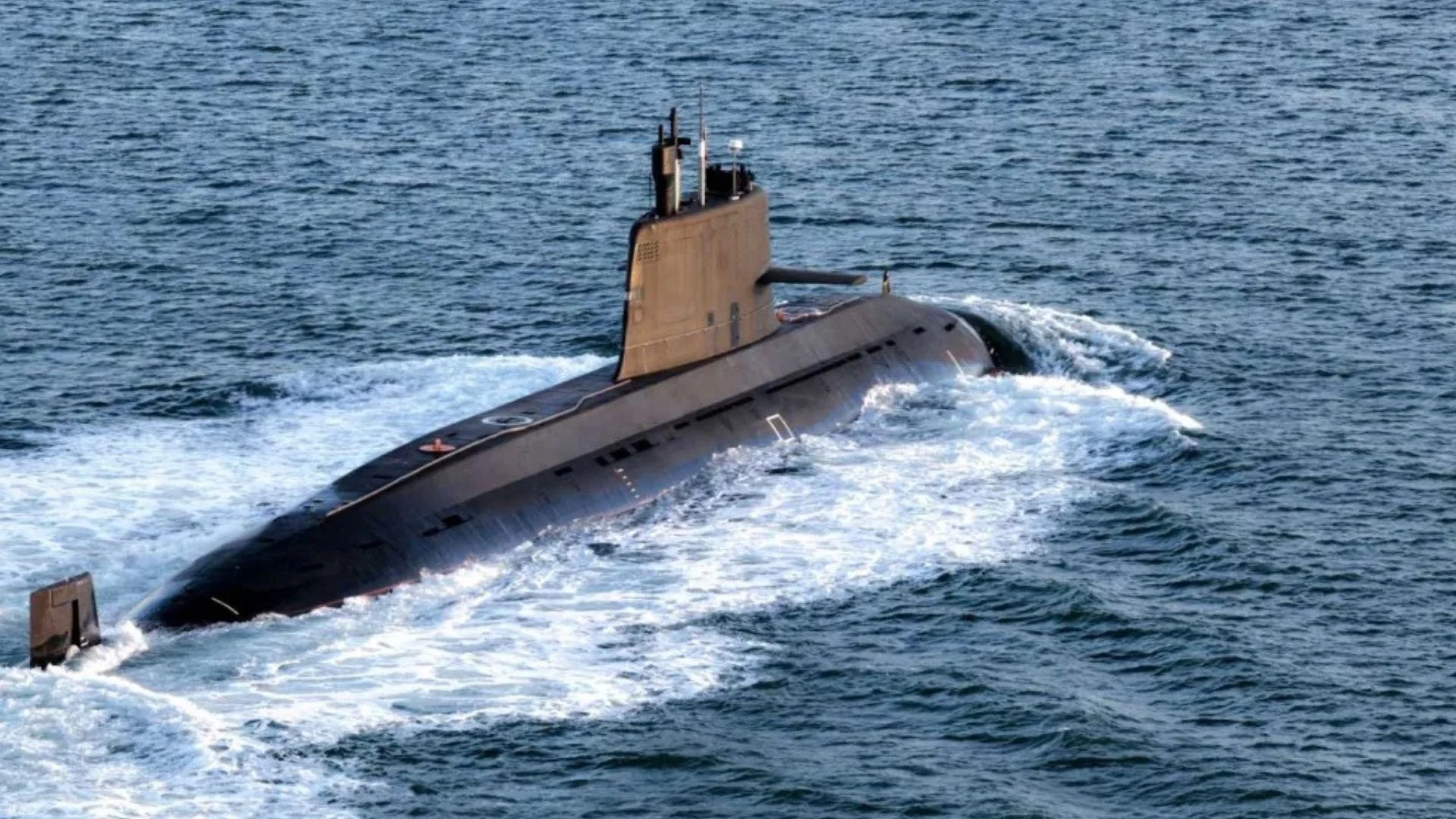
China is moving closer to developing submarine navigation systems that can operate without GPS or satellite support.
The technology uses an advanced nuclear clock designed to maintain highly accurate positioning while submarines remain fully submerged.
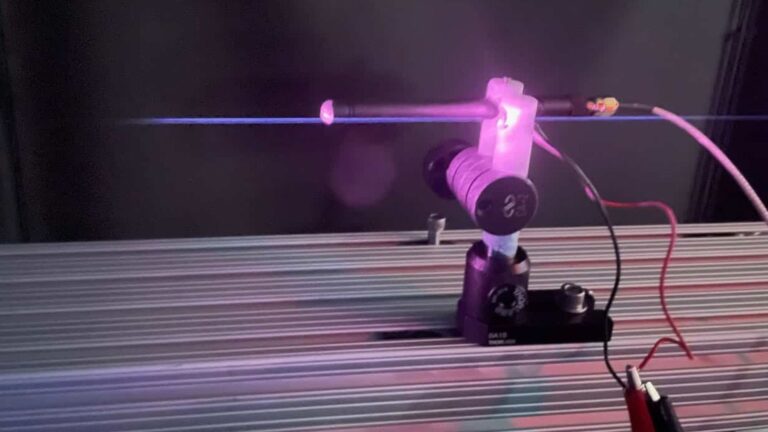
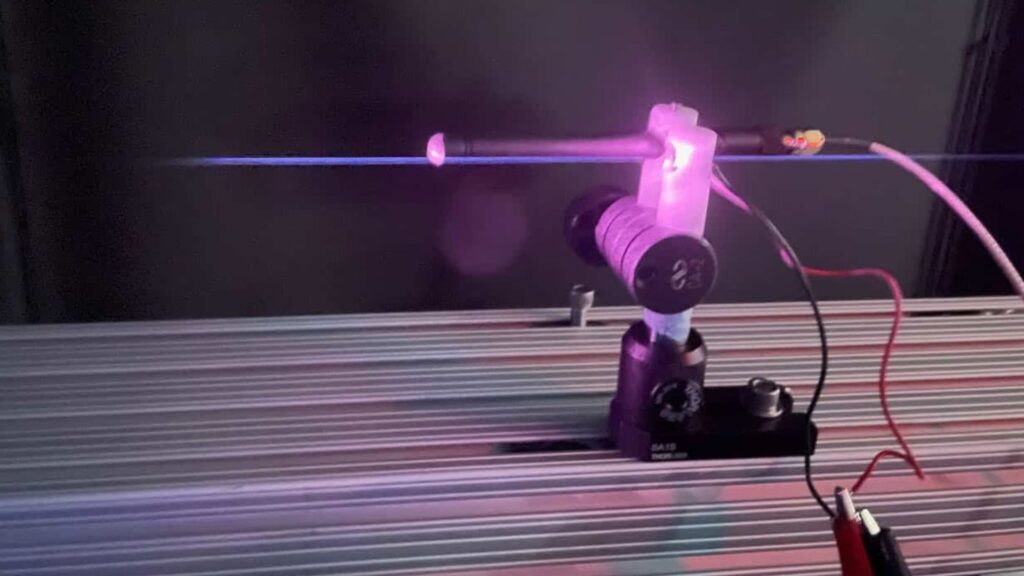
Chinese researchers recently announced they achieved a 145.2-nanometer ultraviolet wavelength needed to activate thorium-229 nuclear clocks. The work was carried out by scientists at the Xinjiang Technical Institute of Physics and Chemistry.
Defense analysts say the development could help Chinese submarines stay underwater longer while reducing detection risks. Modern submarines usually depend on periodic satellite-based navigation updates, which can expose their locations to enemy tracking systems.
Nuclear clocks are considered far more precise than traditional atomic clocks because they measure energy changes inside an atom’s nucleus instead of electron movements around it. That makes them less vulnerable to environmental disturbances such as radiation, temperature shifts, and electromagnetic interference.
The development is drawing growing attention from US defense planners as military competition intensifies across the Indo-Pacific region.
READ ALSO: Shanghai Deploys Humanoid Robot Lingxi X2 to Assist Officers in Urban Enforcement Patrols
The key challenge was producing deep-ultraviolet light at the correct wavelength. Existing systems generated wavelengths near 150 nanometers, which fell short of the required level for thorium-229 excitation. The new fluoroborate crystal reportedly pushed the wavelength to 145.2 nanometers.
Researchers believe this opens the way to operational thorium nuclear clocks. The technology is still in the research stage and has not yet been deployed on submarines. However, defense analysts view the progress as strategically important.
Why GPS-Free Navigation Matters
Modern submarines rely heavily on inertial navigation systems while underwater. Over time, these systems accumulate small errors and require corrections from satellite navigation systems such as GPS. Since GPS signals cannot penetrate seawater, submarines must periodically surface or raise communication masts.
Those moments expose submarines to enemy tracking systems. Satellites, surveillance aircraft, radar systems, and electronic monitoring tools can detect submarines during navigation updates. This has long been an important advantage for anti-submarine warfare operations.
A submarine equipped with a highly accurate nuclear clock can reduce those exposure periods. The vessel can stay underwater longer without relying on external positioning updates. This improves stealth and survivability during military operations.
For China’s People’s Liberation Army Navy, the technology carries major strategic value. China continues expanding its fleet of nuclear-powered submarines, including the Type 093 attack submarines and Jin-class ballistic missile submarines. The future Type 096 strategic submarine is also expected to strengthen China’s underwater deterrence force.
READ ALSO: NVIDIA’s Alpamayo AI Family Aims to Give Autonomous Vehicles “Humanlike” Reasoning
China’s submarine fleet operates under growing pressure from American tracking networks across the Pacific. The US Navy maintains extensive anti-submarine warfare systems in the Indo-Pacific region. These include Virginia-class submarines, P-8A Poseidon patrol aircraft, underwater sonar networks, and space-based surveillance systems.
The American system is designed to monitor key maritime areas around Taiwan, the South China Sea, and Pacific chokepoints. Detecting submarine movements early is central to U.S. naval strategy. Reducing those detection opportunities creates new operational challenges for the Pentagon.
Impact on Taiwan and Indo-Pacific Security
The development comes during rising military competition between China and the US. Taiwan remains one of the most sensitive security issues in the region. Both countries continue to strengthen their military capabilities in the Western Pacific.
Chinese submarines with advanced navigation systems would become harder to track during long patrols. Ballistic missile submarines could operate more quietly inside protected areas near the South China Sea. This strengthens China’s second-strike nuclear deterrence posture.
Attack submarines could also gain tactical advantages during naval operations. Better underwater positioning improves coordination for missile launches and long-range strike missions. It also supports operations in GPS-denied combat environments.
The technology has wider implications beyond navigation alone. Precise timing systems are essential for modern military communications, missile guidance, and coordinated operations. More accurate onboard clocks improve performance across multiple systems.
The development also affects electronic warfare planning. US military doctrine increasingly relies on disrupting enemy satellite navigation through jamming, spoofing, cyberattacks, and anti-satellite operations. A navigation system that does not rely on satellites becomes harder to disrupt.
China has invested heavily in alternative military technologies over the past decade. These include quantum communications, artificial intelligence systems, autonomous underwater vehicles, and resilient command networks. The nuclear clock research fits into Beijing’s broader push for strategic independence during wartime.
Despite the progress, major technical barriers remain before deployment becomes possible. Engineers still need to miniaturize the system for submarine use. The equipment must also survive pressure, vibration, temperature shifts, and long-term operation at sea.
WATCH ALSO: India recently tested carried out the successful launch of Intermediate Range Agni-Prime Missile
Long-duration testing will also be necessary to prove reliability. Military systems require stable performance under real combat conditions. That process could take years before operational deployment becomes realistic.
The US is also pursuing advanced timing and navigation technologies. American researchers have studied nuclear clock systems for years through scientific and defense programs. The competition reflects a broader race for dominance in next-generation military technologies.
Undersea warfare remains one of the most important parts of strategic deterrence. Submarines play major roles in intelligence gathering, missile deployment, and naval power projection. Any technology that improves submarine stealth changes the balance of maritime security.
The Chinese research highlights how competition between major powers is expanding into advanced science fields. Navigation systems, timing precision, and autonomous operations are becoming central to future military planning. These technologies are expected to shape the next phase of undersea warfare across the Indo-Pacific.