SpaceX has moved closer to launching the newest version of its Starship rocket system.
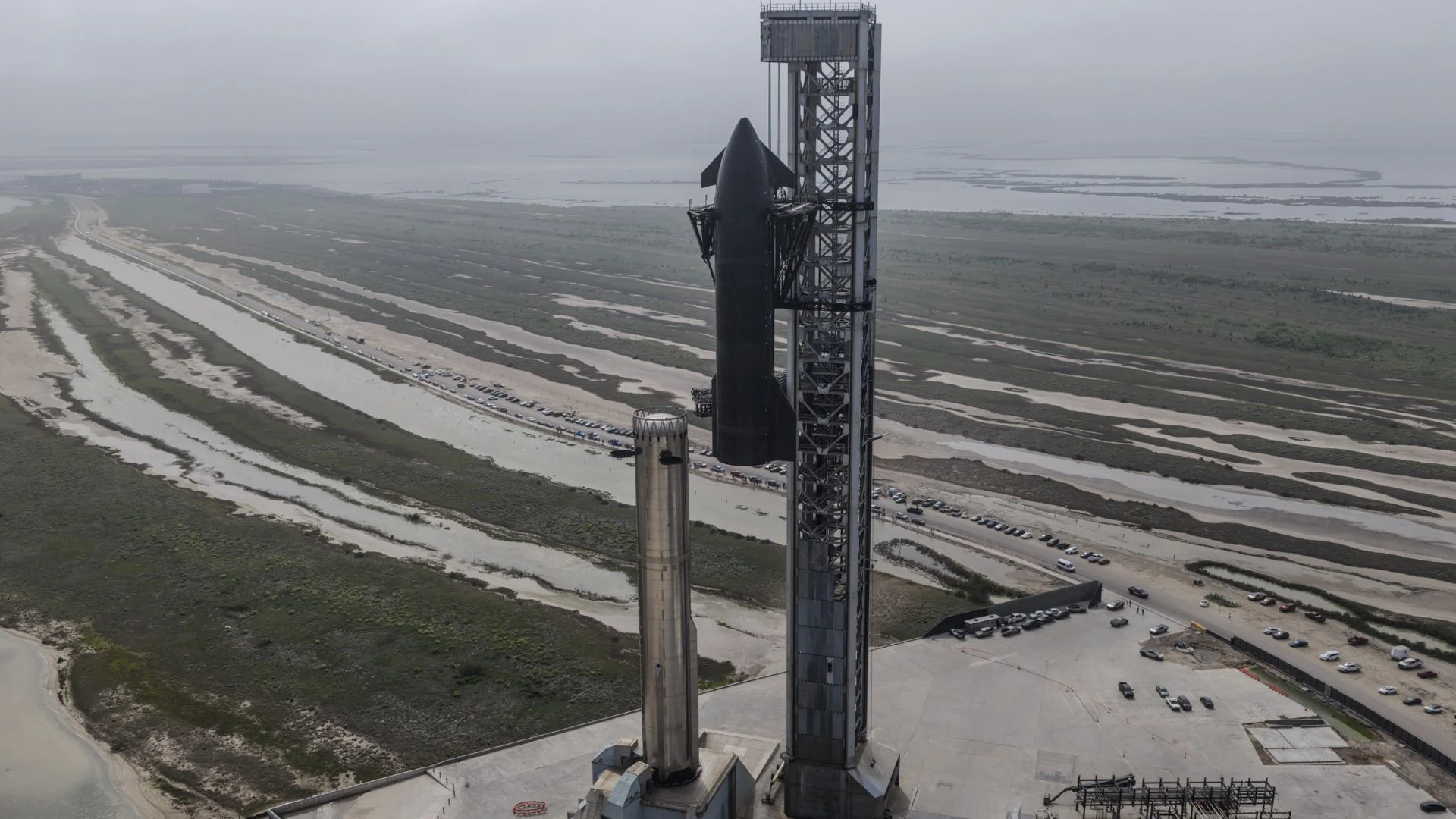
The company stacked the Super Heavy booster and Ship upper stage at Starbase in South Texas on May 19. The launch is scheduled no earlier than May 21 at 6:30 p.m. EDT.
Starship is currently the tallest and most powerful rocket ever built. The system stands about 400 feet tall when fully assembled. It is designed to carry large payloads and astronauts to Earth orbit, the moon, and eventually Mars.
The launch will mark the debut flight of Starship Version 3(V3). This upgraded version includes several changes compared to earlier V1 and V2 models. SpaceX says the new design improves performance and supports future deep-space missions.
Before launch, the company conducted a full wet-dress rehearsal at Starbase. Engineers fully loaded both stages with fuel and practiced the countdown sequence before engine ignition. This type of test helps teams confirm that launch systems are working correctly before liftoff.
READ ALSO: NASA Satellite Will Test Orbital ‘Gas Station’ Tech to Fuel Moon and Mars Missions
SpaceX also tested the Super Heavy booster’s 33 Raptor 3 engines in recent weeks. These engines are the rocket’s main power source during launch. The company has been performing repeated checks to improve reliability after earlier test flights faced technical problems.
SpaceX Starship V3 Expands Space Capabilities
One of the biggest upgrades in Starship V3 is its support for in-space refueling. The spacecraft now includes docking systems that allow fuel transfers between Starship vehicles in orbit. This technology is considered essential for long-distance missions beyond low Earth orbit.
In-space refueling works like an orbital gas station for spacecraft. A tanker version of Starship can deliver fuel to another Starship already in orbit. This process allows missions to carry enough fuel for trips to the moon or Mars without launching fully loaded from Earth.
Flight 12 will follow a suborbital test profile instead of reaching full orbit. The Ship upper stage is expected to splash down in the Indian Ocean after reentry. The Super Heavy booster will land in the Gulf of Mexico rather than return to the launch site.
SpaceX has already demonstrated partial recovery operations with earlier missions. The company successfully used giant mechanical arms, known as chopsticks, to catch returning Super Heavy boosters at the launch tower. However, the Ship upper stage has not yet been recovered using this system.
READ ALSO: Rotor Built With 99% Pure Rare Earth Recycled Magnets Passes Ford’s EV Tests in UK
The outcome of Flight 12 will help determine future recovery plans. If the mission performs well, SpaceX could attempt its first Ship catch during Flight 13 or Flight 14. Such a step would move the company closer to its goal of fully reusable rockets.
NASA Moon Missions Depend on Starship Progress
NASA is closely watching Starship’s development because the spacecraft plays a major role in the Artemis moon program. The agency selected SpaceX to build a lunar landing system for astronaut missions. Starship is expected to transport astronauts from lunar orbit to the moon’s surface.
NASA currently plans to launch Artemis 3 in late 2027. During that mission, astronauts aboard the Orion spacecraft will dock with Starship in low Earth orbit. The mission will test whether both spacecraft can safely connect and operate together in space.
If the docking mission succeeds, Starship will later support astronaut landings on the moon during Artemis 4, planned for 2028. NASA views reusable spacecraft as a way to lower mission costs and increase launch frequency. Starship’s large cargo capacity also allows it to carry heavy equipment and supplies needed for lunar exploration.
SpaceX is not the only company involved in NASA’s lunar plans. Blue Origin is also building its own moon lander called Blue Moon under a separate NASA contract. NASA has said it hopes to test both systems, but the agency is prepared to move forward with one lander if delays affect the other program.
WATCH ALSO: US Air Force’s Sentinel missile brings improved range, accuracy, resiliency and flexibility
The success of Starship V3 is important not only for NASA but also for the future of commercial spaceflight. SpaceX aims to use the rocket for satellite launches, cargo transport, private missions, and future human travel beyond Earth orbit.
Flight 12 now stands as another major test in the company’s long-term plan to build a reusable transportation system for deep space exploration.