The secretive AIM-260 air-to-air missile has been seen publicly for the first time.
The missile was photographed attached to a US Navy fighter jet during a test flight in Florida. This marks an important step for one of America’s most closely guarded defense programs.
The AIM-260 Joint Advanced Tactical Missile (JATM), a next-generation air-to-air weapon, is designed to replace the aging AIM-120 AMRAAM.
The AIM-120 has served as the US military’s primary beyond-visual-range air combat missile for decades. The new missile aims to improve range, speed, and combat effectiveness.
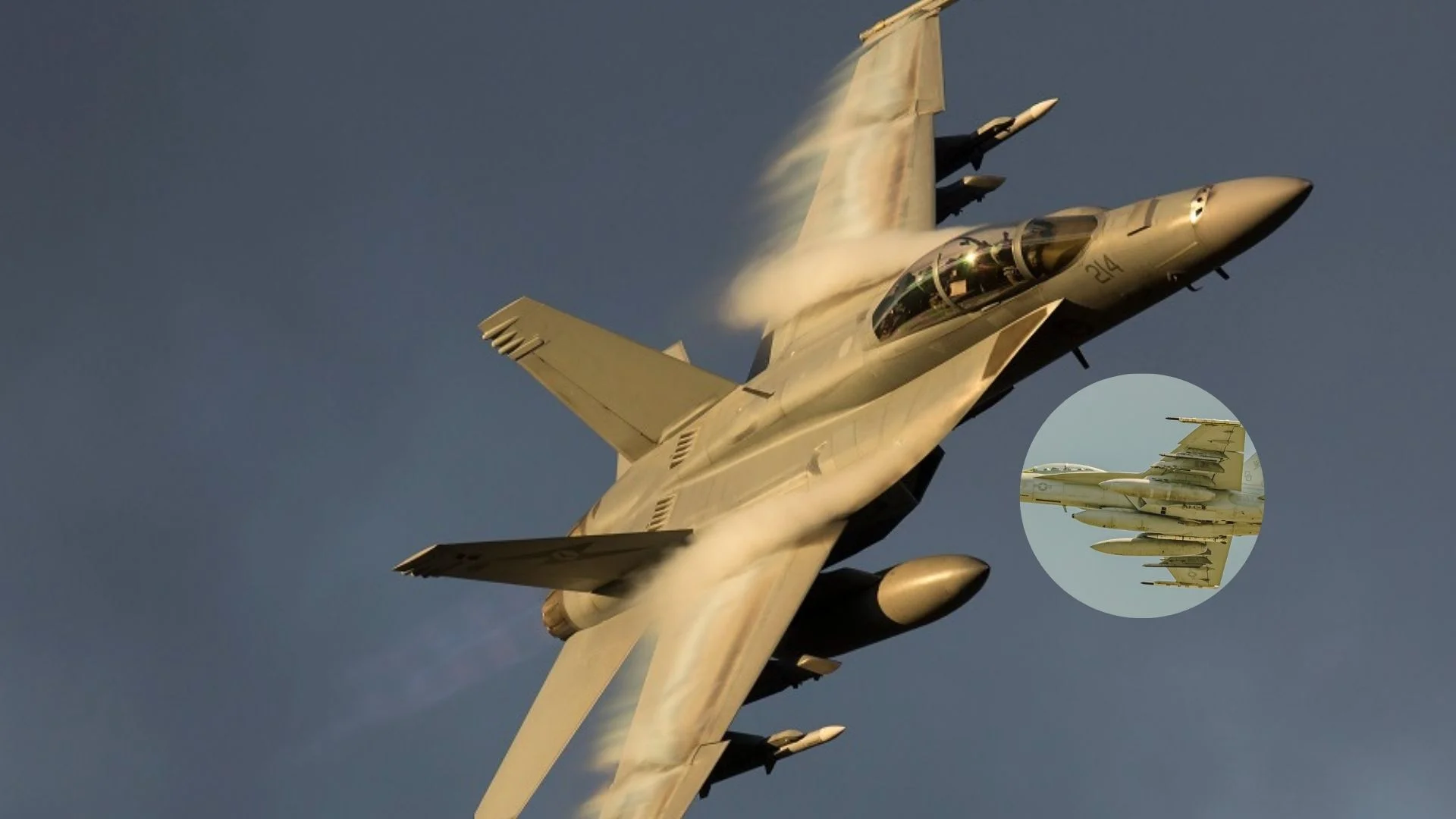
The image was captured on May 13 at Eglin Air Force Base in Florida. A US Navy F/A-18F Super Hornet from Air Test and Evaluation Squadron 31 carried the missile during the flight. Eglin is a major testing center for military aircraft and advanced weapons.
The missile was mounted under the aircraft near the right engine intake. The test aircraft also carried special flight data pods and an upgraded fuel tank equipped with an infrared search-and-track sensor. These tools help engineers collect important performance data during testing.
AIM-260 Design and Advanced Features
The AIM-260 has a clean and simple external design. It features four tail fins and lacks the mid-body fins seen on the AIM-120. This streamlined shape helps reduce drag, improving speed and range.
READ ALSO: International Team Proposes a 150-Meter ‘Curtain’ to Hold Back the Melting Doomsday Glacier
The missile appears similar in size to the AIM-120. This is important because it allows the AIM-260 to fit inside the internal weapons bays of stealth fighters. Aircraft such as the F-22 Raptor and F-35 can carry it without major design changes.
A yellow band near the front suggests the missile carried a live high-explosive warhead during testing. Two black bands near the rear may indicate the position of its rocket motor. Small square markings on the missile’s body help engineers visually track it during test operations.
Defense experts believe the AIM-260 uses a more advanced rocket motor. Reports suggest it may use a dual-pulse propulsion system. This allows the missile to conserve energy and remain maneuverable during the final phase of an engagement.
The missile is also expected to feature a state-of-the-art radar seeker. An Active Electronically Scanned Array(AESA) seeker can improve target detection and tracking. This technology helps the missile to engage faster-moving threats more accurately.
The AIM-260 may also support networked targeting. This allows the missile to receive target updates from other aircraft, drones, or sensors after launch. Pilots can engage distant targets without relying only on their own radar systems.
Why the AIM-260 Matters
The AIM-260 program began publicly in 2019. The missile was jointly developed by the US Navy and the US Air Force. Its main purpose is to counter newer long-range air-to-air missiles developed by strategic competitors.
One major concern has been China’s PL-15 missile. The PL-15 is believed to offer greater engagement range than current American systems. The AIM-260 is being developed to restore and expand the US air combat advantage.
Reports indicate the AIM-260 can strike targets at distances of at least 120 miles. This gives pilots more room to engage enemy aircraft before entering danger zones. Longer range is becoming increasingly important in modern aerial warfare.
WATCH ALSO: BYD SEAL Delivers Lightning-Fast Acceleration for Effortlessly Smooth Drives
The missile is also expected to support future autonomous combat systems. It may arm next-generation drones being developed under the US Air Force’s Collaborative Combat Aircraft program. This shows how the AIM-260 fits into broader plans for connected and unmanned warfare.
The first operational users are expected to include Navy Super Hornets and Air Force F-22 Raptors. Future integration is also planned for next-generation fighter programs such as the Air Force’s F-47 and the Navy’s upcoming F/A-XX aircraft. This ensures the missile will remain central to US airpower for years.
The original target was to deploy the missile in 2022. However, delays linked to funding and program adjustments slowed progress. The recent public appearance suggests the program is moving closer to active service.
The AIM-260 will also work alongside the AIM-174B, another long-range missile recently introduced by the US Navy. These weapons give American forces more options in future air battles. They are part of a wider effort to prepare for increasingly advanced global military threats.
READ ALSO: Ukraine Unveils ARDAL Robotic UGV for Blind Grenade Strikes on Battlefield
The first public sighting of the AIM-260 signals that years of secret development are entering a new phase. The missile is expected to become a key part of the US’s future air combat strategy. Its arrival will shape how the US responds to evolving challenges in contested skies.