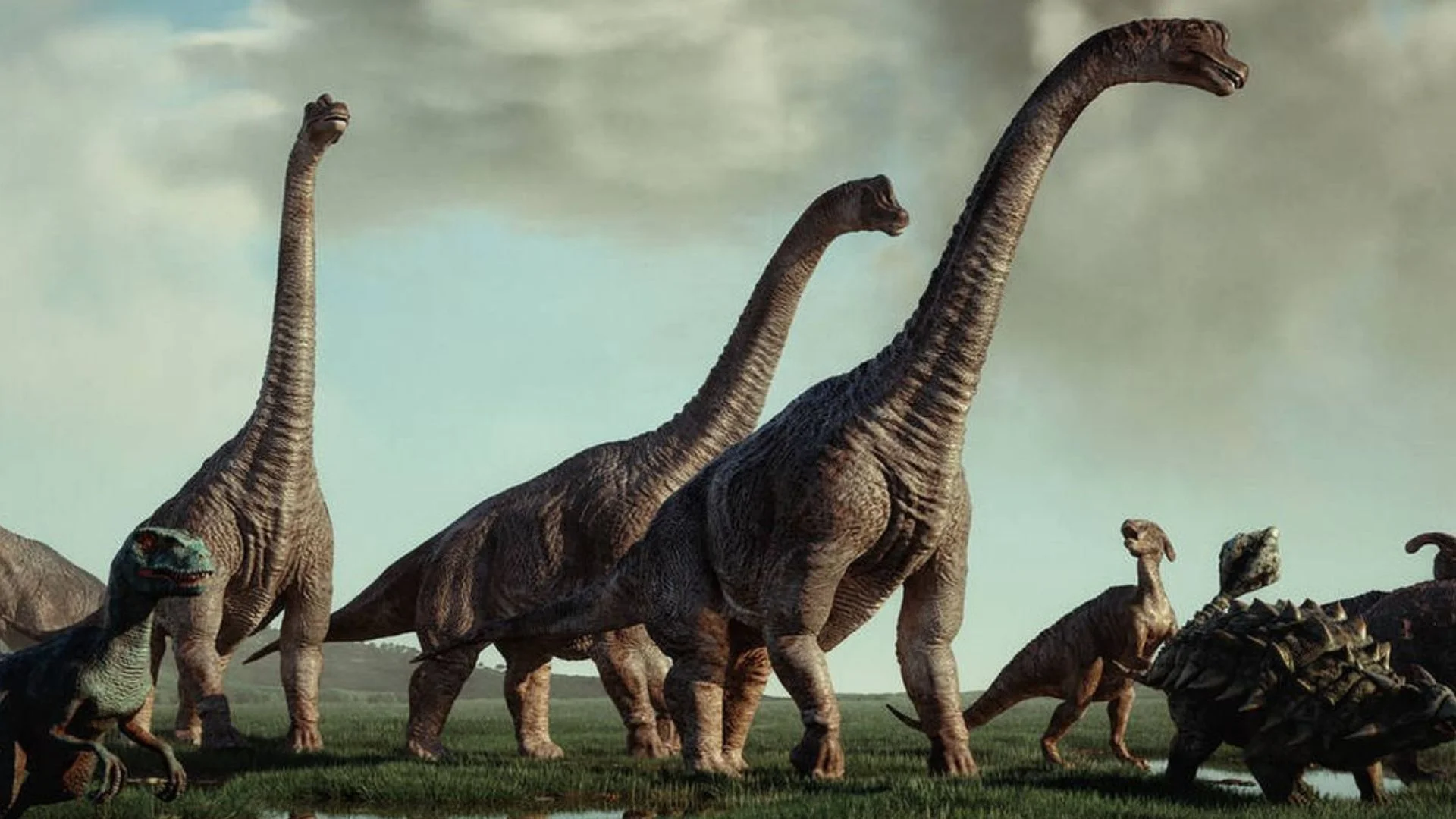
Fossils of a massive new dinosaur species unearthed in Thailand have been identified as the largest ever discovered in Southeast Asia.
The long-necked plant-eater lived around 100 to 120 million years ago during the Early Cretaceous period. Scientists say the fossil discovery offers fresh insight into dinosaur life in Asia and the ancient ecosystems that once covered the region.
A team of researchers from University College London, Mahasarakham University, Suranaree University of Technology, and Sirindhorn Museum announced the discovery in a new study published in the journal Scientific Reports.
The dinosaur was named Nagatitan chaiyaphumensis after the Thai province of Chaiyaphum, where its fossils were first found. Scientists uncovered the bones near the edge of a pond in northeastern Thailand nearly ten years ago.
READ ALSO: World’s First Ammonia-Powered Offshore Vessel Set to Launch This Autumn
The fossil remains included parts of the spine, ribs, pelvis, and legs. One of the most important discoveries was a front leg bone measuring 1.78 meters long, roughly the height of an adult human. Based on these remains, researchers estimated the dinosaur stretched about 27 meters in length and weighed around 27 tonnes.
That weight is close to the combined weight of nine adult Asian elephants. The dinosaur belonged to the sauropod family, a group known for long necks, long tails, and enormous bodies. Famous members of this family include Diplodocus and Brontosaurus.
Researchers explained that the name ‘Naga’ comes from a mythological serpent found in Southeast Asian folklore. The word ‘Titan’ refers to the giants of Greek mythology, while ‘chaiyaphumensis’ links the species to its discovery site in Thailand. The dinosaur is now the 14th species officially named in Thailand.
Lead author Thitiwoot Sethapanichsakul, a Thai PhD student at UCL Earth Sciences, described the animal as one of the largest dinosaurs ever found in the region.
He said the species was still smaller than giant sauropods such as Patagotitan and Ruyangosaurus, which weighed up to 60 tonnes. However, Nagatitan still ranks among the biggest dinosaurs discovered in Asia.
Scientists called it ‘the last titan’ because the fossils came from Thailand’s youngest dinosaur-bearing rock formation. Researchers believe that younger rock layers in the region formed after the area became a shallow sea. That geological change reduced the chances of preserving later dinosaur fossils on land.
The Early Cretaceous environment in the area was dry to semi-dry with winding river systems crossing the landscape.
Experts said sauropods were well-adapted to such climates because their long necks and tails helped them dissipate body heat. Rivers in the area also supported fish, freshwater sharks, and crocodiles.
WATCH ALSO: This robot that you see mimicking meditation is a Chinese company’s new humanoid
Fossils Discovery Reveals about Dinosaur Life
The newly identified dinosaur lived alongside several other prehistoric animals. These included smaller plant-eating dinosaurs such as iguanodontians and early relatives of Triceratops. Large meat-eating predators, including carcharodontosaurians and spinosaurids, also shared the same ecosystem.
Researchers classified Nagatitan as a somphospondylan sauropod. This group of giant plant-eaters spread widely across different continents around 120 million years ago. Scientists further identified the dinosaur as part of the Euhelopodidae family, a branch of sauropods found only in Asia.
The team said the dinosaur had several unique skeletal features. Differences in its spine, pelvis, and leg bones helped separate it from previously known species. Those features confirmed it was an entirely new dinosaur species rather than a variation of another animal.
A life-size reconstruction of Nagatitan chaiyaphumensis is now displayed at the Thainosaur Museum in Bangkok. The exhibit gives visitors a chance to appreciate the animal’s enormous scale. Researchers hope the display will also increase public interest in paleontology across Southeast Asia.
Thailand has become an important location for dinosaur discoveries over the past four decades.
Scientists say the country holds one of Asia’s richest collections of dinosaur fossils. Researchers believe Thailand ranks among the top three countries in Asia for dinosaur remains.
Project leader Dr. Sita Manitkoon said younger generations of Thai paleontologists are expanding research efforts across the country.
READ ALSO: People Thought Police ‘Arrested’ a Robot: What Really Happened in Macau
She explained that Thailand began serious dinosaur research only in the 1980s, yet discoveries have increased rapidly in recent years. More fossils are still awaiting formal study and description.
The research team also highlighted how modern technology supported the project. Scientists used 3D scanning and printing tools to study the fossils in both Thailand and the UK without repeatedly transporting the bones. Researchers said this approach reduced travel costs and lowered the project’s carbon footprint.
Professor Paul Upchurch from UCL Earth Sciences said international cooperation played a major role in the study.
He noted that partnerships between Thai researchers and global institutions are helping scientists better understand dinosaur evolution in Southeast Asia. The discovery also provides valuable insights into how giant dinosaurs adapted to ancient climates and ecosystems.
The study was funded by the National Geographic Society. Researchers believe more undiscovered dinosaur species are still hidden in Thailand’s fossil beds. Future excavations and studies can further reshape scientists’ understanding of prehistoric life in Asia.