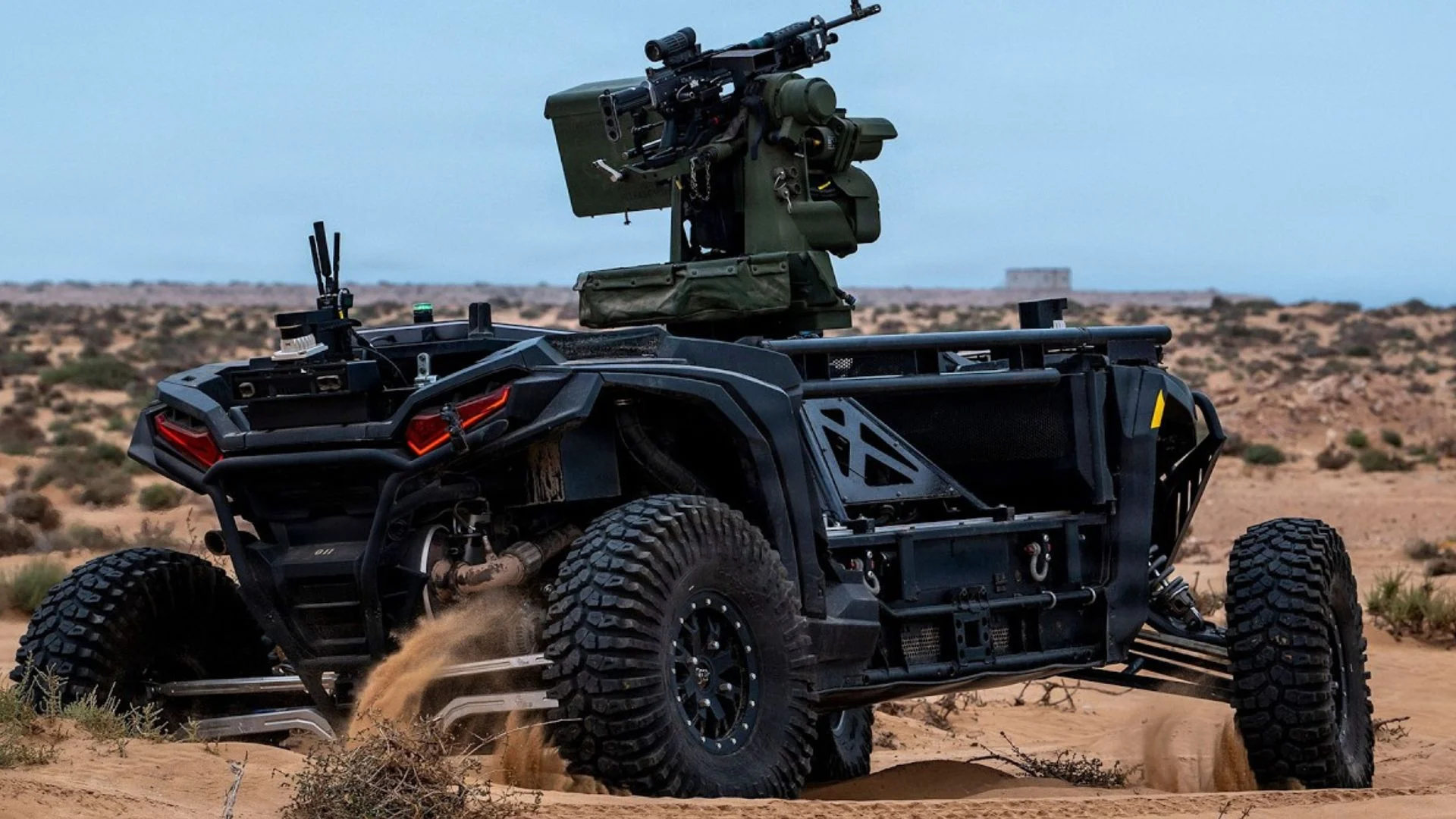
US Army airborne troops tested robotic ground systems and combat vehicles during a field exercise in Morocco as part of African Lion 26 on May 4, 2026.
The training involved the 173rd Airborne Brigade working alongside Moroccan forces in a simulated counterattack scenario.
The drill focused on how soldiers and robotic systems can operate together in modern combat conditions.
Unmanned ground vehicles moved ahead of infantry units to scout the area and identify possible threats before troops advanced. These systems supported infantry movement in a high-risk environment by providing early warnings and extending battlefield awareness. The main objective was to improve safety, coordination, and decision-making speed during operations.
READ ALSO: Kratos Picks Indiana for New Hypersonic Testing Facility Under Project Helios
Commanders used remote-controlled systems to assist planning and battlefield movement throughout the exercise. Robotics helped expand surveillance coverage and reduce soldiers’ direct exposure to potential enemy fire. The setup allowed risk to be shared between human forces and machines in contested conditions.
The drill also combined infantry operations with robotics and communication systems in coordinated maneuvers. These elements worked together to test how advanced technology can support traditional combat roles in fast-moving scenarios.
Human-Machine Teaming in Modern Warfare
The exercise highlighted a growing shift in how the US Army plans future combat operations. Military planners are increasingly focusing on human-machine teaming, where soldiers and robotic systems work side by side. This approach is designed to improve safety and efficiency in high-risk environments.
Robotic systems performed tasks such as reconnaissance, route checking, and forward support. These tasks are often dangerous for soldiers during active combat. By assigning them to machines, troops can focus on decision-making and movement.
The use of unmanned systems also helped commanders share operational risk between humans and machines. This concept is becoming more important in modern military planning. It allows forces to maintain mobility while reducing casualties in exposed areas.
Lessons from recent global conflicts, especially in Ukraine, influenced these developments. There, drones and small unmanned systems have changed how battles are observed and fought. The US.Army is adapting similar ideas into its own training and doctrine.
African Lion 26 and Future Battlefield Strategy
African Lion 26 is one of the largest US-led military exercises in Africa. It involves multiple partner nations and covers land, air, and sea operations. The inclusion of robotic systems shows how the exercise is evolving with new technology.
WATCH ALSO: Drum-shaped antenna reflector on NASA-ISRO NISAR satellite deployed
Moroccan forces also participated in the robotic counterattack drills. This cooperation reflected growing interest among allied nations in unmanned systems. It also helped improve coordination between partner militaries during complex operations.
US military planners see exercises like this as testing grounds for future combat ideas. The focus is on integrating drones, robotic ground vehicles, and digital command systems into one network. These systems are expected to work together on future battlefields.
The 173rd Airborne Brigade played a key role in testing these concepts during the drill. Airborne units often operate on fast-deployment missions with limited heavy equipment support. Robotic systems can help them stay effective in such conditions.
Expanding Role of Autonomous Combat Systems
The US Army is increasing its focus on autonomous systems as part of its modernization plans. These include robotic combat support tools, AI-assisted communication systems, and unmanned logistics platforms. The goal is to improve speed, awareness, and protection in combat zones.
During the Morocco exercise, unmanned ground vehicles supported tasks like route clearance and threat detection. They also assisted in communication and battlefield awareness for commanders. These functions helped improve coordination during the simulated assault.
Instead of being separate experiments, robotic systems are now being integrated into real field operations. This marks a shift from lab testing to using them in live exercises with troops. It helps the Army understand how these systems perform under real conditions.
READ ALSO: Microelectronics Research Gets AI Boost as Oak Ridge Labs Build Autonomous Science Systems
Military experts see this shift as part of a broader change in land warfare. Future conflicts are expected to involve mixed teams of soldiers, drones, and robotic systems. This combination aims to improve flexibility and reduce risk in combat situations.
The African Lion 26 exercise in Morocco demonstrated how robotics is becoming part of modern military training. US Army airborne troops and Moroccan forces worked together with unmanned systems in a live counterattack scenario. The drill showed how technology is reshaping battlefield roles and coordination.
As military forces continue to adapt, human-machine teaming is expected to grow in importance. The integration of robots into frontline operations may change how future missions are planned and executed. These developments point toward more connected and technology-driven combat formations in the years ahead.