
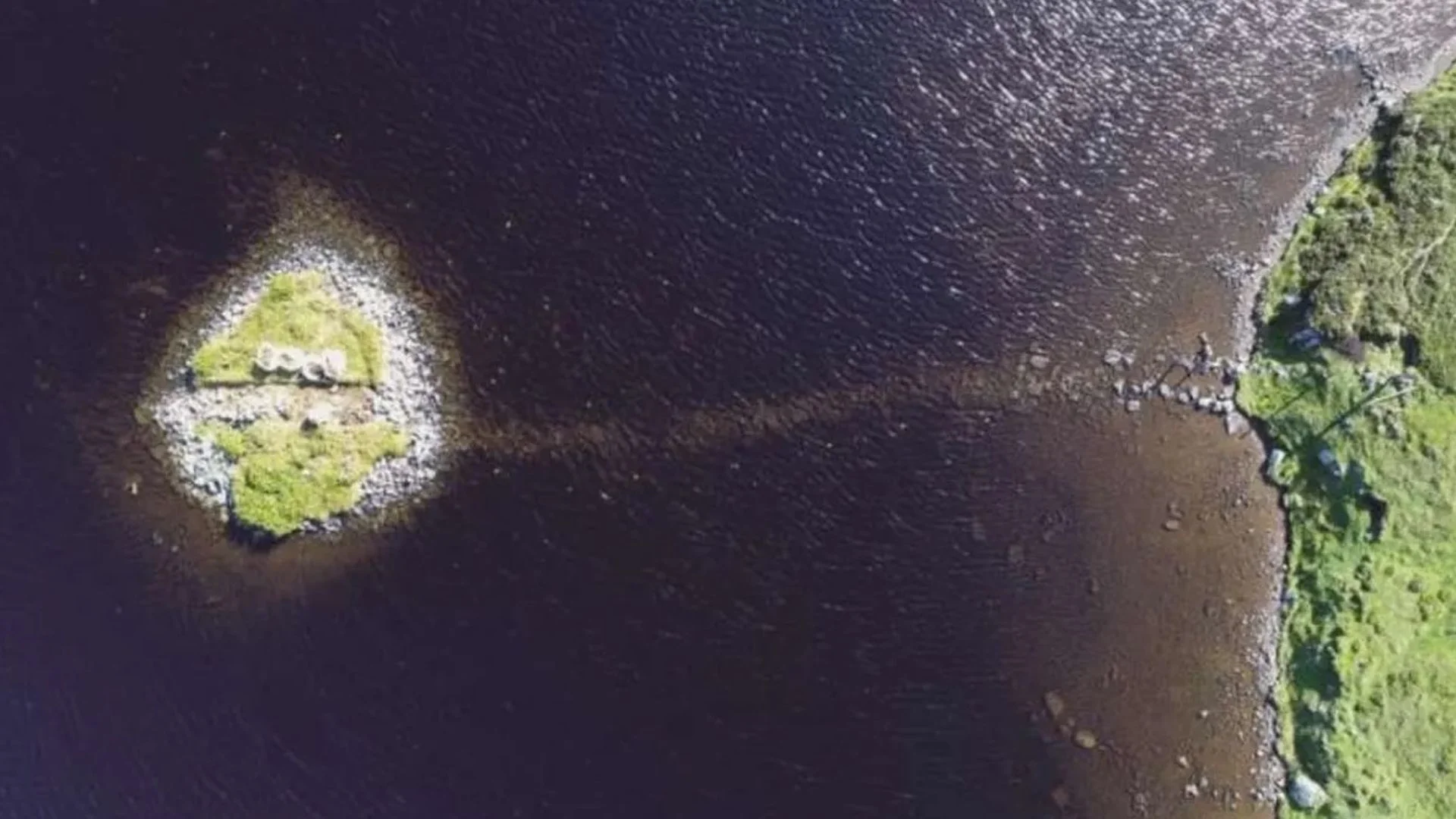
Archaeologists have uncovered new details about a prehistoric man-made island hidden beneath a Scottish loch, offering rare insight into early human engineering and social life.
The discovery comes from detailed excavation and advanced imaging of a crannog.
Researchers say the site dates back more than 5,000 years, making it older than some of the world’s most famous ancient monuments.
The research team, led by experts from the University of Southampton and the University of Reading, focused on a crannog located in Loch Bhorgastail on the Isle of Lewis.
READ ALSO: MetaEase Tool Spots Hidden Cloud Algorithm Failures Before Outages Hit Users Worldwide
What appears today as a stone-built island was found to rest on a much older wooden foundation beneath the water. This layered structure reveals a long history of construction, use, and adaptation over thousands of years.
Ancient Island Older than Stonehenge
The findings show that the crannog was first built during the Neolithic period, between 3800 and 3300 BC. This places it earlier than well-known structures such as Stonehenge, highlighting its historical importance. The earliest phase consisted of a circular wooden platform about 23 meters wide, supported by layers of timber and brushwood.
Over time, the island evolved through multiple construction phases. Around 2,000 years after its initial creation, people added more brushwood and stone during the Middle Bronze Age. Later, further modifications occurred during the Iron Age, indicating that the site remained significant across generations.
A stone causeway, now submerged, once connected the island to the nearby shore. This pathway suggests that the crannog was not isolated but actively used and accessed by people. Its design points to careful planning and considerable effort, indicating organized and capable communities.
WATCH ALSO: A robot was recently kicked and violently dragged to test its abilities
Clues from Pottery and Daily Life
Archaeologists discovered hundreds of pieces of Neolithic pottery scattered in the water around the island. These include fragments of jars and bowls, many of which still contain traces of food residue. These findings suggest that the site may have been used for communal activities such as cooking and feasting.
Researchers believe the crannog may have served as a gathering place rather than a permanent settlement. The presence of worked stone tools and food remains supports the idea of shared events or rituals. These discoveries help build a clearer picture of how early communities lived and interacted.
Dr. Stephanie Blankshein, an archaeologist involved in the project, explained that crannogs are well known across Scotland. She noted that many were previously thought to belong mainly to the Iron Age or later periods. However, newer evidence shows that some of these structures date back much earlier than once believed.
Technology and Hidden Details
A key part of the study involved stereophotogrammetry, a technique that combines multiple images to create detailed 3D models. This method enabled researchers to map both the visible island and the submerged structure as a single continuous feature. It provided a level of detail that traditional land or underwater surveys alone could not achieve.
READ ALSO: MQ-4C Triton Vanishes Mid-Flight After 50,000 Ft Drop, US Navy Confirms Crash
Photogrammetry works by taking many photographs from different angles and combining them using software. The result is a high-resolution digital model that can be studied closely. However, applying this technique in shallow water presents challenges, including poor visibility, moving sediments, and distorted light.
To overcome these issues, the team developed a new approach using two waterproof cameras fixed at a set distance apart. This stereo setup improved image accuracy by capturing overlapping views of the same area. A diver carefully guided the cameras through the water, using precise positioning similar to how drones operate in the air.
Professor Fraser Sturt, who led the project, said shallow water conditions have long frustrated archaeologists. He explained that the new method offers a practical and cost-effective solution for studying similar sites. The approach could now be used to explore other crannogs that remain hidden or poorly understood.
The research marks the first major output from the University of Southampton’s Coastal and Inland Waters Heritage Science Facility. It demonstrates how combining traditional excavation with modern technology can transform archaeological understanding. The study also opens new possibilities for investigating submerged heritage sites worldwide.
WATCH ALSO: SpaceX rocket sends 11,000 pounds of scientific investigations, cargo to space station
As researchers continue to study the Loch Bhorgastail crannog, they hope to uncover more details about its purpose and the people who built it. The findings already suggest that prehistoric communities were more complex and capable than previously thought.
Future work using these advanced techniques will reveal even more about early human innovation and life in ancient landscapes.