China has introduced its first embodied intelligent humanoid robot designed to take on dangerous industrial work.
The move signals a major step in bringing artificial intelligence out of labs and into real-world, high-risk environments.
The robot is built to handle tasks that often put human workers at risk. These include welding, inspection, rust removal, and surface treatment. By taking over such jobs, the system aims to improve safety and reduce accidents in industries like construction and chemical processing.
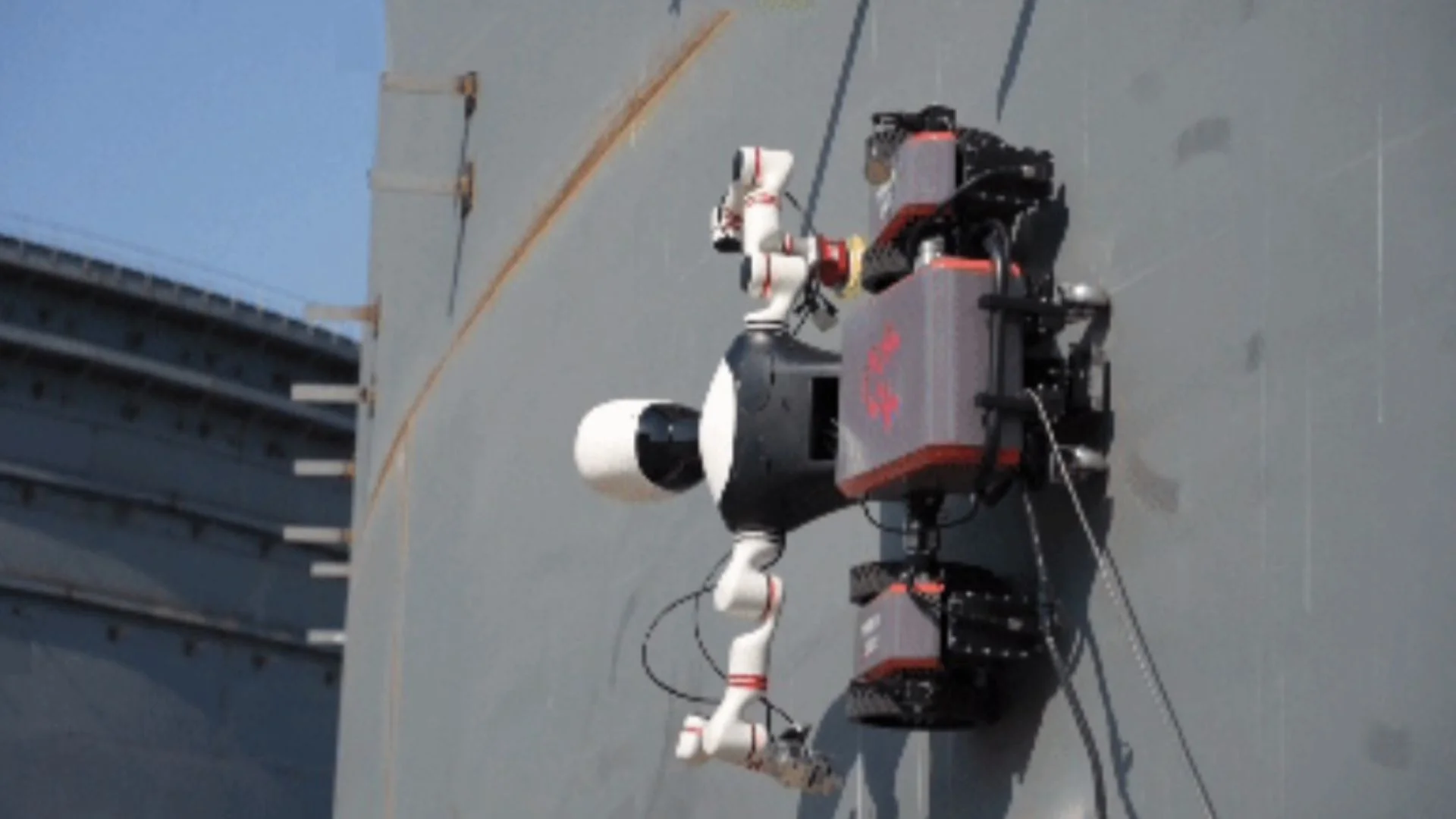
The robot was recently tested at a construction site involving a large chemical storage tank. During the demonstration, it moved smoothly across vertical metal surfaces. This was made possible by its wheeled base and magnetic system, which keep it firmly attached to walls while working.
READ ALSO: MirrorBot Reveals What Happens When Strangers Finally Look Up
Its design combines mobility with precision. The humanoid upper body has 15 degrees of freedom, allowing it to move flexibly and perform delicate operations. The robot also features two arms, allowing it to multitask. For example, it can grind a surface with one hand while welding with the other.
Weighing about 90 kilograms, the machine uses electromagnetic adhesion to stay attached to metal structures. Developers say it can carry extra weight without losing stability or movement efficiency. This makes it suitable for heavy-duty industrial tasks.
Unlike older wall-climbing robots built for a single function, this system is multi-purpose. By changing its tools, it can quickly switch between different jobs. These include non-destructive testing, coating, and other surface-related work.
The robot runs on a cable-powered system, which removes the need for batteries. This allows it to operate for longer hours without interruptions, thereby improving on-site productivity.
WATCH ALSO: Hyundai’s Atlas humanoid robot wins top honor for its advanced design and capabilities
Developers say the robot is powered by a large AI model trained on more than 100,000 hours of operational data. This enables it to learn from experience, adapt to complex environments, and improve its performance over time.
With this deployment, China is pushing forward the use of intelligent machines in industries where safety is a constant concern.