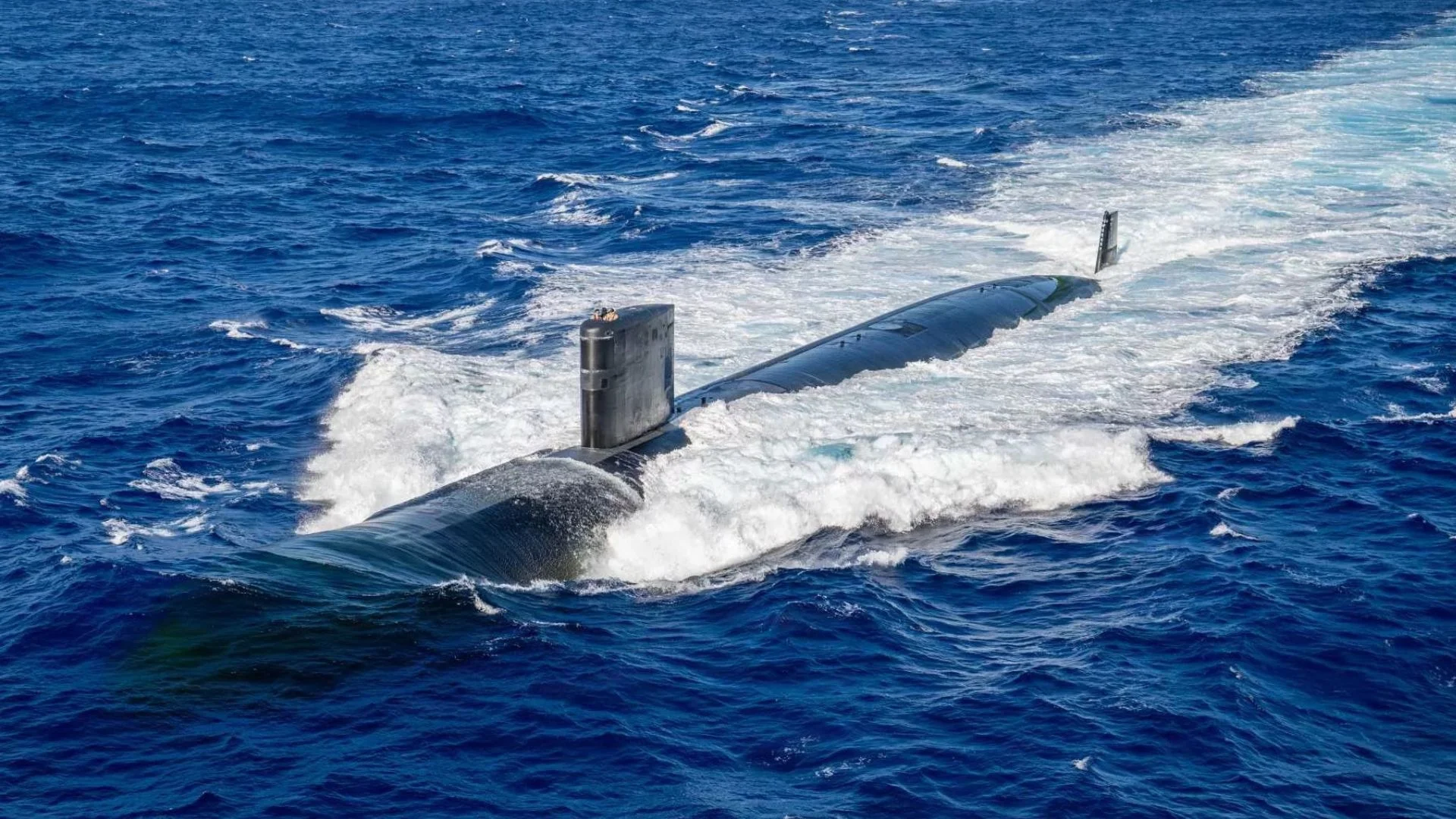
China has deployed a network of 42 research vessels and hundreds of underwater sensors to map the ocean floor. This multi-year campaign is building a detailed database to support submarine operations against the US Navy.
A recent Reuters report reveals that China has conducted a large-scale, multi-year campaign to map the seafloor across the Pacific, Indian, and Arctic oceans. The effort involves at least 42 tracked research vessels and hundreds of deployed sensors positioned near key naval corridors.
The campaign is carried out by civilian research institutes and vessels, but the data they collect is directly usable for military purposes. A key example is the Dong Fang Hong 3, a scientific research ship that conducted survey missions in the vicinity of Taiwan, Guam, and the Indian Ocean between 2024 and 2025.
READ ALSO: HMS Active Hits Water as Royal Navy’s Type 31 Fleet at Rapid Pace
Modern submarine warfare is heavily dependent on environmental knowledge. A submarine’s ability to hide or detect enemies relies on understanding the seabed terrain and water conditions, which affect sonar performance. Without precise local data, a submarine operates with significant uncertainty.
The ships use a method called parallel track navigation, moving in tight lines to create high-resolution maps of the seabed. Hundreds of fixed sensors, including buoys and subsea arrays, complement this by continuously measuring temperature, salinity, and currents. These sensors are placed near strategic chokepoints, such as the Malacca Strait and areas around Guam.
This data allows China to build detailed environmental models. Submarines can then use seabed features, such as trenches, for concealment. The models also identify acoustic shadow zones where enemy sonar is less effective, allowing submarines to hide more effectively.
WATCH ALSO: Top research robot integrated with new intelligence platform
The report notes that while the data collection is impressive, it is part of a larger system. The integration of civilian research with military goals follows directives from the Chinese Communist Party, ensuring that all collected information supports national defense objectives.
This capability acts as a major force multiplier. By reducing environmental uncertainty, China increases the effectiveness of its submarine fleet, which is expected to grow to 80 units by 2035. It also improves anti-submarine warfare, allowing Chinese forces to better detect and track US and allied submarines in contested waters.