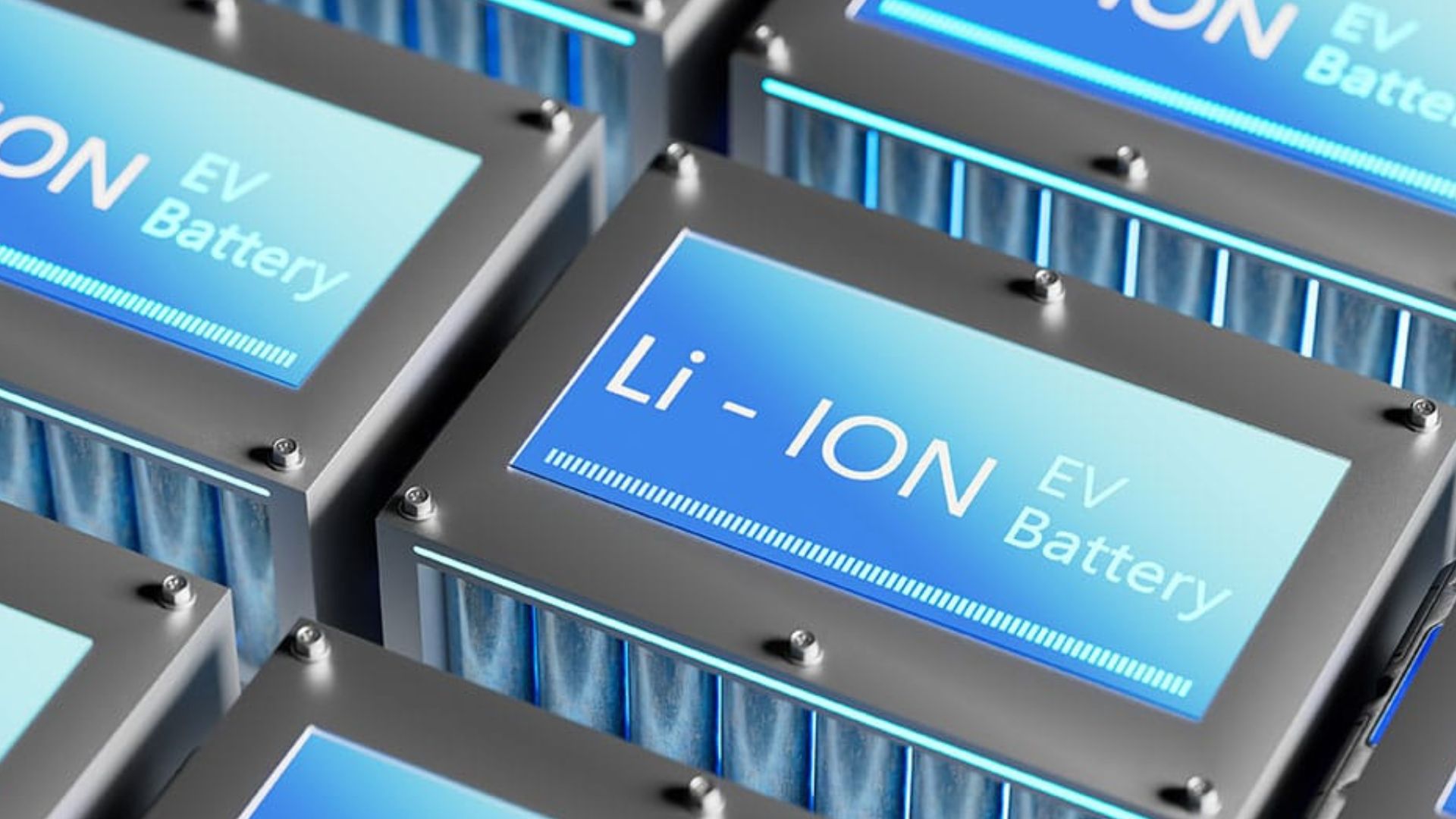
A team of researchers at the University of Surrey has developed a new lithium-ion battery design that could transform how long electric vehicles and portable devices run on a single charge.
The innovation focuses on improving the battery’s anode, the part that stores energy during charging.
Lithium-ion batteries are at the heart of modern technology. They power everything from smartphones and smartwatches to electric cars. But despite years of progress, one major limitation remains: how much energy they can store without losing stability over time.
READ ALSO: 850 US Tomahawk Cruise Missiles Fired: Is the Arsenal Under Pressure?
Today, most batteries use graphite as the anode material. While graphite is reliable, it has a relatively low storage capacity. Silicon, in contrast, can store nearly ten times more energy. However, it comes with a major drawback. Silicon expands when charged, causing it to crack and degrade quickly, and reducing battery life.
To address this challenge, the Surrey research team has introduced a new structure called “Vertically Integrated Silicon–Carbon Nanotube” (VISiCNT). The design combines the strengths of both silicon and carbon nanotubes in a unique way.
In this approach, scientists grow dense networks of carbon nanotubes directly onto copper foil, which is already widely used in battery manufacturing. These nanotubes act like a flexible framework. A thin layer of silicon is then added on top, allowing the structure to store high amounts of energy while managing expansion during charging.
Dr. Muhammad Ahmad, lead author of the study, explains the importance of the breakthrough. He says the new design allows silicon to reach its full storage potential without compromising durability. He adds that the battery delivers high capacity, supports faster charging, and remains stable over many cycles.
WATCH ALSO: Humanoid robot folds towel autonomously after observing human
Laboratory tests show impressive results. The new anode achieved energy storage levels above 3500 milliampere-hours per gram. This is close to silicon’s theoretical maximum and far higher than the 370 mAh/g offered by graphite in current batteries. Just as important, the battery maintained strong performance even after repeated charging cycles.
Another key advantage lies in how the technology is made. The carbon nanotubes are grown directly onto copper using a scalable process. This means manufacturers may not need to redesign existing production lines to adopt the new technology.
Professor Ravi Silva, who leads the research, highlights this practical benefit. He says the method allows easy integration into current manufacturing systems, making it a realistic option for large-scale use. He also points out that the technology could be used beyond electric vehicles, including in grid storage systems and small electronic devices.
READ ALSO: Japan’s Insect-Inspired Robot Tracks Odors Even with One Sensor
As the demand for better energy storage grows, innovations like VISiCNT could play a crucial role. Longer battery life, faster charging, and higher capacity are all essential for supporting cleaner energy and advanced technologies.
This new design does not just improve performance; it moves battery technology a step closer to meeting the demands of the future.