Researchers have discovered that tiny bubbles, when combined with low-frequency sound waves, can clean fruits and vegetables far more effectively than traditional methods.
The technique is gentle, chemical-free, and surprisingly powerful. The findings were published on March 25 in the journal Droplet.
Today, most fresh produce is cleaned using water, sometimes with bubbling systems or soft brushes. In many cases, chemicals such as chlorine, ozone, or peroxyacetic acid are added to kill germs and remove dirt. While effective, these methods can be harsh on delicate surfaces and may leave residues. Recognizing these challenges, the new method takes a different approach.
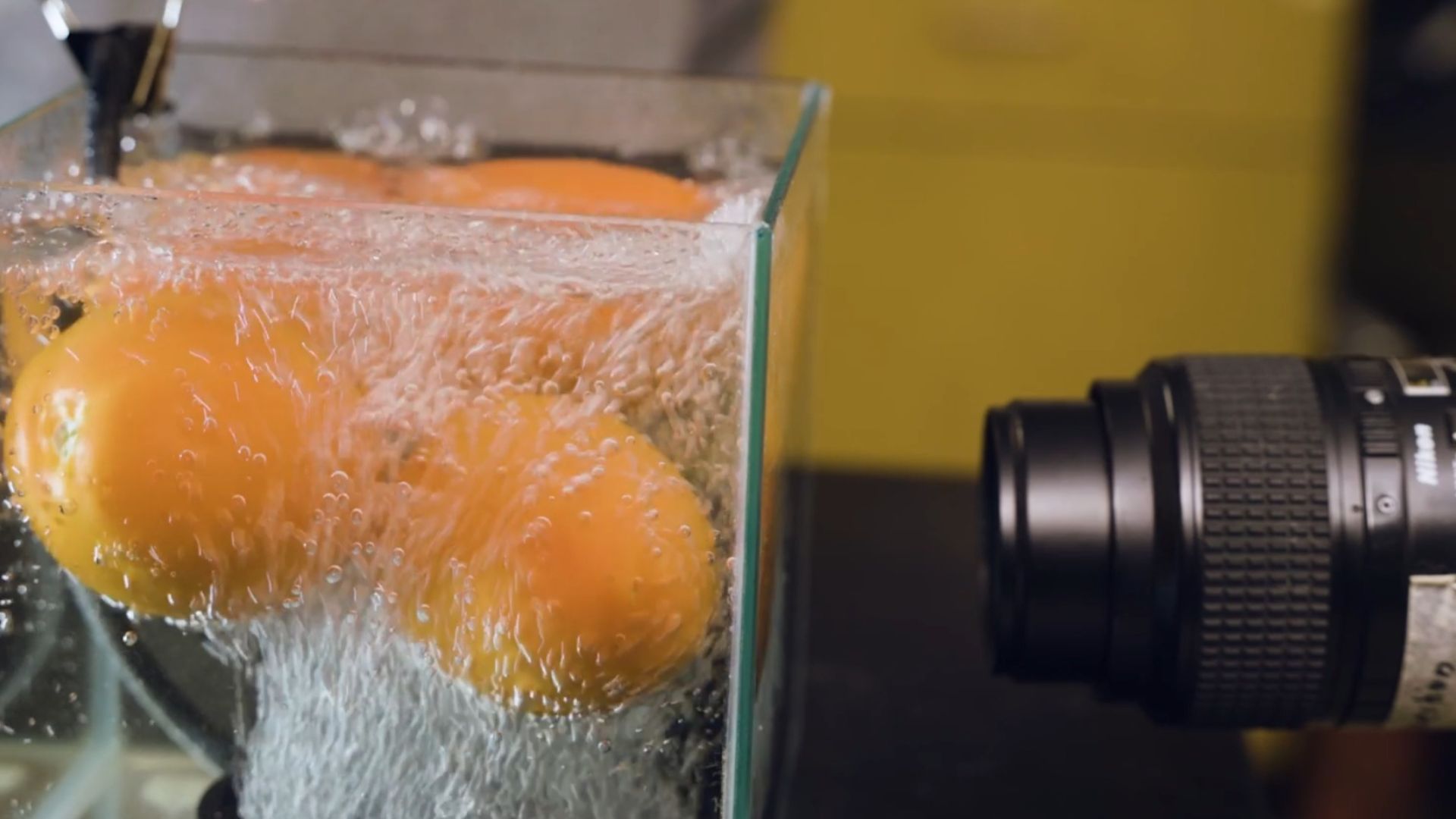
To demonstrate this new approach, scientists place vegetables in a water bath filled with bubbles. Then, they introduce a steady, low-frequency sound using an underwater speaker.
READ ALSO: Meteorite Hits Houston Home? Fireball and Loud Boom Spark Mystery
This sound interacts with the bubbles, causing them to vibrate in a special way known as resonance. These vibrating bubbles act like tiny scrubbers.
The study found that produce cleaned with sound-activated bubbles showed approximately 90% less dirt than produce washed with bubbles alone or with sound frequencies that did not create resonance.
Professor Sunny Jung, the senior author of the study, highlighted the importance of this discovery. He said, “We have very few good options for cleaning soft surfaces. This method gives us a gentle and effective alternative.”
Unlike brushes or rough cleaning tools, this technique does not damage the surface of fruits or vegetables. It also reduces the need for chemicals, making it safer for both people and the environment.
To understand why this works so well, consider the underlying science: it is simple but clever.
Bubbles of different sizes respond to different sound frequencies. Smaller bubbles vibrate at higher frequencies, while larger bubbles respond to lower ones. When the right frequency is used, the bubbles move in a stop-and-go motion. This motion creates a strong scrubbing effect that lifts dirt and contaminants away.
WATCH ALSO: 6-ton tiltrotor aircraft completes first flight in China
In the experiments, researchers tested the method using glass slides coated with protein-based artificial dirt. They generated bubbles by pumping air through needles and porous stones. The sound waves were delivered through an underwater speaker.
The results consistently showed better cleaning performance when the bubbles were tuned to the right frequency.
Yany Lin, the study’s first author, believes this is just the beginning. She said, “This is a newly discovered mechanism. It opens the door to many more uses, especially where gentle and clean surfaces are important.”
Beyond fruits and vegetables, the method could be used to clean medical instruments and delicate electronic components, such as semiconductors. These items require precise cleaning without scratches or contamination.
READ ALSO: A Supersonic Jet Without the Boom? NASA’s X-59 Just Moved One Step Closer
In addition to its cleaning power, the technique also uses less energy compared to some traditional cleaning systems, adding to its appeal.
While it may not replace all cleaning methods right away, this energy-efficient technique offers a promising, safer, and more sustainable future for cleaning.