Researchers at Georgia Tech have developed a new system that could significantly speed up how robots learn and perform tasks.
The breakthrough addresses a long-standing limitation in imitation learning, where robots have traditionally been constrained by the speed of human demonstrations, potentially opening the door to more practical, real-world applications.
The tool is called SAIL (Speed Adaptation for Imitation Learning). It allows robots to complete tasks three to four times faster than the people who taught them. The team published its findings on the arXiv preprint server.
READ ALSO: From Butterflies to Eagles: China’s New Drones Are Changing Aerial Tech Fast
The problem is simple. Imitation learning is effective for teaching robots complex tasks, such as folding laundry. But the robot cannot move faster than the demonstration it was shown. This makes the technology too slow for many real-world jobs.
Georgia Tech researchers solved this with a modular system. SAIL keeps movements smooth at high speeds. It adjusts speed based on the task and accounts for hardware delays. This helps the robot stay stable and precise even when moving fast.
Shreyas Kousik, assistant professor of mechanical engineering and a co-lead author, said speed is key for robots to work outside the lab.
The SAIL tool emerged from a collaborative, cross-campus effort that combined knowledge from mechanical engineering, robotics, and machine learning.
WATCH ALSO: Hyundai’s Atlas humanoid robot wins top honor for its advanced design and capabilities
The team behind this work includes Kousik, Benjamin Joffe—a senior research scientist at the Georgia Tech Research Institute—and Danfei Xu, an assistant professor in the School of Interactive Computing. They were joined by graduate students and researchers from several laboratories, contributing diverse expertise to the project.
SAIL tackles this problem using a modular design in which different components work in coordination to push performance beyond the limits of the training data. The system ensures smooth motion even at high speeds, maintains precise tracking, adapts its speed to the task’s complexity, and times actions to compensate for hardware delays. These features enable robots to operate quickly while remaining stable, well-coordinated, and accurate.
Joffe noted that while academic robotic systems have demonstrated remarkable capabilities, they often lack the speed and reliability required for real-world applications. He explained that the team set out to closely examine this gap and build a solution that addresses it comprehensively.
READ ALSO: Targets Weeds, Not Crops: China’s ‘Zero-Pollution’ Breakthrough Can Replace Chemical Herbicide
He further emphasized that the objective is not simply to increase speed, but to develop robots that can intelligently determine when moving faster is beneficial and when it might lead to errors.
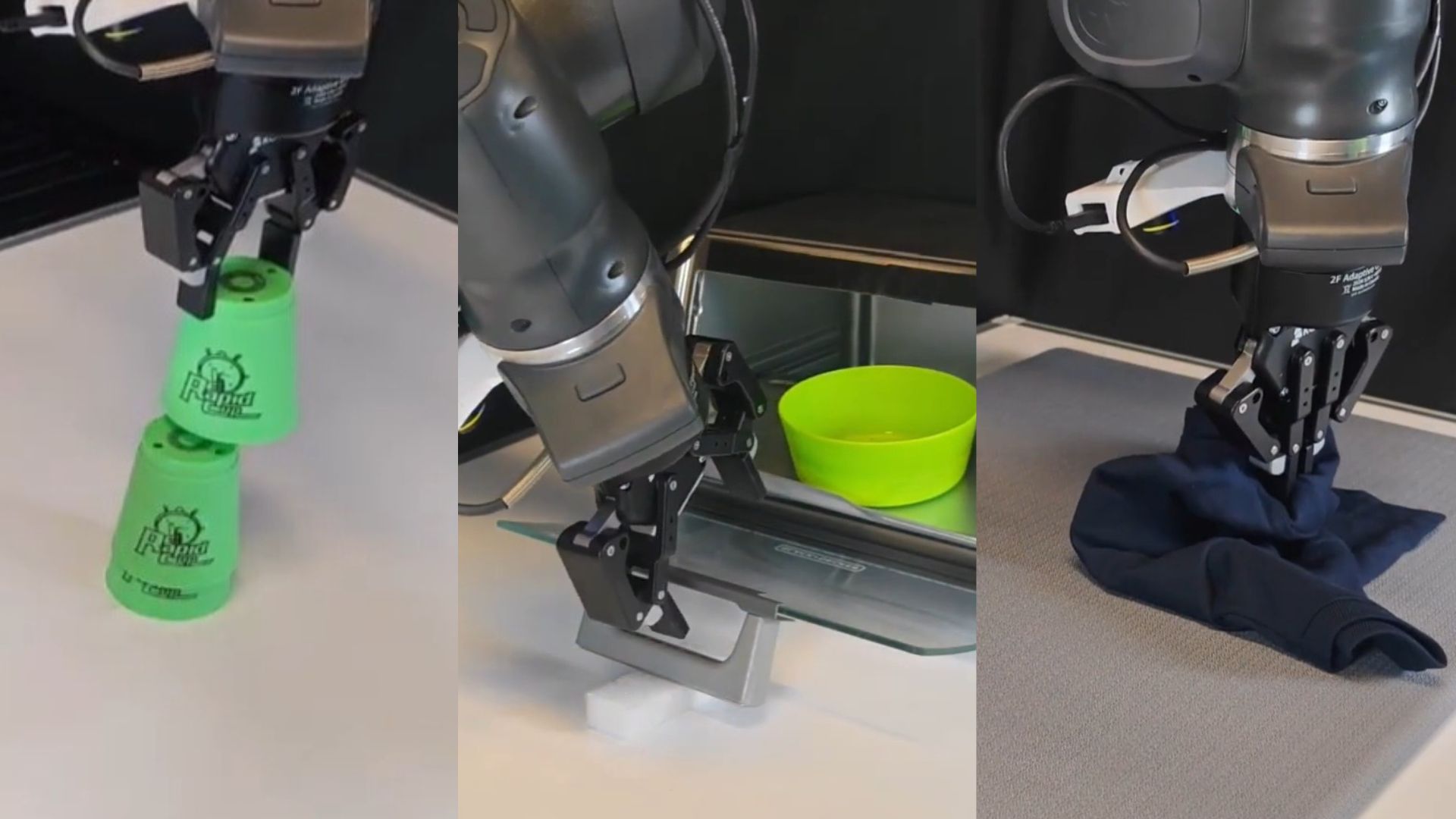
The team tested SAIL on 12 tasks. These included stacking cups, packing food, and wiping a whiteboard.
One task showed a clear limit. The robot struggled to wipe a whiteboard at high speed because it had to maintain constant contact with the surface. The researchers noted that sometimes slowing down is the right choice.
This research matters because it bridges the gap between lab robots and practical use. SAIL does not make robots universally smart on its own. But it proves that learned skills can be accelerated safely and reliably.