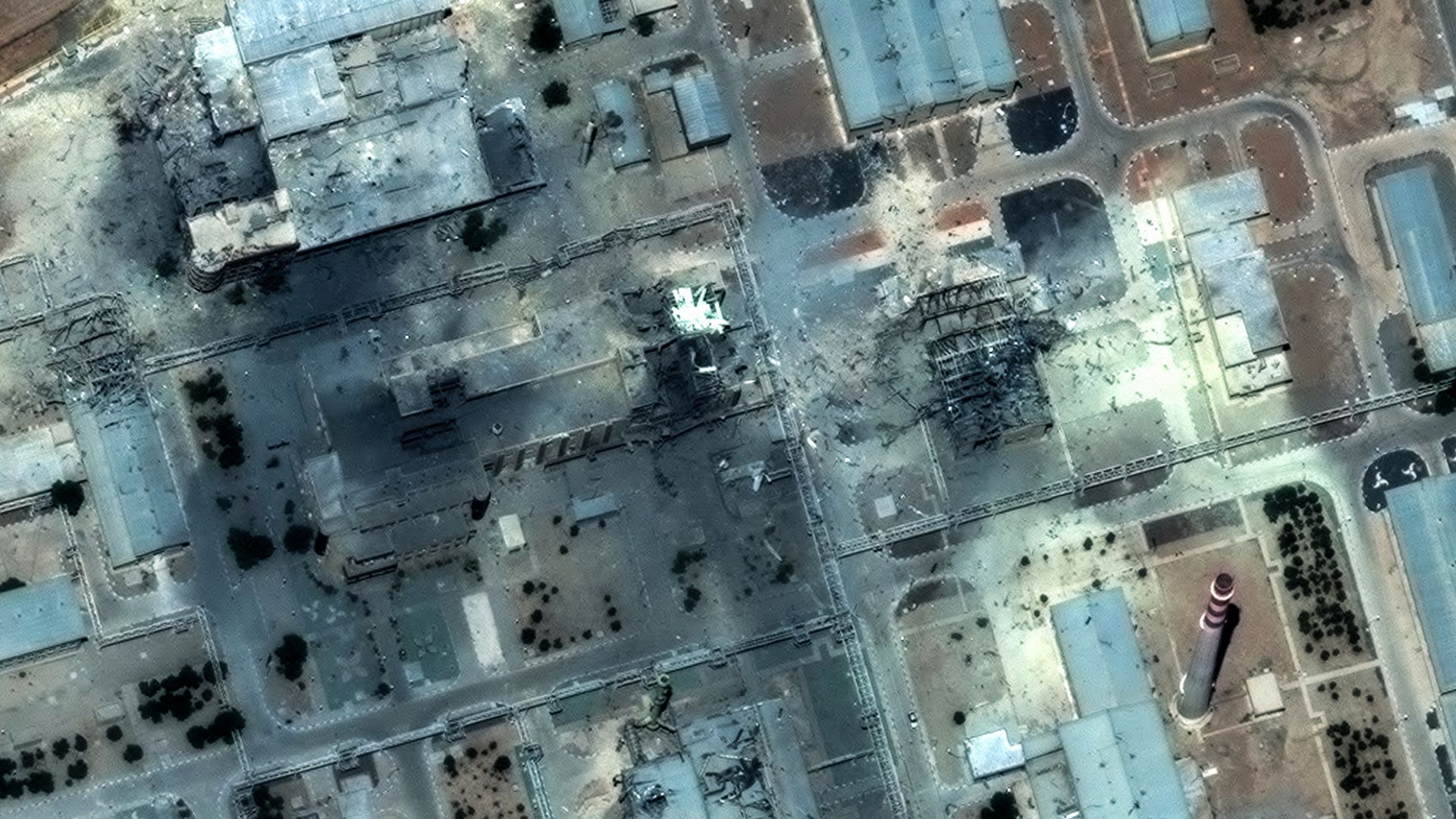
Satellite imagery has revealed a wave of reconstruction and fortification work at several of Iran’s most sensitive military and nuclear facilities.
It intensifies scrutiny as Washington weighs military options and urges Tehran to return to the negotiating table.
According to analysts, the images show new concrete shielding, buried tunnel entrances, reinforced mountain facilities, and repair efforts at missile bases. Those are the same bases that were previously damaged in last year’s confrontation with Israel and the US.
The developments come as US officials publicly warn that military action remains on the table if diplomatic efforts over Iran’s nuclear programme collapse.
READ ALSO: https://modernmechanics24.com/post/spacexs-stargaze-eyes-earths-orbit/
“Iran would be very wise to make a deal with President Trump and with his administration,” White House press secretary Karoline Leavitt said. She underscored the administration’s dual-track approach of diplomacy and deterrence.
Military Build-Up
The revelations coincide with a visible US military build-up in the Middle East.
According to US officials, Washington currently has 13 warships deployed in the region. It includes the aircraft carrier USS Abraham Lincoln, nine destroyers, and three littoral combat ships.
Another carrier strike group led by the USS Gerald R. Ford, the world’s largest aircraft carrier, is en route to the Middle East from the Atlantic. The vessel is accompanied by three destroyers.
The US President has publicly suggested that military action remains a possibility. Reportedly, the Pentagon has prepared a range of strike options, though no final decision has been announced.
Against that backdrop, satellite photos are offering rare insight into Iran’s defensive preparations.
WATCH ALSO: https://modernmechanics24.com/post/happy-new-year-2026-from-iss/
Parchin: A Concrete Shield Over Sensitive Site
About 30 kilometres southeast of Tehran lies the Parchin military complex. It is considered one of Iran’s most sensitive defence facilities. Western intelligence agencies have previously alleged that explosive tests linked to nuclear weapons research were conducted there more than two decades ago. Tehran has consistently denied seeking atomic weapons.
Israel reportedly struck the site in October 2024. Satellite images taken shortly before and after that attack show extensive damage to a rectangular building within the complex.
However, imagery from late 2024 and early 2025 shows steady reconstruction. By November, the skeletal frame of a new large structure with adjacent smaller buildings will be in place. Weeks later, it appeared that a metallic roof covered the facility.
By mid-December, the structure was partially concealed. And by mid-February, it was no longer visible from above.
The Washington-based Institute for Science and International Security (ISIS) reported in January that Iran had constructed a “concrete sarcophagus” over the newly built facility. It is identified as Taleghan 2.
READ ALSO: https://modernmechanics24.com/post/rare-earths-redrawing-global-power-map/
Earlier imagery, ISIS said, showed a long cylindrical chamber inside the building. It is possibly a high-explosives containment vessel.
“High-explosive containment vessels are essential to the development of nuclear weapons,” it stated, noting that such equipment can also be used for conventional military applications.
William Goodhind, a forensic imagery analyst with Contested Ground, observed that the new roof blended with the surrounding terrain. “It has most likely been covered with dirt to obscure the concrete colour,” he said.
David Albright, founder of ISIS, wrote on social media that Iran had been busy burying the new Taleghan 2 facility, adding that more soil was being piled on. He warned that the site may soon become a fully unrecognizable bunker, providing significant protection from aerial strikes.
Isfahan: Tunnel Entrances Buried
The Isfahan nuclear complex is one of three uranium-enrichment facilities targeted by the US in June. It has also seen significant changes.
In addition to its fuel-cycle infrastructure, Isfahan includes underground storage areas where much of Iran’s enriched uranium stockpile has been kept.
Satellite images from late January show that Iran began backfilling two tunnel entrances with soil. By early February, a third entrance had also been buried. According to ISIS, all access points to the tunnel complex were completely sealed by February 10.
Analysts say the move serves multiple defensive purposes. Backfilling tunnel entrances could dampen the impact of air strikes. It could also complicate any potential ground raid aimed at seizing or destroying highly enriched uranium.
WATCH ALSO: https://modernmechanics24.com/post/cartoon-robot-learns-kitchen-chores-2/
Near Natanz: Fortifying “Pickaxe Mountain”
Activity has also intensified near the Natanz nuclear facility. It is home to two of Iran’s primary uranium enrichment plants.
ISIS reports that satellite images show efforts to harden and defensively strengthen two tunnel entrances at a mountain complex roughly two kilometres from Natanz, known informally as Pickaxe Mountain.
Imagery since February 10 reveals steady movement of dump trucks, cement mixers, and other heavy equipment in and around the site. The work suggests reinforcing underground infrastructure to withstand potential bombardment.
Iran has not publicly clarified its plans for the facility. But the scale and tempo of construction point to a strategic effort to make critical assets more resilient.
Missile Bases: Repair and Recovery
Beyond nuclear facilities, satellite imagery shows repair efforts at missile installations damaged in last year’s conflict.
Shiraz is identified by Israel-based research group Alma as one of 25 primary sites capable of launching medium-range ballistic missiles. South of this base, reconstruction of the logistics and likely command compound. Comparisons between images taken in July 2025 and late January indicate clearance and rebuilding efforts.
“The key takeaway is that the compound has yet to return to its full operational capacity from prior to the air strikes,” Goodhind said.
READ ALSO: https://modernmechanics24.com/post/unitree-robotics-20000-robot-2026-gala/
Further north, near the city of Qom, another missile base sustained moderate above-ground damage during the conflict. Satellite comparisons between July 2025 and early February show a newly installed roof over a previously damaged structure. Repairs appear to have begun in mid-November and were likely completed within 10 days.
The latest imagery shows the fragile state of negotiations between Tehran and Washington. The Trump administration has repeatedly insisted that diplomacy remains the preferred path but has also warned of severe consequences if talks fail.
Iran maintains that its nuclear programme is peaceful and intended for civilian energy and research purposes. However, the visible fortification of sensitive sites suggests Tehran is preparing for the possibility of further strikes.
As US naval forces consolidate in the region and military planning accelerates, the satellite evidence paints a picture of a country digging in.