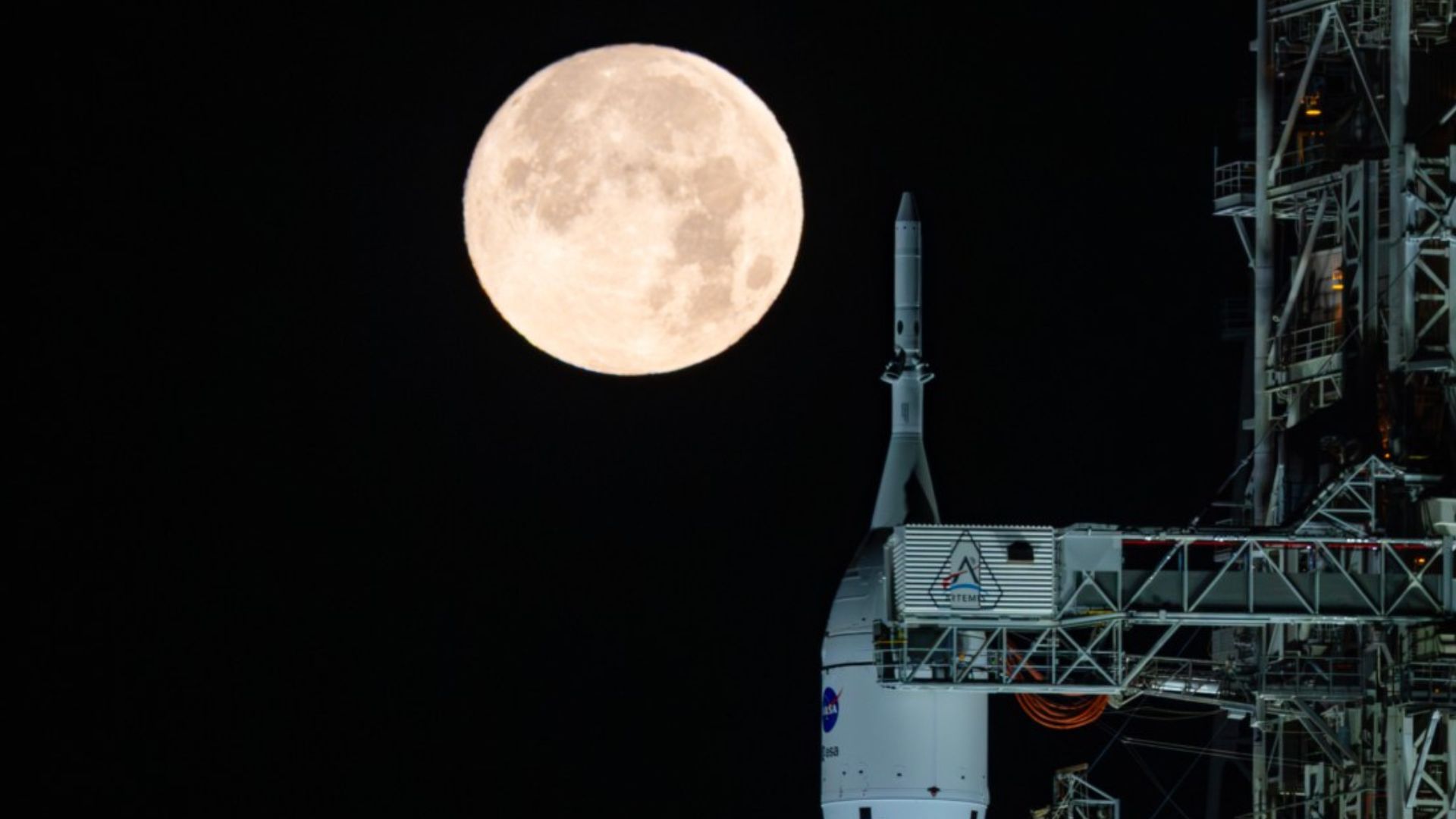
NASA is preparing for a critical milestone in its return-to-the-Moon campaign, targeting February 19 as the next tanking day for the second wet dress rehearsal (WDR) of Artemis II.
The rehearsal marks a decisive step toward launching astronauts around the Moon for the first time in more than five decades.
The test will take place at Kennedy Space Center. The launch teams will simulate a full countdown and fueling sequence for the powerful Space Launch System (SLS) rocket and the Orion spacecraft.
This rehearsal follows a partial fueling test conducted on February 12. During that operation, teams detected a suspected issue with a filter in ground support equipment that may have reduced the flow of liquid hydrogen.
READ ALSO: https://modernmechanics24.com/post/auto-deploying-umbrella-opens-in-rain/
Over the weekend, engineers replaced the filter, reconnected the fueling line, and restored environmental conditions at the launch pad. The earlier test provided sufficient data for mission managers to proceed with another wet dress rehearsal attempt this week.
According to NASA officials, the replacement work positions the team to conduct a full-scale rehearsal that closely mirrors launch-day conditions.
What the Wet Dress Rehearsal Will Test
The wet dress rehearsal will run launch and support teams through nearly 50 hours of integrated operations.
The process includes loading cryogenic liquid hydrogen and liquid oxygen into the SLS rocket’s tanks. It will conduct a full countdown sequence, practice recycling procedures during the countdown, and ultimately drain the tanks to simulate a scrubbed launch.
Launch controllers already reported to their consoles at the Launch Control Center at 6:40 p.m. EST on February 17 to begin the countdown. The simulated launch time is set for 8:30 p.m. EST on February 19, within a four-hour window.
The Artemis II astronaut crew will not participate directly in the rehearsal. Instead, a closeout team will practice Orion hatch operations at the pad, ensuring readiness for crewed flight procedures.
During the test, operators will execute two terminal countdown sequences. This is basically the final ten minutes before liftoff. Controllers will pause the clock at T-1 minute 30 seconds, hold for several minutes, then resume until T-33 secondsbefore pausing again.
After recycling the clock back to T-10 minutes, they will repeat the sequence to just under T-30 seconds. This rehearsal simulates real-world launch-day contingencies, including weather delays or technical holds.
WATCH ALSO: https://modernmechanics24.com/post/china-humanoid-robot-plays-basketball/
Earliest Launch Opportunity in 2026
NASA has not announced an official launch date for Artemis II. The agency plans to set one only after a successful rehearsal and a thorough review of the collected data.
However, officials hope to launch on March 6 as the earliest possible date, allowing time for a second rehearsal, data analysis, and final launch preparations.
The mission is officially scheduled for no later than April 2026, with the first launch window opening on February 6, 2026.
A 24/7 live stream of the rocket at the pad remains available online. NASA will also provide additional live coverage and updates during fueling operations.
First Crewed Artemis Mission
Artemis II builds on the success of Artemis I, which flew an uncrewed Orion spacecraft around the Moon in 2022. The upcoming mission will mark NASA’s first crewed flight aboard the SLS rocket and Orion capsule.
Four astronauts will fly the 10-day mission: NASA astronauts Reid Wiseman, Victor Glover, Christina Koch, and Jeremy Hansen of the Canadian Space Agency.
The spacecraft will orbit Earth several times before performing a translunar injection burn. Orion will travel on a four-day journey toward the Moon, fly around it, and return to Earth on a free-return trajectory. This will be the first such crewed mission since the Apollo era.
READ ALSO: https://modernmechanics24.com/post/robotics-firms-build-like-robot-hands/
European Service Module Powers Deep Space Flight
A key component of Artemis II is the European Service Module, built by the European Space Agency (ESA). The module provides propulsion, power, life support consumables, and thermal control for Orion.
Weighing approximately 13,500 kilograms at launch, the service module carries 8,600 kilograms of propellant, 240 kilograms of drinking water, 30 kilograms of nitrogen, and 90 kilograms of oxygen. It also offers up to 0.57 cubic meters of payload volume.
After Orion reaches Earth orbit, the SLS upper stage will boost the spacecraft into a highly elliptical orbit. The crew will verify systems and conduct manual proximity operations using the service module’s engines. This is important for future Artemis missions and the planned lunar Gateway outpost.
The spacecraft will travel nearly 7,500 kilometers beyond the Moon before looping around and returning safely to Earth.
WATCH ALSO: https://modernmechanics24.com/post/cartoon-robot-learns-kitchen-chores-2/
Clock Ticking Towards New Lunar Era
With Artemis II, NASA aims to validate the systems and procedures required for sustained human exploration beyond low Earth orbit. The mission represents a bridge between uncrewed testing and future lunar landings under the Artemis program.
After the wet dress rehearsal is completed as planned and data reviews confirm readiness, Artemis II will move one step closer to carrying astronauts around the Moon. It will write a new chapter of human spaceflight more than 50 years after humanity last ventured beyond Earth orbit.