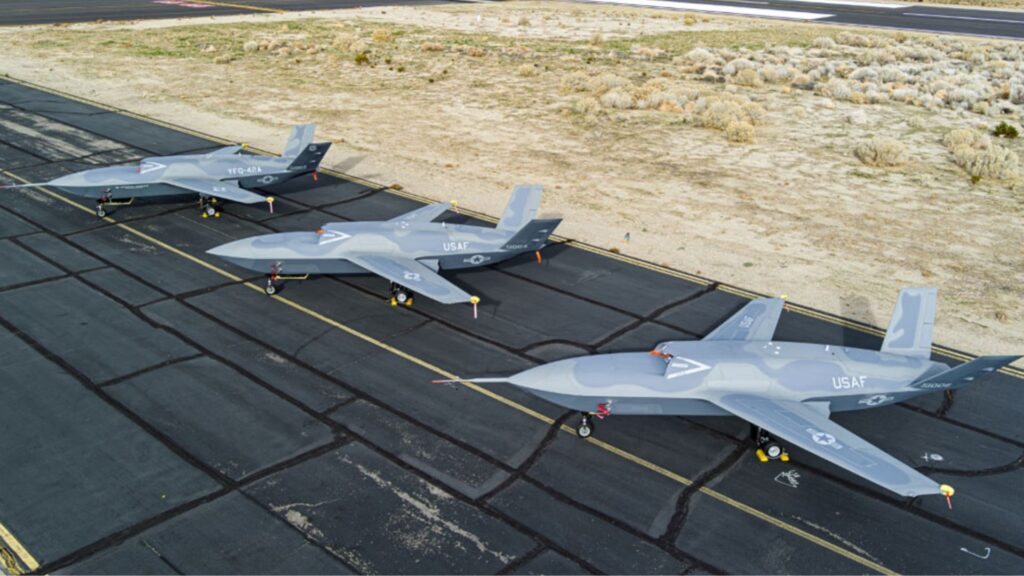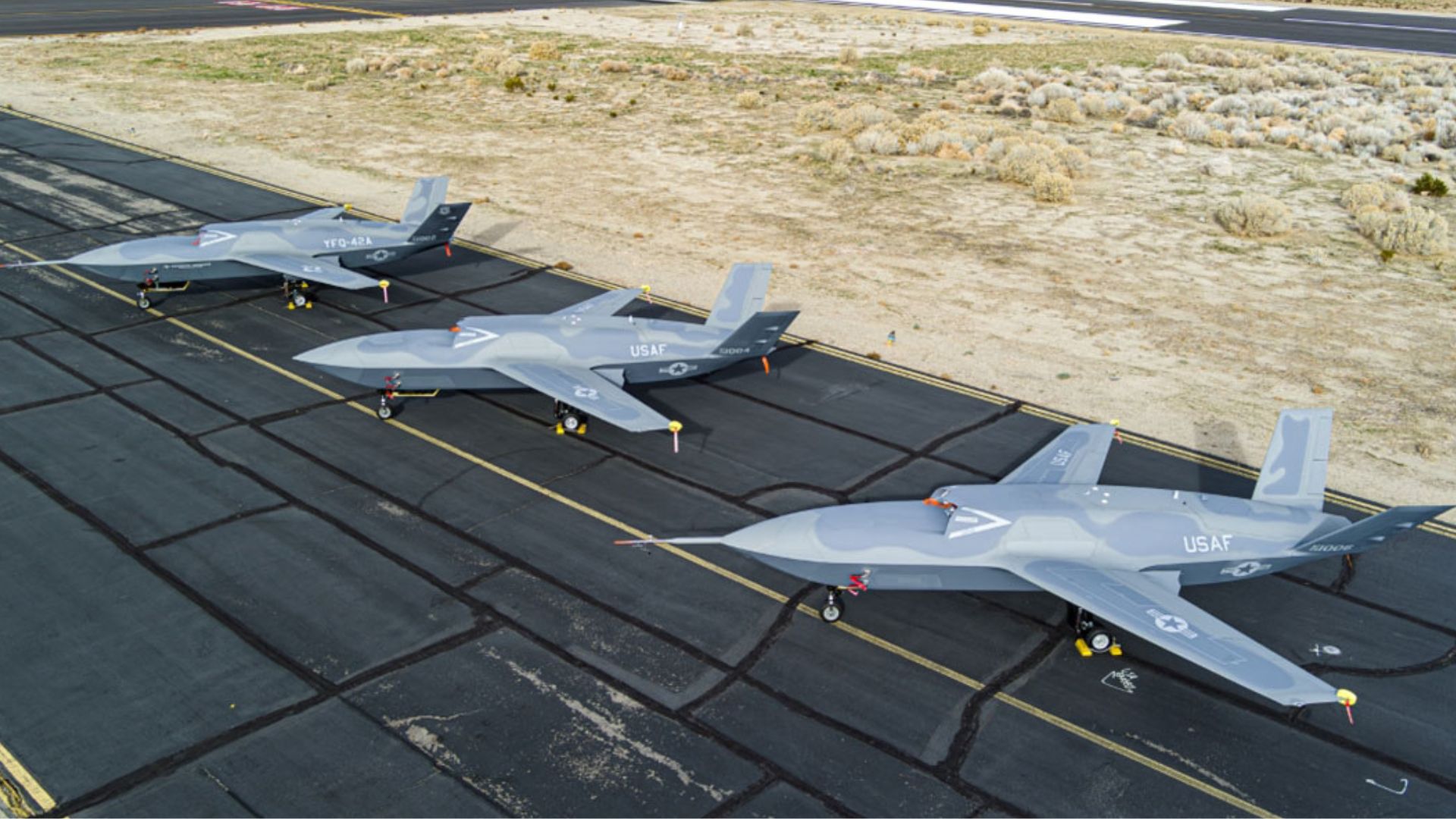
General Atomics Aeronautical Systems, Inc. (GA-ASI) successfully integrated third-party mission autonomy software into its YFQ-42A Collaborative Combat Aircraft (CCA) and conducted its first semi-autonomous airborne mission.
In autonomous military aviation, this marks a significant step forward in the US Air Force’s effort to deploy advanced uncrewed fighter jets capable of operating alongside human pilots.
During the test, the YFQ-42A flew for more than four hours in semi-autonomous mode. The aircraft used mission-autonomy software called Sidekick, developed by Collins Aerospace, a business unit of RTX.
The Sidekick software was integrated into the YFQ-42A’s flight control system using the Autonomy Government Reference Architecture (A-GRA). This enabled secure, reliable communication between the aircraft’s systems and the autonomy software.
READ ALSO: https://modernmechanics24.com/post/ariane-64-historic-europe-space-launch/
Autonomy mode was activated through a Ground Station Console. Once enabled, a human operator on the ground sent commands directly to the aircraft. The YFQ-42A responded accurately and executed the assigned tasks without interruption.
David R. Alexander, President of GA-ASI, said, “We are excited to collaborate with Collins to deliver enhanced autonomous mission solutions. The integration of Sidekick with our YFQ-42A demonstrates our commitment to innovation and operational excellence in unmanned aircraft technology.”
Ryan Bunge, Vice President at Collins Aerospace, said, “The autonomy capabilities showcased in this flight highlight our dedicated investment to advance collaborative mission autonomy. The rapid integration of Sidekick onto this General Atomics platform and its immediate ability to support a broad spectrum of combat-relevant behaviors underscores the strength and flexibility of our open systems approach.”
The YFQ-42A is designed and developed by General Atomics Aeronautical Systems, Inc.(GA-ASI) for the US Air Force under the Collaborative Combat Aircraft program. The aircraft is part of a new generation of uncrewed fighter jets that can support manned aircraft in combat missions.
WATCH ALSO: https://modernmechanics24.com/post/humanoid-robot-towel-task/
GA-ASI has decades of experience in unmanned aviation. The company began flying its weaponized MQ-20 Avenger jet in 2008. Since then, it has continued investing in autonomy research and testing.
In 2024, GA-ASI flew the XQ-67A Off-Board Sensing Station jet in collaboration with the Air Force Research Laboratory. The company also conducted advanced manned-unmanned teaming tests involving the MQ-20 and an F-22 Raptor.
The successful mission autonomy test shows that uncrewed fighter jets can safely perform complex operations under human supervision during next-generation warfare.
By using open system architecture like A-GRA, the YFQ-42A can quickly integrate new autonomy software. This reduces development time and increases mission flexibility.
READ ALSO: https://modernmechanics24.com/post/study-human-chin-evolution-accident/
The milestone strengthens the US Air Force’s push toward collaborative combat aircraft. It also reinforces GA-ASI’s position as a leader in uncrewed military aviation and mission autonomy technology.