USA Rare Earth, Pasqal and Riven Systems have announced a strategic partnership to develop new technology for separating rare earth elements. The project will combine quantum machine learning, AI and automated laboratory testing to find molecules that can separate rare earths more efficiently.
The three companies aim to develop a faster way to discover chemical compounds used in rare earth processing. The goal is to support smaller processing facilities that could require less equipment, energy and raw materials.
The partnership focuses on finding new separation molecules, also called extractants. These molecules are used to separate individual rare earth elements from mixed materials.
READ ALSO: https://modernmechanics24.com/post/iperionx-continuous-titanium-system/
The companies will study whether quantum machine learning can help identify extractants that work better than existing options. The project is expected to focus on materials that USA Rare Earth plans to process, including mixed rare earth carbonates and recycled material from magnet manufacturing.
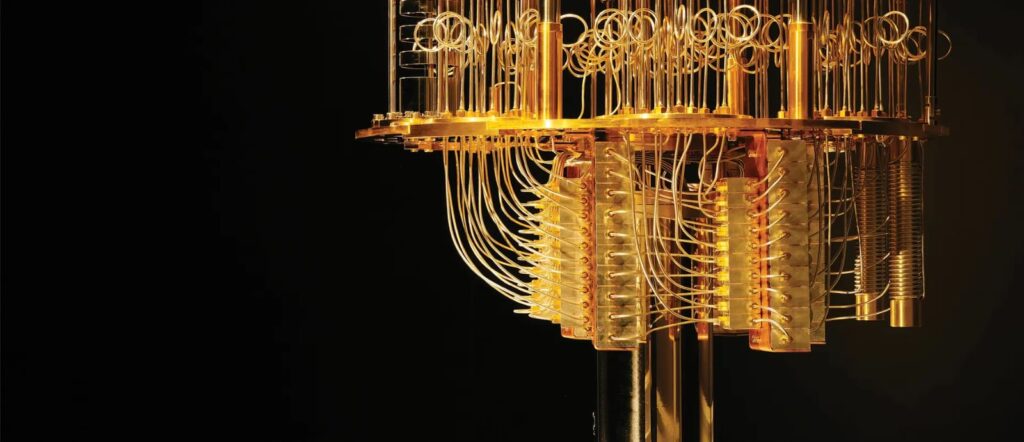
The project brings together USA Rare Earth, Pasqal and Riven Systems. USA Rare Earth provides expertise in rare earth processing, while Pasqal brings its neutral-atom quantum computing systems.
Riven Systems will provide its automated laboratory platform. According to GlobeNewswire, the lab can run thousands of experiments and collect chemical data that can then be used to train machine learning models.
A major challenge in rare earth processing is separating mixed rare earth materials into individual elements. This is especially important for materials such as dysprosium, terbium and yttrium, which are used in several advanced technologies.
Finding suitable chemical extractants can take years of testing. The companies want to reduce this trial-and-error process by combining automated experiments with machine learning and quantum computing.
Riven’s self-driving laboratory is expected to carry out thousands of automated experiments. The results will create a dataset showing how different chemical extractants interact with individual rare earth elements.
Pasqal will use its neutral-atom quantum processing unit to compare quantum machine learning models with models based on classical computers. The results could help USA Rare Earth identify promising extractants for its processing systems.
WATCH ALSO: https://modernmechanics24.com/post/airbus-a350f-test-ahead-first-flight/
The technology will be tailored to USA Rare Earth’s expected feedstocks. These include material from the Round Top project in Texas, third-party mixed rare earth carbonates and recycled magnet-making material known as swarf.
If successful, better extractants could reduce the number of processing stages and the amount of equipment needed. The companies also expect the approach could reduce raw material use, energy demand and the environmental impact of future processing facilities.
The partnership is still at the development stage. The companies have not yet demonstrated a commercial-scale separation process using a newly discovered extractant.
Further testing will be needed to confirm whether quantum machine learning provides practical benefits over conventional computing and whether promising molecules perform reliably in real processing conditions.
The partners eventually envision an end-to-end discovery system. A quantum machine learning model would identify promising extractants, Riven’s automated lab would test them, and USA Rare Earth would validate the strongest candidates at its R&D facility in Wheat Ridge, Colorado.
This approach could connect advanced computing with real chemical experiments. If the system works at larger scale, it could provide another tool for developing more efficient rare earth processing methods in the United States and other Western markets.