The US is preparing to send a new anti-drone system called Merops to the Middle East after it proved effective against Russian drones in Ukraine, according to two US officials’ statements to the Associated Press.
The system is designed specifically to counter small unmanned aerial vehicles (UAVs), including the Iranian-made Shahed drones that have become a growing threat in the region.
What the Merops System Does
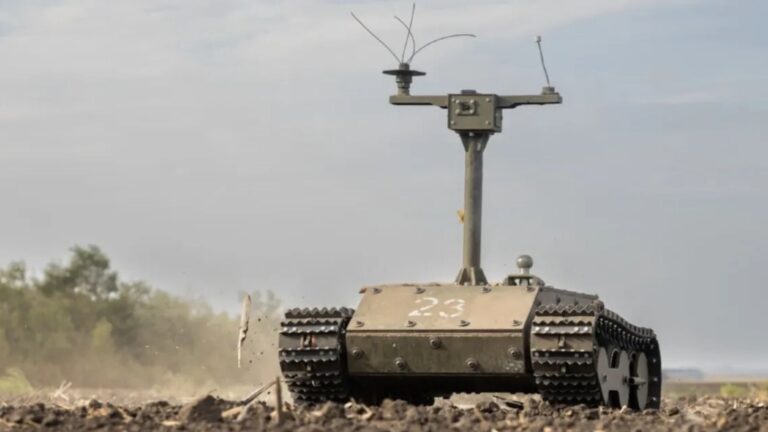
Merops uses a unique drone-against-drone approach. Instead of firing expensive missiles, the system launches its own small drones to intercept and disable hostile drones in the air.
The system has several key features:
AI-guided navigation: It uses artificial intelligence to track and chase hostile drones even if satellite signals or communications are jammed.
Mobile deployment: The entire system is compact and can fit in the back of a midsize pickup truck.
Drone detection capability: It can identify small drones that are often difficult to detect on traditional radar systems.
Low-cost interception: It avoids using costly interceptor missiles to stop relatively cheap drones.
This cost advantage is important. Iranian drones typically cost less than $50,000, while missile interceptors such as Patriot systems can cost hundreds of thousands of dollars per shot.
Why the US Needs New Defense
US forces in the Middle East already use Patriot and THAAD missile defense systems to stop ballistic missiles. However, these systems are not designed primarily to deal with large swarms of small drones.
READ ALSO: https://modernmechanics24.com/post/ursa-major-hadley-h13-engine-for-flight/
Lawmakers say this has created a major challenge.
Rep. Jim Himes, the top Democrat on the House Intelligence Committee, highlighted the issue. He said, “We’re pretty good at taking missiles down. What is much more problematic for us is the huge inventory of Iranian drones.”
Himes added that the problem comes down to simple economics. He said, “It’s really expensive to take down a cheap drone, a giant missile going after a tiny drone.”
The Merops system has already been used in NATO countries like Poland and Romania, where Russian drones repeatedly crossed into NATO airspace.
The US military also learned valuable lessons from the war in Ukraine, where Russia has launched large numbers of Shahed-type drones.
WATCH ALSO: https://modernmechanics24.com/wp-content/plugins/feeds-for-youtube/img/lightbox-placeholder.png
Ukrainian President Volodymyr Zelenskyy recently said the US asked Ukraine for help in countering these drones. He did not specify what type of assistance Kyiv would provide.
Officials say the Merops systems will be deployed across several locations in the Middle East, including areas where US troops are not permanently stationed.
Most of the systems will be delivered directly by Perennial Autonomy, the company that manufactures the technology. The firm is backed by former Google CEO Eric Schmidt.
US officials said the deployment will not affect NATO defenses in Europe.
Pentagon officials recently admitted in briefings to lawmakers that stopping large waves of drones remains a challenge.
READ ALSO: https://modernmechanics24.com/post/scientist-device-earthquake-damage/
Defense Secretary Pete Hegseth acknowledged the difficulty. He said, “This does not mean we can stop everything, but we ensured that maximum possible defense and force protection were in place before we went on offense.”
The growing use of cheap drones in modern warfare means militaries must quickly adapt.
Michael Robbins, CEO of the drone industry group AUVSI, stressed the urgency. He said, “Our forces must defend bases and populations without spending a million dollars to stop a $50,000 threat.”
The upcoming deployment of the Merops system marks a new step in the US effort to build faster, cheaper, and smarter defenses against drone warfare.