The US Army has launched the development of a cutting-edge simulation system, GENESIS, in partnership with defense technology company AeroVironment.
The initiative is currently underway as the Army enters a new phase of missile defense innovation.
The system is being built to test advanced sensors and missile defence systems in a realistic virtual environment before deployment to the battlefield. It enables engineers to evaluate critical technologies faster, more safely, and at a fraction of the cost of traditional testing methods.
What Is GENESIS?
GENESIS is a next-generation hardware-based simulation environment designed specifically to support missile defence research and development.
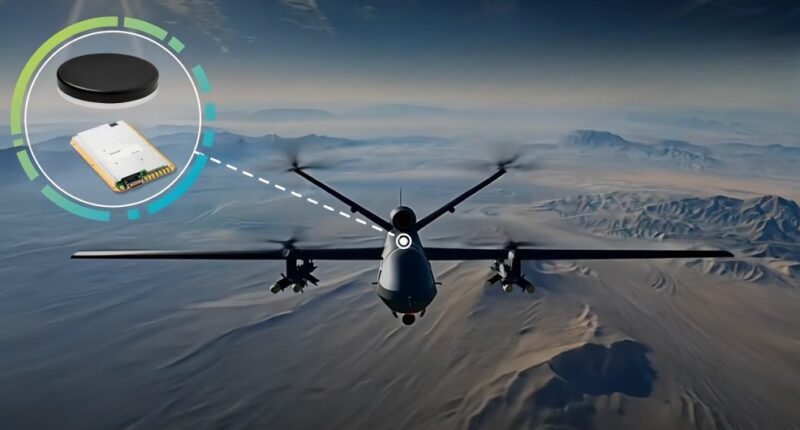
The system will simulate real battlefield conditions for advanced sensors and missile defence systems. It will focus particularly on electro-optical and infrared (EO/IR) sensors, which play a critical role in detecting and tracking threats, including missiles, aircraft, and drones.
Unlike basic computer simulations, GENESIS combines advanced hardware and physical testing tools to create a realistic testing environment.
The system will include multispectral projection technology that can recreate the different wavelengths of light used by sensors to detect objects. This allows engineers to test how sensors perform in complex environments.
READ ALSO: https://modernmechanics24.com/post/why-ai-prosthetic-arms-feel-unsettling/
It will also feature high-frame-rate imaging systems capable of capturing extremely fast events, such as missile launches and interceptions.
In addition, the platform will include precision optical systems and automated control technologies to manage and repeat complex test scenarios with accuracy.
One of the most advanced features of GENESIS is a flight motion table that physically moves test hardware to simulate aircraft or missile motion.
This allows engineers to evaluate how sensors and defence systems behave while moving at high speeds or under changing conditions.
The system will also use a cryogenic space chamber, which recreates the extremely cold conditions found in space. This capability is particularly important for testing missile-tracking sensors used in space-based defense systems.
These technologies will allow researchers to replicate conditions found across space, air, and missile defence environments.
WATCH ALSO: https://modernmechanics24.com/post/tesla-car-system-shows-instant-driving-decisions/
The platform will support testing programs run by the US Army Combat Capabilities Development Command Aviation & Missile Center, which develops advanced aviation and missile technologies for the military.
Military officials say advanced testing environments like GENESIS are essential to accelerating defence innovation.
Developing new weapons and sensor systems often requires years of testing and refinement. By using highly accurate simulations, engineers can test more scenarios in less time.
Mary Clum, president of space, cyber, and directed energy at AeroVironment, said realistic testing environments are critical for developing future defence systems.
“True innovation in defense starts long before technology reaches the battlefield,” Clum said.
“It starts in how we test, refine, and prove it. By building realistic, repeatable, and scalable testing ecosystems, we help the Army accelerate innovation, strengthen deterrence, and ensure warfighters keep a decisive advantage.”
WATCH ALSO: https://modernmechanics24.com/post/china-unitree-launches-h2-humanoid/
To support the program, the US Army Aviation and Missile Technology Consortium has awarded AeroVironment a $97.4 million contract.
The project will run for the next three years, during which engineers will design and build the complete simulation system.
The platform will be developed at Redstone Arsenal, one of the US’s major centers for missile defence and aerospace research.
The location already hosts several military research organizations and defense contractors working on advanced missile and space technologies.
Testing complex weapons systems in the real world can be expensive and risky. Simulation environments like GENESIS allow engineers to evaluate new technologies without launching actual missiles or conducting large-scale field tests.
Johnathan Jones, senior vice president for cyber and mission solutions at AeroVironment, said the project represents a strong partnership between industry and government.
“GENESIS shows what is possible when industry and government align around a shared vision of innovation,” Jones said.
READ ALSO: https://modernmechanics24.com/post/na62-rare-particle-decay-measurement/
“We are advancing realism and precision so the US military can accelerate development, reduce risk, and deliver mission-ready technologies.”
Modern warfare is shaped by advanced missile systems, space-based sensors, and integrated air defense networks.
Testing technologies that operate across multiple domains, space, air, and missile defence, is becoming more important for military planners. With GENESIS, the US Army hopes to build a testing environment capable of preparing defense technologies for future threats before they appear on the battlefield.
Experts say systems like this could significantly speed up the development of next-generation missile defense technologies in the coming years.