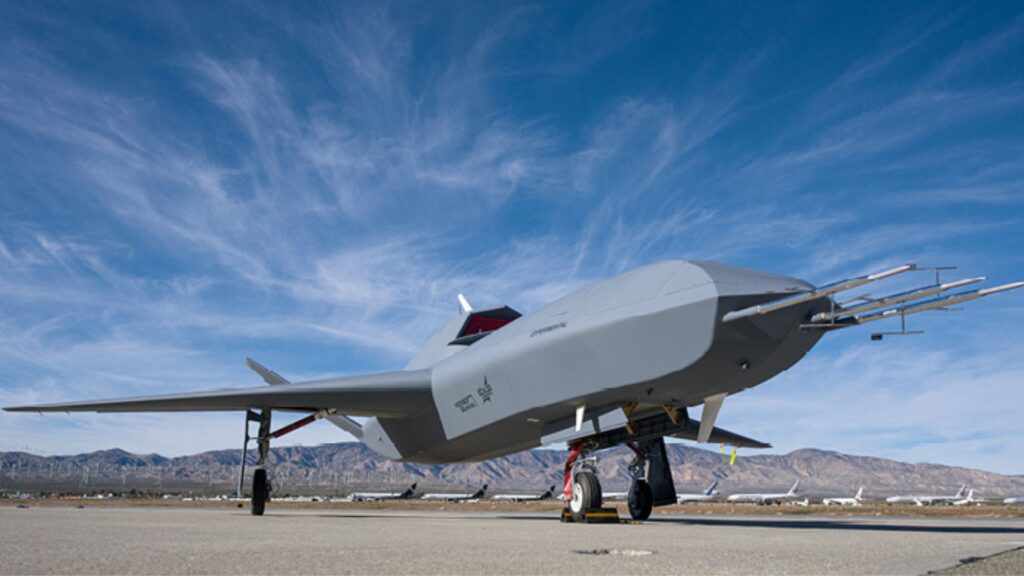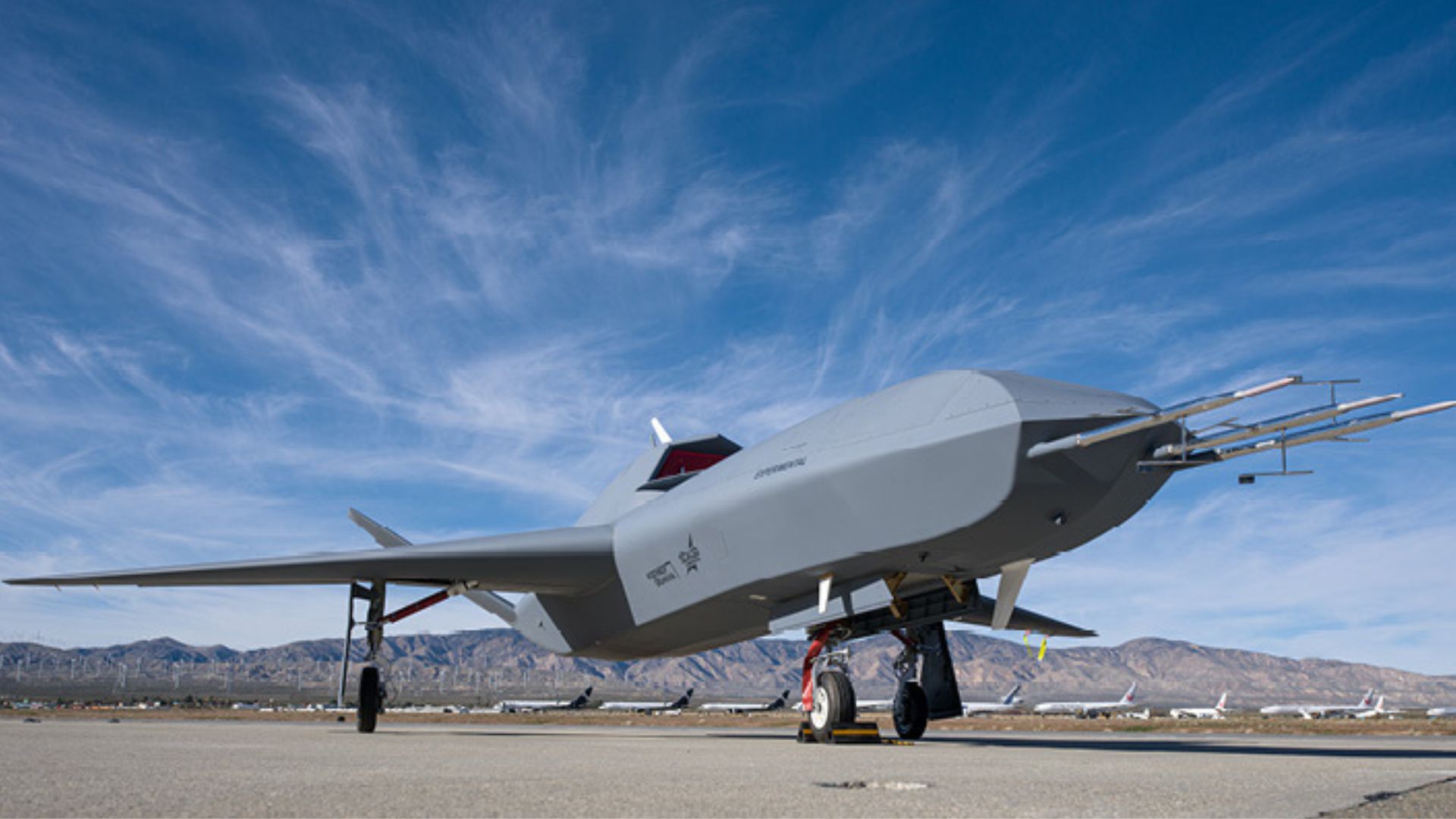
Northrop Grumman has officially given its YFQ-48A autonomous combat drone a new identity: Talon Blue.
The announcement marks the latest development in the US Air Force’s rapidly evolving Collaborative Combat Aircraft (CCA) program. The program aims to integrate advanced, lower-cost autonomous drones alongside crewed fighter jets.
The renaming follows closely behind another branding move in the CCA space, as General Atomics recently introduced the name “Dark Merlin” for its YFQ-42A design.
For Northrop Grumman, the YFQ-48A’s new moniker signals both heritage and ambition.
READ ALSO: https://modernmechanics24.com/post/chinese-create-tofu-brine-safe-battery/
What Is Talon Blue?
Talon Blue is an autonomous, stealth-optimized uncrewed combat aircraft designed to operate as part of the Air Force’s CCA fleet.
CCAs are intended to fly alongside advanced crewed fighters such as the F-35 and future Next Generation Air Dominance (NGAD) aircraft. It also targets performing missions ranging from intelligence gathering and electronic warfare to strike operations and air-to-air combat support.
Unlike traditional drones, Talon Blue is built to function as a loyal wingman. It can execute missions semi-independently, receiving guidance from a human pilot or operating within a networked combat ecosystem.
The aircraft emphasizes modular manufacturing, low cost, and rapid production timelines.
In a company statement, Northrop Grumman said, “The YFQ-48A Talon Blue’s designation within the Air Force’s Collaborative Combat Aircraft program underscores the strategic alignment between Northrop Grumman’s manufacturing agility and the Air Force’s acquisition goals for low-cost, cutting-edge technology.”
The company added that the aircraft’s design provides mission versatility through advanced modular manufacturing techniques that reduce part count and overall weight, shortening production timelines without sacrificing capability.
WATCH ALSO: https://modernmechanics24.com/post/idaho-lab-receives-nuclear-reactor-fuel/
From Project Talon to Talon Blue
Northrop first unveiled the drone in December under the name “Project Talon.” Later, the US Air Force assigned it the formal designation YFQ-48A and described it as a strong contender for future CCA fleets.
The original Talon name paid homage to the T-38 Talon jet trainer, reflecting shared design principles of performance, maneuverability, and affordability.
At the time, Tom Jones, President of Northrop Grumman’s Aeronautics Systems sector, said, “It’s got a cool sound to it, too.”
The addition of “Blue” appears to reference a deeper lineage in stealth innovation.
Analysts believe “Blue” may be a tribute to Tacit Blue, the secretive 1980s demonstrator that revolutionized American stealth research. Nicknamed “The Whale,” Tacit Blue pioneered low-observable technologies that shaped the development of modern stealth aircraft.
Similarly, Lockheed’s early stealth test platform was known as “Have Blue,” which eventually led to the F-117 Nighthawk.
The YFQ-48A’s design strongly suggests stealth optimization. It features a shovel-like nose, pronounced chine lines, a dorsal air intake, and a splayed V-tail exhaust. These characteristics are reminiscent of Tacit Blue’s unusual layout. These elements reduce radar visibility and enhance survivability in contested airspace.
READ ALSO: https://modernmechanics24.com/post/spot-robot-at-st-engineering-mras/
Inside CCA Program
The Air Force’s CCA initiative aims to field large numbers of relatively affordable autonomous aircraft to complement high-end crewed fighters. Instead of risking a $100 million jet in every mission, commanders could deploy CCAs to conduct dangerous or high-risk tasks.
Currently, General Atomics’ YFQ-42A and Anduril Industries’ YFQ-44A are under development as part of Increment 1 of the program. Anduril’s drone carries the nickname “Fury,” reflecting its origins as a ‘red air’ adversary training aircraft.
The Air Force has not yet selected which Increment 1 design or whether both will move into larger-scale procurement.
Meanwhile, nine companies are reportedly under contract to refine concepts under Increment 2, though the service has not publicly disclosed their identities. Northrop Grumman may be among them, but confirmation has not been provided.
Beyond the YFQ-48A, Northrop Grumman now describes Project Talon as a broader portfolio of modular, cost-effective, and rapidly deployable autonomous aircraft systems.
One component of that ecosystem is Talon IQ, previously known as Beacon. The platform functions as an autonomous testbed. It leverages the Prism autonomy suite and the Model 437 Vanguard jet developed by Scaled Composites, a Northrop subsidiary.
WATCH ALSO: https://modernmechanics24.com/post/biohybrid-robots-turn-food-waste-into-functional-machines/
Northrop has released imagery showing the YFQ-48A alongside the Model 437 and the Model 401, also known as “Son of Ares.” These aircraft demonstrate the company’s expanding digital ecosystem approach. It integrates uncrewed platforms, autonomy software, and rapid prototyping techniques.
Northrop Grumman previously stated it aims for the YFQ-48A’s first flight approximately nine months after its December unveiling, placing the milestone around August this year.
Beyond US military applications, Talon Blue could attract international interest. The global market for autonomous combat drones is expanding as nations seek cost-effective force multipliers that can operate in high-threat environments.
Amid the geopolitical tensions reshaping airpower strategies, platforms like Talon Blue may become central to next-generation air dominance concepts.
Why the Name Matters
While renaming a drone may seem cosmetic, branding plays a role in public understanding and strategic messaging. Complex alphanumeric designations like YFQ-48A often obscure broader technological implications.
By introducing the Talon Blue name, Northrop Grumman gives its aircraft a clearer identity, one rooted in stealth heritage and future-focused innovation.
READ ALSO: https://modernmechanics24.com/post/l3harris-hypersonic-engine-production/
Talon Blue stands as a symbol of how autonomous systems are reshaping modern air combat and why the future of fighter aviation may be increasingly uncrewed.