A new research partnership between Quaise Energy and Oregon State University (OSU) could help unlock a powerful new source of clean energy hidden deep beneath the Earth’s surface.
Quaise Energy has donated $750,000 to Oregon State University to support research into superhot rock geothermal energy, a technology scientists believe could transform the world’s energy system.
The funding was provided through the OSU Foundation and will support laboratory experiments designed to recreate the extreme underground conditions where superhot rock resources exist.
Researchers hope this work will improve understanding of how geothermal systems behave miles below the Earth’s surface and help develop technologies capable of tapping this enormous energy source.
A Potential Breakthrough in Clean Energy
Superhot rock geothermal energy refers to heat stored in rocks located 2 to 12 miles beneath the Earth’s surface. At those depths, temperatures are extremely high, and water can reach a unique state known as supercritical water.
Supercritical water forms at temperatures of about 374 degrees Celsius (704 degrees Fahrenheit) and behaves differently from ordinary water. It becomes denser and carries much more energy than standard hot water.
Because of this property, it can produce more electricity when used in geothermal power plants.
READ ALSO: The Secret War Tool Hiding on Your Street: Security Cameras
According to a report by the Clean Air Task Force, tapping just 1 percent of global superhot rock resources could generate about 63 terawatts of carbon-free power. That is more than eight times the world’s current electricity production.
Carlos Araque, CEO and co-founder of Quaise Energy, says the technology could change how the world produces electricity.
“If successfully developed, superhot rock geothermal energy could supply enormous amounts of reliable, carbon-free power,” Araque said.
At Oregon State University, scientists will attempt to recreate these deep underground conditions inside a specialized research system.
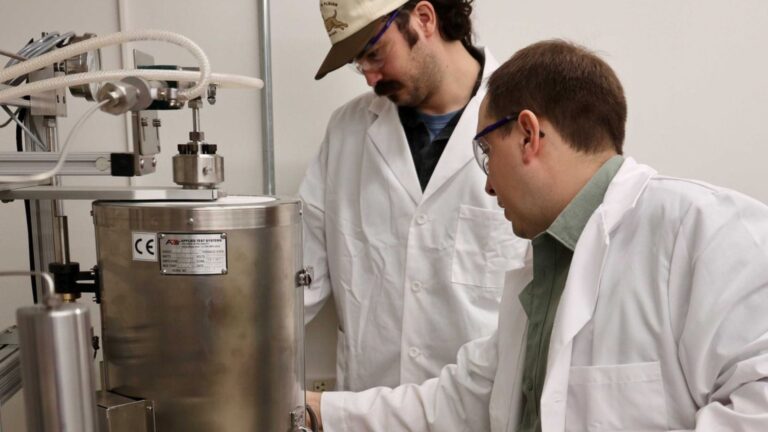
The work will be conducted at the Experimental Deep Geothermal Energy (EDGE) Lab, led by Brian Tattitch, assistant professor and Barrow Family Chair in Mineral Resource Geology.
WATCH ALSO: China’s military showcases modern battlefield capabilities in new exercise
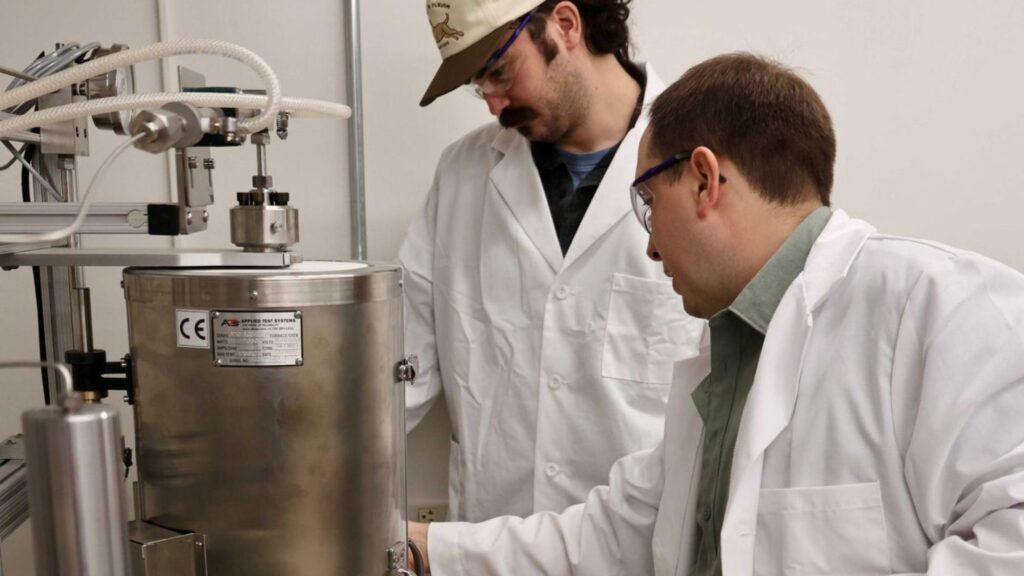
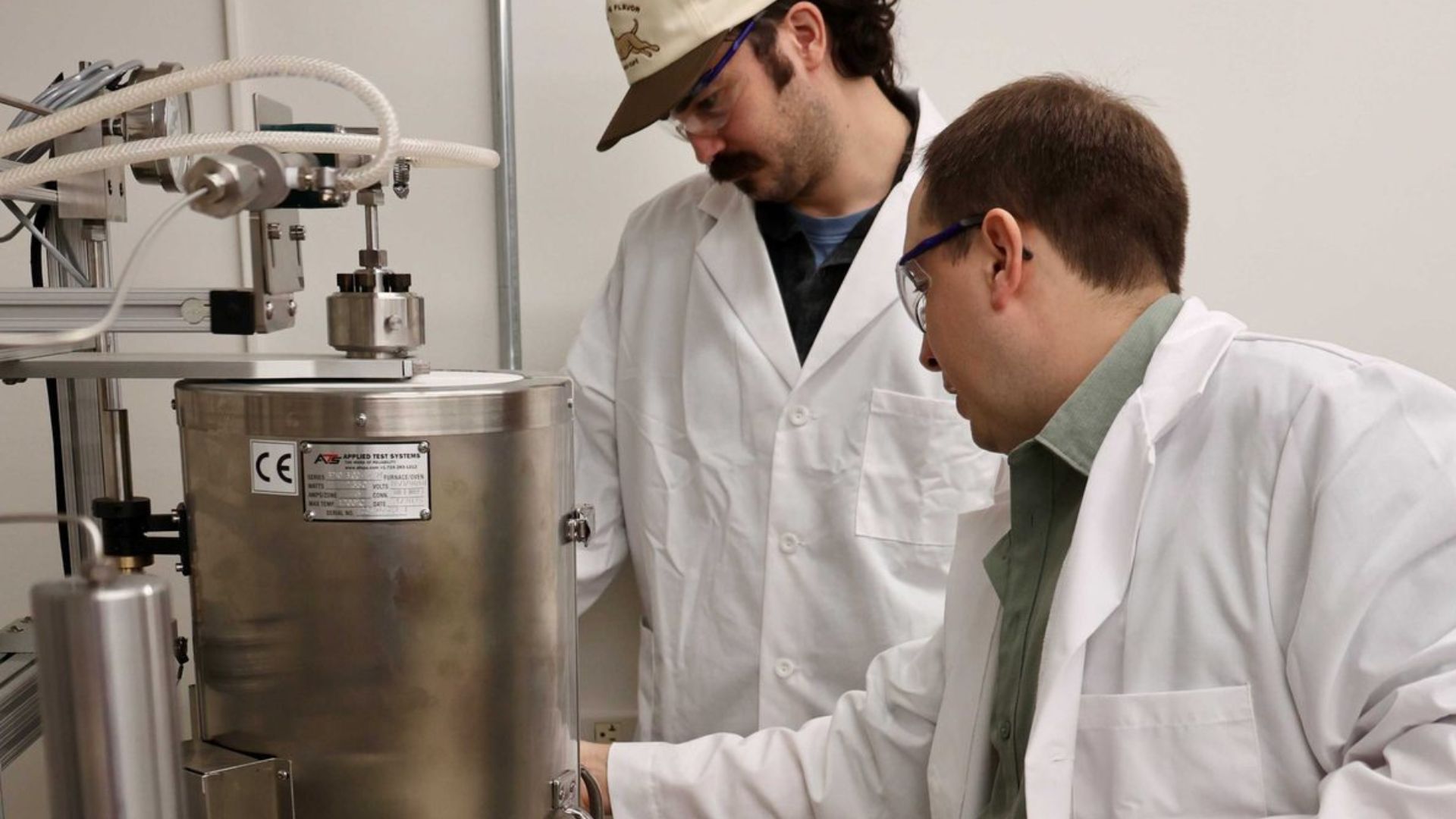
Tattitch and his team are developing a custom flow-through reactor that allows water to move through rock samples under extreme heat and pressure. The reactor can withstand temperatures up to 500 degrees Celsius and pressures 500 times higher than those at the Earth’s surface.
“We’re developing a flow-through reactor that lets us move fluid through rock under superhot conditions,” Tattitch said. “This allows us to observe how these systems change in real time.”
Scientists say studying these conditions in the laboratory is important because they are difficult and expensive to observe directly underground.
Why This Research Matters
Geoffrey Garrison, Vice President of Operations at Quaise Energy, says the experiments will help solve major technical challenges in developing superhot geothermal energy.
“Superhot rock geothermal operates in conditions where current models fail,” Garrison said. “Controlled experiments like these are essential for understanding how fluids behave and how rocks interact with them.”
He adds that the research will provide valuable data needed to design stronger wells and long-lasting geothermal reservoirs.
Quaise believes early access to this data will reduce both technical risks and financial costs as the company develops future geothermal power projects.
Accessing superhot rock is extremely challenging because of the depths involved. Traditional drilling technologies used by the oil and gas industry are often too expensive or inefficient to reach these depths.
READ ALSO: White House Pushes Defense Firms to Boost Missile Production 4x
To overcome this challenge, Quaise Energy is developing a new drilling technology that the company describes as the first major drilling innovation in a century.
Araque says the company has already made progress in testing the technology.
“In 2025 we demonstrated the technology in the field for the first time,” Araque said.
During the test, the system drilled 118 meters into granite at a quarry in Texas, setting a record for this type of drilling method.
The company plans to expand that capability.
“One of our goals for 2026 is to extend that drilling distance to about one kilometer,” Araque said.
Three Key Research Areas
The EDGE Lab at OSU will focus on three main research areas.
Rock and Fluid Interactions
Scientists will study how different types of rocks behave when extremely hot water flows through them.
Rocks contain many different minerals that react differently to heat and fluids. Some minerals may form crystals that could block the small cracks needed for water flow.
Tattitch says understanding this process is important.
“We can simulate different scenarios in the lab to see whether the system might clog,” he said. “By monitoring the chemistry, we can understand what is happening and apply that knowledge to real geothermal wells.”
WATCH ALSO: Buildroid AI expanding simulation-first robotic platform to multiple US sites
Glass-Like Well Liner
Another area of research involves a glass-like material that forms along the walls of holes drilled using Quaise’s technology.
This vitrified layer could act as a natural liner, preventing wells from collapsing and improving stability. Researchers want to understand how this material behaves over long periods under extreme heat and pressure.
Materials Used in Geothermal Systems
The lab will also test materials used in geothermal power systems to see whether they can survive superhot conditions. For example, conventional geothermal systems use materials like sand to keep underground fractures open.
However, such materials may not perform well at temperatures around 400 degrees Celsius.
“We need to understand how these materials behave under superhot conditions,” Tattitch said.
The research project will also provide hands-on experience for undergraduate and graduate students at Oregon State University. Tattitch believes this emerging field could create many new career opportunities.
“Right now, superhot rock geothermal is still a frontier,” he said. “Students working on this research today may build careers in this field as it becomes a major source of energy.”
If the technology succeeds, superhot rock geothermal could offer reliable, carbon-free electricity around the clock, helping countries transition away from fossil fuels while meeting growing global energy demand.