Scientists at the University of Sydney developed a breakthrough method that uses sunlight and liquid metals to produce clean hydrogen from both freshwater and seawater. The research team created a process that uses liquid gallium to extract hydrogen from water.
The study, published in Nature Communications, highlights how sunlight alone can drive the reaction without the need for expensive equipment or purified water.
Hydrogen has long been viewed as a key fuel for the future. Governments and industries worldwide are searching for cost-effective ways to produce green hydrogen to power energy systems, transport networks, manufacturing, and agriculture. However, current production methods face several technical and financial challenges.
Lead author and PhD student Luis Campos said the new system overcomes many of those barriers. “We now have a way of extracting sustainable hydrogen, using seawater, which is easily accessible while relying solely on light for green hydrogen production,” he said.
READ ALSO: https://modernmechanics24.com/post/super-bowl-ai-ad-buzz-center-stage/
Senior researcher Professor Kourosh Kalantar-Zadeh from the School of Chemical and Biomolecular Engineering explained that the discovery builds on years of work exploring the chemistry of liquid metals. “We show how the natural chemistry of liquid metals can create hydrogen,” he said.
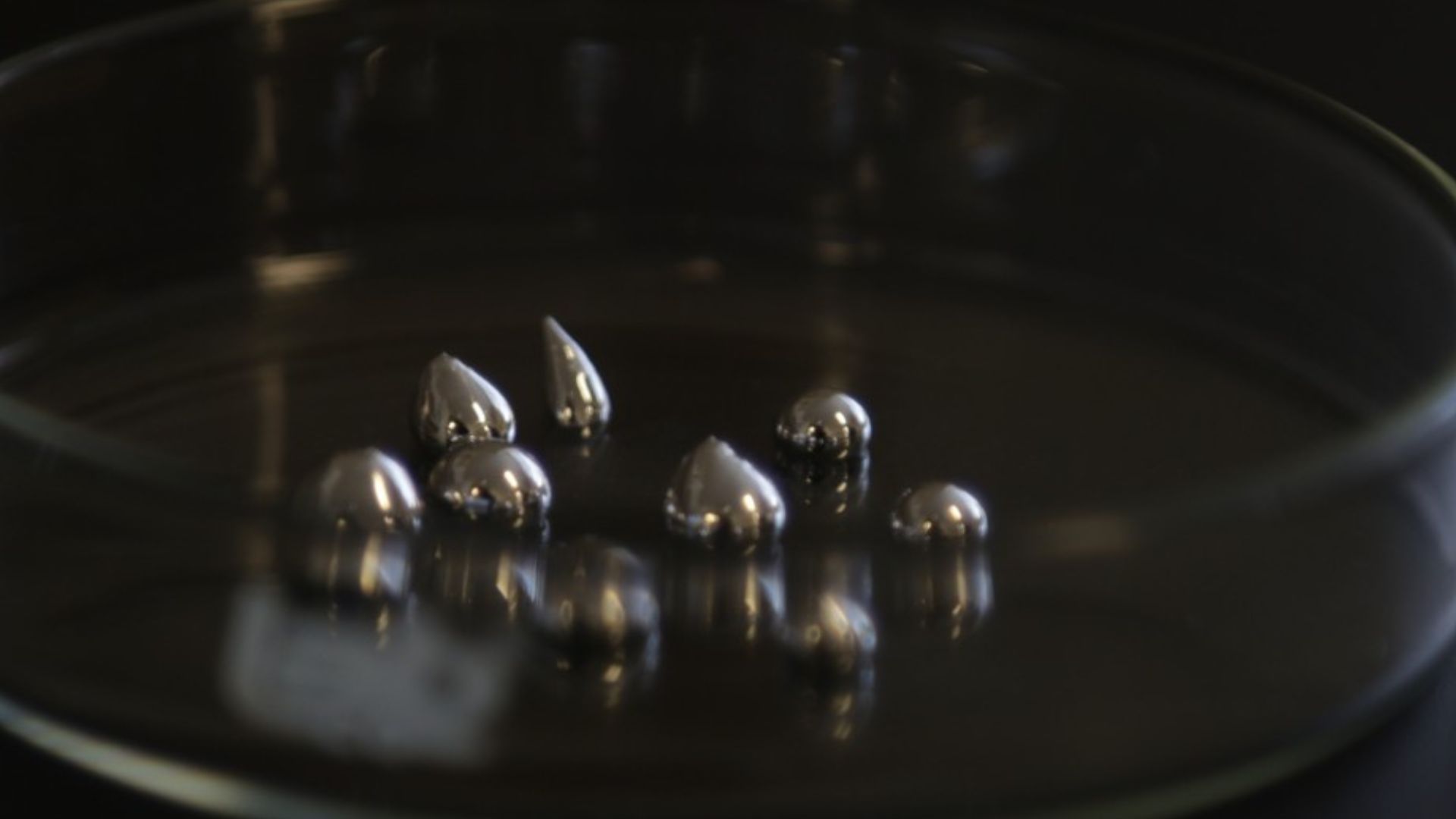
The key element is gallium, a metal with a low melting point. Gallium requires very little energy to change from a solid to a liquid. At room temperature, it appears solid. When slightly heated to near body temperature, it becomes a shiny liquid metal.
Researchers found that tiny gallium particles can absorb light. When these particles are suspended in water and exposed to sunlight or artificial light, they react with water molecules. The reaction forms gallium oxyhydroxide and releases hydrogen gas.
Campos explained that the process is simple but powerful. “When exposed to light in water, liquid gallium reacts at its surface. This reaction creates clean hydrogen and gallium oxyhydroxide,” he said.
WATCH ALSO: https://modernmechanics24.com/post/humanoid-robot-towel-task/
One major advantage of the method is its circular design. After the hydrogen is extracted, gallium oxyhydroxide can be converted back into gallium and reused. Professor Kalantar-Zadeh said, “After we extract hydrogen, we can reduce gallium oxyhydroxide back into gallium and reuse it for future hydrogen production. We term this a circular process.”
The team reported a maximum efficiency of 12.9 percent in their proof-of-concept tests. While this number may seem modest, the researchers consider it competitive at this early stage.
“For the first proof-of-concept, we consider the efficiency of this technology to be highly competitive,” Professor Kalantar-Zadeh said. He pointed out that silicon-based solar cells reached around 6 percent efficiency in the 1950s and did not exceed 10 percent until the 1990s.
The team is now working to improve efficiency further and move toward commercial-scale applications. Their next goal is to build a mid-scale reactor capable of producing more hydrogen.
Hydrogen continues to attract global attention because it burns cleanly. When hydrogen is used as a fuel, it produces water as its only byproduct. It does not release carbon dioxide or harmful pollutants. This makes it an attractive alternative to fossil fuels in the fight against climate change.
Green hydrogen is produced using renewable energy sources. Most current methods focus on “water splitting.” It separates hydrogen and oxygen atoms in water molecules. Techniques such as electrolysis, photocatalysis, and plasma systems have shown promise. However, they often require purified water and expensive equipment, which increases costs.
READ ALSO: https://modernmechanics24.com/post/australia-dart-hypersonic-ground-test/
Professor Kalantar-Zadeh’s method avoids many of those obstacles. It works with both seawater and freshwater, eliminating the need for costly purification. Using sunlight as the primary energy source also reduces operational expenses.
“Gallium has not been explored before as a way to produce hydrogen at high rates when in contact with water,” Professor Kalantar-Zadeh said. “It is such a simple observation that was ignored previously.”
Project co-lead Dr. Francois Allioux emphasized the technology’s broader impact. “Hydrogen offers a clean energy solution for a sustainable future and could play a pivotal role in Australia’s international advantage in a hydrogen economy,” he said.
As nations invest heavily in hydrogen infrastructure, innovations like this could strengthen energy security and reduce greenhouse gas emissions. The ability to generate hydrogen from seawater is especially important for countries with long coastlines and abundant sunlight.
The discovery led to practical solutions for global energy challenges. By combining sunlight and liquid metal, scientists have created a promising new method for producing green hydrogen.