MIT researchers have engineered a flexible polymer that can switch its ability to conduct heat more than two times higher simply by stretching it. The material, an olefin block copolymer commonly found in everyday products, transitions from plastic-like insulation to marble-like heat conduction in just 0.22 seconds.
The discovery could lead to smart fabrics that cool you down when stretched, electronics that shed heat when components get hot, and buildings that regulate temperature without external power.
For decades, engineers faced a basic problem. Most materials have fixed thermal properties. Plastic insulates. Metal conducts. You cannot change how a material handles heat without remaking it entirely.
That limitation matters more than ever. Smartphones overheat. Electric vehicle batteries need cooling. Athletes want clothes that adapt to body temperature. Buildings waste energy fighting the weather.
READ ALSO: https://modernmechanics24.com/post/3d-printer-filament-turns-into-robot/
MIT’s Department of Mechanical Engineering has now found a way around this limit. The team discovered that a common polymer called olefin block copolymer can switch its thermal behavior back and forth, thousands of times, simply by stretching and releasing it .
In its relaxed state, the material behaves like plastic. Its tangled molecular chains block heat from moving through. But when stretched quickly, those chains straighten out. Heat suddenly finds clear pathways. The material’s thermal conductivity more than doubles .
Dr. Svetlana Boriskina, principal research scientist at MIT, explains the feeling this creates. “The resulting difference in heat dissipation through this material is comparable to a tactile difference between touching a plastic cutting board versus a marble countertop,” she says .
The switch happens in just 0.22 seconds. That is the fastest thermal switching ever observed in any material .
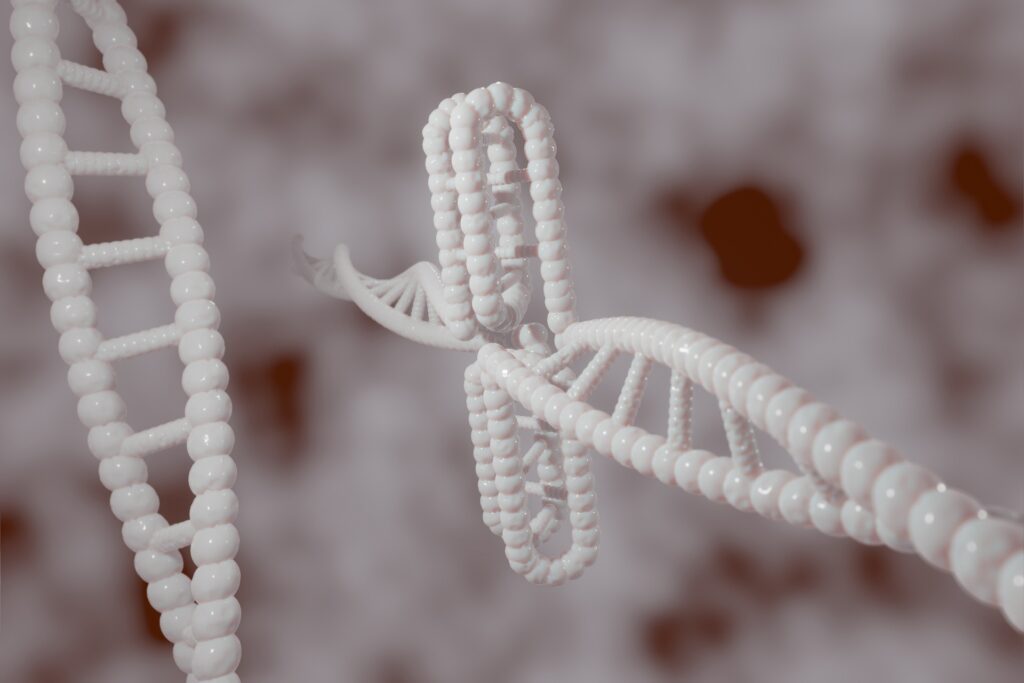
How does it work? The researchers used X-ray and Raman spectroscopy to watch what happens at the microscopic level. In its unstretched state, the polymer consists of tangled carbon chains with small islands of ordered structure scattered throughout. When stretched, those ordered islands align, and the tangled chains straighten out .
But crucially, the material never fully crystallizes. It stays mostly amorphous, just better organized. That is why it can snap back to its original state when relaxed. The team tested it for over 1,000 cycles with no degradation .
WATCH ALSO: https://modernmechanics24.com/post/us-hits-isis-terrorists-nigeria/
Duo Xu, an MIT graduate student and study co-author, notes how unexpected this was. “As we stretched and released the material, we realized that its thermal conductivity was really high when it was stretched and lower when it was relaxed, over thousands of cycles,” Xu says. “This switch was reversible, while the material stayed mostly amorphous. That was unexpected” .
The implications stretch across industries.
Imagine workout clothes woven from these fibers. While you sit still, the fabric traps body heat to keep you warm. The moment you start moving and stretching, the same fabric instantly conducts heat away, cooling you down .
Electronics could benefit too. Computer chips generate heat in bursts. A phone case made from this polymer could normally insulate, keeping your device comfortable to hold. When the processor kicks into high gear, the case could stretch slightly and dump heat into the air .
Buildings might one day use these materials in walls or windows that adapt to weather. On cold days, they insulate. When the sun beats down, they conduct heat away .
The research team included collaborators from China’s Southern University of Science and Technology, led by Yuan Zhu. Their findings were published in the journal Advanced Materials .
There are limitations. The material works, but the thermal switch ratio is currently just above two. Boriskina wants to push further. “If we could make further improvements to switch their thermal conductivity from that of plastic to that closer to diamond, it would have a huge industrial and societal impact,” she says .
The team is now building computer models to understand exactly how to tweak the polymer’s amorphous structure for even bigger changes when stretched.
READ ALSO: https://modernmechanics24.com/post/rare-earths-redrawing-global-power-map/
The research was supported by the U.S. Department of Energy, the Office of Naval Research, and MIT’s graduate fellowship programs . For anyone who has ever wished their clothes could read their body temperature, that future just got closer.