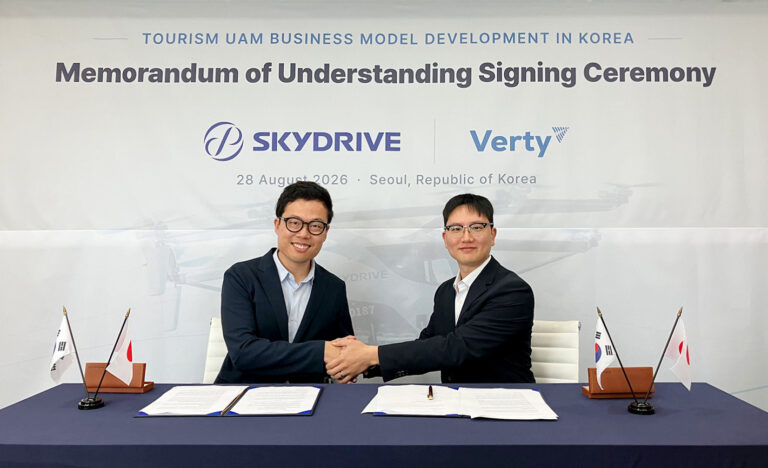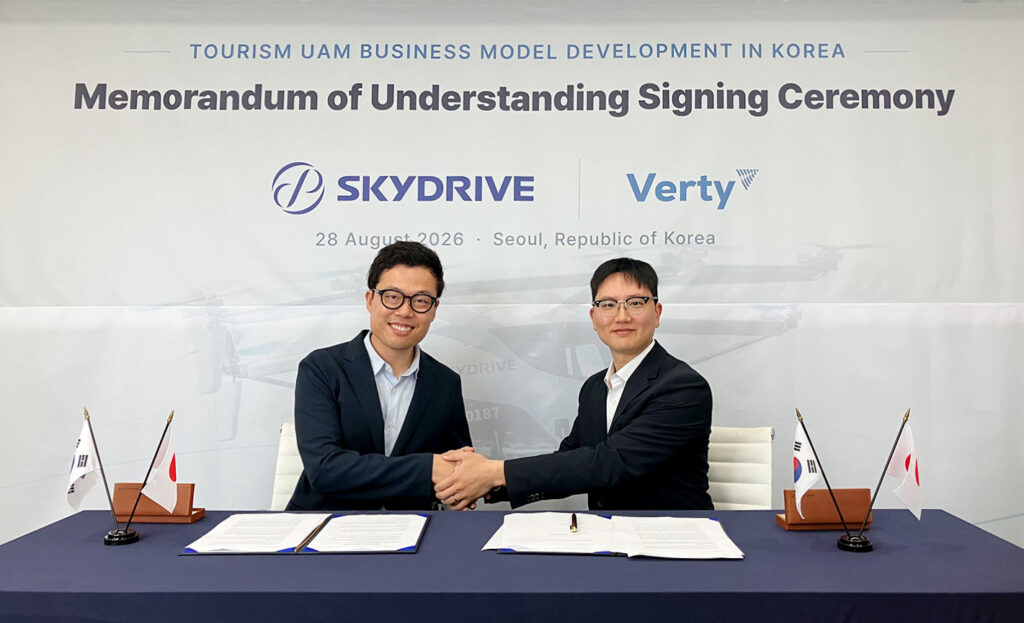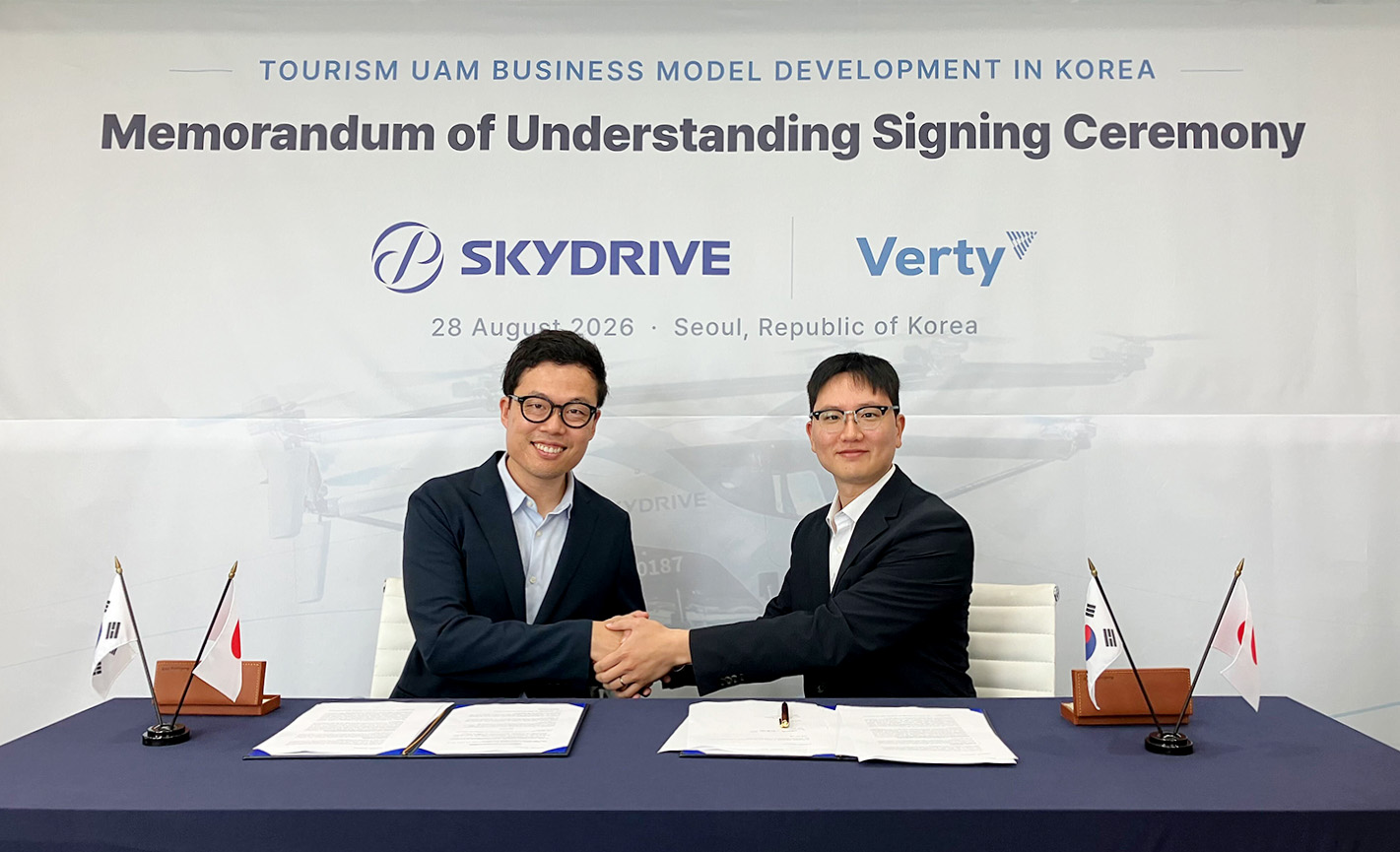
SkyDrive has signed an agreement with South Korean company Verty to prepare for commercial electric vertical takeoff and landing (eVTOL) flights in South Korea. The companies will study routes, safety and infrastructure, with a goal of starting commercial operations by 2028.
The partnership is based on a memorandum of understanding (MOU). SkyDrive, a Japan-based eVTOL developer, will work with Verty to explore how its three-seat SD-05 aircraft could be used for commercial services in South Korea.
The two companies will first conduct a feasibility study. The study will look at flight safety, vertiport infrastructure, air traffic management and possible flight routes. Proposed services include sightseeing flights and short regional trips between cities.
South Korea is working on plans to develop Advanced Air Mobility (AAM) as part of its future transportation system. AAM refers to new forms of air travel that use aircraft such as eVTOLs to carry people over relatively short distances.
Verty is working on the operational side of this technology. The Seoul-based company is developing systems covering flight operations, air traffic management and vertiport operations. It is also preparing to become an eVTOL operator and is seeking an Air Operator Certificate (AOC) under South Korean regulations.
One of Verty’s main ideas is its “AAM as a Service” model. Instead of requiring companies to build their own complete infrastructure, Verty aims to provide aircraft operations, systems and other support as a service.
According to the companies, the partnership will explore different commercial uses for SkyDrive’s SD-05. One proposed application is tourism, including sightseeing routes around destinations such as Jeju Island. Another is regional transport between urban areas around the Seoul Metropolitan Area, including Goyang City.
The SD-05 is a compact three-seat eVTOL aircraft developed by SkyDrive. Unlike conventional aircraft, an eVTOL is designed to take off and land vertically using electric propulsion, which could allow operations from smaller dedicated sites known as vertiports.
However, commercial eVTOL services still depend on several factors. The companies need to complete safety studies, develop suitable infrastructure and routes, and meet aviation regulations before passenger services can begin. Aircraft certification and operational approvals are also important steps.
SkyDrive said it is pursuing type certification for the SD-05 and is expanding its activities beyond Japan. The company is also working with partners in markets including the United States, United Arab Emirates, India, Thailand, Indonesia, Vietnam, Australia and Taiwan.
Verty and SkyDrive believe their combined capabilities could help build an operating model for eVTOL services in South Korea. If the required safety, infrastructure and regulatory steps are completed, the partnership is targeting commercial deployment in 2028.
The agreement shows how eVTOL developers and aviation service companies are working together to prepare for Advanced Air Mobility. Instead of focusing only on the aircraft, the project also covers the supporting systems needed to operate future air taxi and regional flight services.