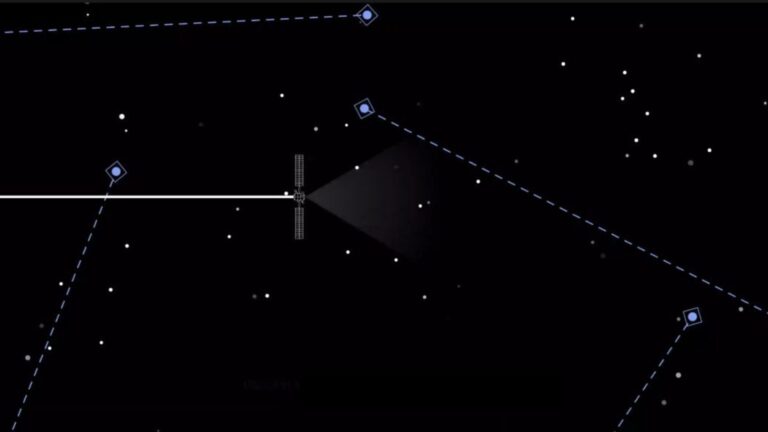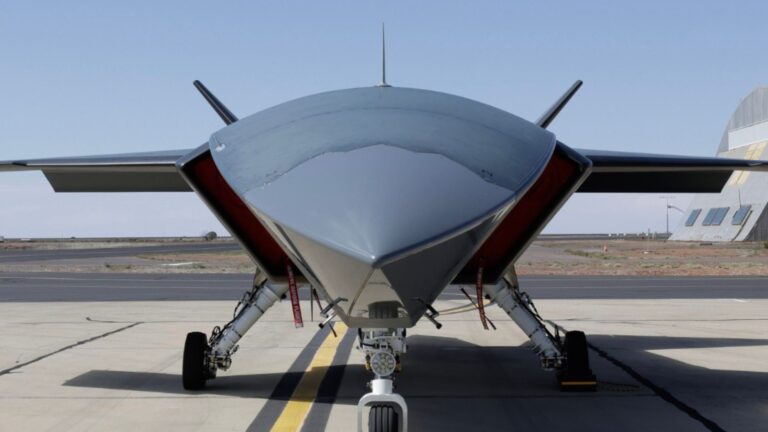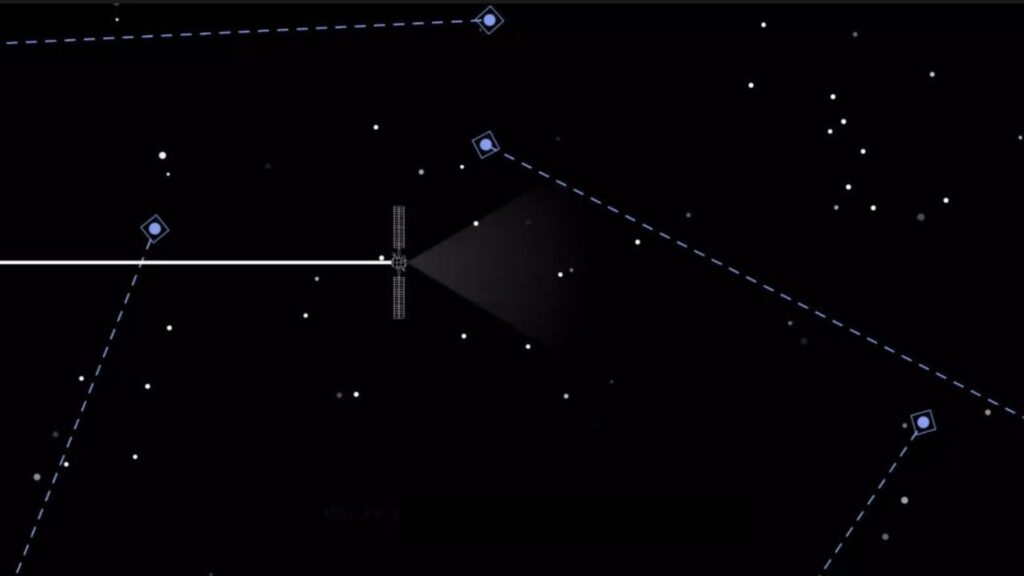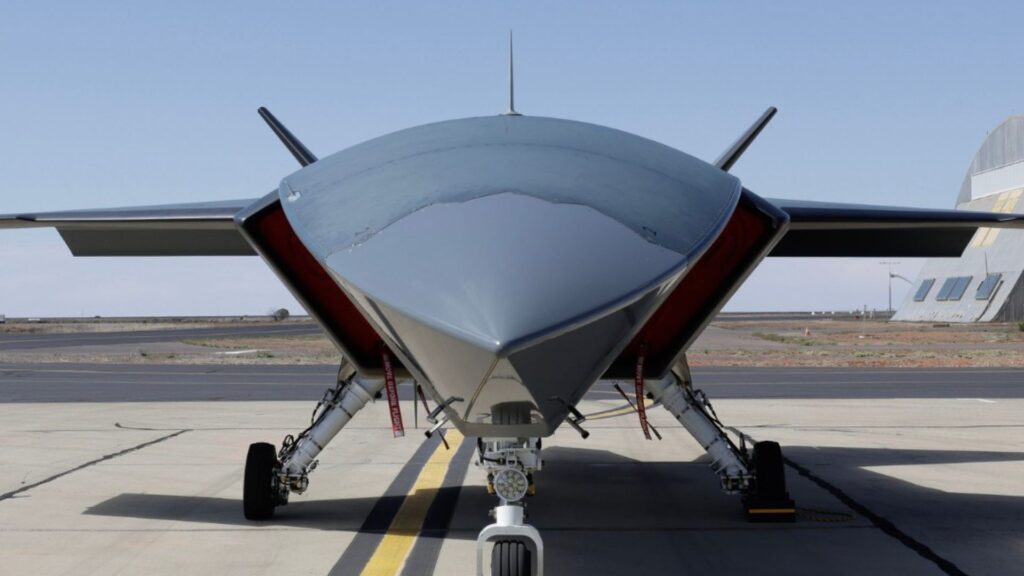
The US Department of Defense is turning to the commercial space sector for a new generation of surveillance spacecraft capable of monitoring other satellites in orbit.
Through a recent solicitation, the Pentagon’s Defense Innovation Unit (DIU) unveiled plans for the Geosynchronous High-Resolution Optical Space-Based Tactical Reconnaissance project, also named “Ghost Recon.” It aimed at strengthening America’s ability to track objects in geosynchronous orbit (GEO).
The initiative indicates concerns within the Pentagon that US space-monitoring systems are insufficient to maintain continuous, high-resolution surveillance of both friendly and adversarial satellites operating nearly 36,000 kilometers above Earth.
According to the solicitation, the DoD lacks sufficient satellites capable of providing high-resolution space-to-space imagery and maintaining custody of both friendly and adversarial satellites in geosynchronous orbit (GEO).
READ ALSO: https://modernmechanics24.com/post/china-2d-semiconductor-wafer-production/
Surveillance Gap in GEO
Geosynchronous orbit is home to some of the world’s most strategically important satellites, including communications, missile warning, intelligence, and weather platforms. With increasing global power in space, identifying, inspecting, and characterizing satellites in GEO has become a national security priority.
Under the Ghost Recon program, DIU is seeking relatively low-cost, scalable commercial spacecraft. It aims to deliver high-resolution space-to-space imagery and precise object characterization. The goal is also to field satellites that can maneuver close enough to capture detailed images of other spacecraft, maintaining safe operational distances.
The solicitation states that contractors must design satellites capable of producing fully resolved imagery of an ESPA Grande-sized spacecraft and its key subsystems from a distance of at least 10 kilometers. That includes imaging components such as star trackers, communications payloads, and mission systems.
Timeline Transition
The Pentagon wants these commercial satellites launched within 2 years of contract award. Within three years, the spacecraft would transition to government ownership and operation. By the fourth year, the satellites must show operational agility by conducting at least one drive-by maneuver per week during the first year of government-led operations.
WATCH ALSO: https://modernmechanics24.com/post/ula-atlasv-amazon-leo-success/
These drive-by missions may involve sub-synchronous or super-synchronous orbital paths, or inclined-track design reference missions (DRMs), allowing the spacecraft to inspect targets at varying altitudes. The satellites must also maneuver above or below GEO altitude to optimize solar illumination for imaging.
The DIU acknowledged that foreign satellites may not passively allow close inspection. The solicitation notes that some resident space objects (RSOs) may attempt to move away when approached.
To counter this, DIU suggested the deployment of multiple spacecraft to support surveillance of uncooperative RSOs. In addition to tracking known satellites, Ghost Recon platforms may also be tasked with detecting and localizing previously untracked objects in GEO.
“These systems must reduce costs compared to existing and planned programs of record while achieving high-resolution image collection,” the solicitation states.
The Pentagon expects the capability to improve GEO RSO characterization, battle damage assessment (BDA), positive identification (PID), and combat identification (CID).
Contractors must outline detailed spacecraft capabilities, including slew rate, angular resolution, and modular transfer function. They must also estimate the cost of maintaining a 30-day revisit cycle for a specific target over a 10-year period.
The satellites must perform at least rendezvous and proximity operations, operate in GEO for at least three years, and meet National Security Space Launch integration standards. The spacecraft must also use Unified S-Band communication protocols.
READ ALSO: https://modernmechanics24.com/post/sodium-sulfur-battery-us-power-grid/
DIU is also exploring options to extend spacecraft longevity. The solicitation mentions the potential for on-orbit refueling to extend spacecraft lifespan, increase maneuverability for follow-on missions, and reduce replacement cadence.
Space Domain
The Ghost Recon project highlights how space has become an increasingly contested domain. With adversaries developing counter-space capabilities and their own inspection satellites, the Pentagon is seeking flexible, cost-effective tools to maintain situational awareness in Earth’s most strategic orbit.
Proposals for the program are due by March 3.