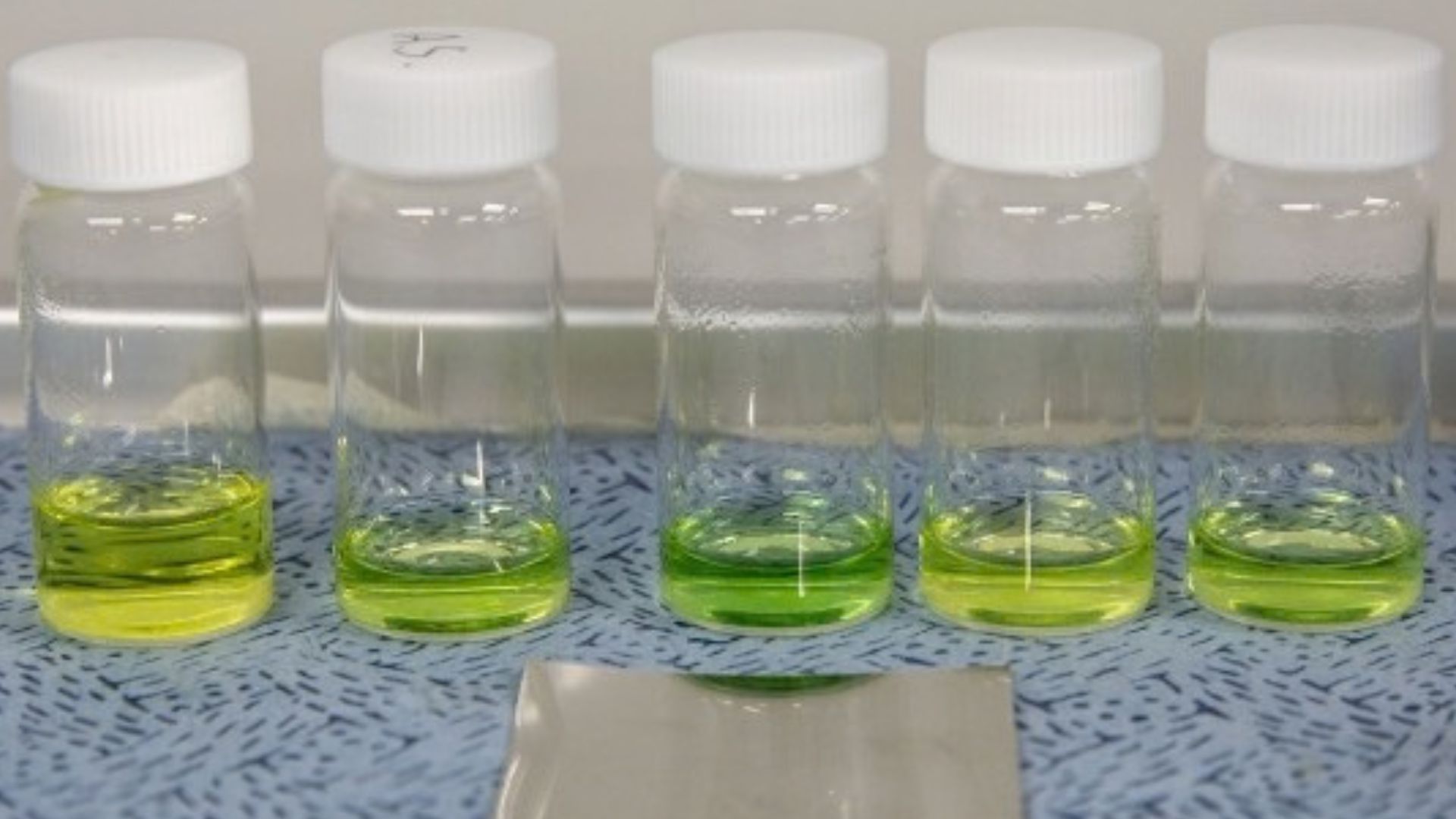
South Korean researchers have developed a palladium membrane that can transport hydrogen ions through water without allowing water to cross the membrane.
The Korea Institute of Energy Research (KIER) said the technology was tested in an electrochemical ammonia synthesis system. The development offers a way to use water directly as a hydrogen source in a process powered by renewable electricity.
The research addresses a longstanding problem in electrochemical systems.
Separation membranes must allow selected ions to move between compartments while keeping solvents, reactants and products apart. Conventional polymer membranes can transport ions efficiently, but water and other unwanted substances can also cross with them.
This movement, known as crossover, can reduce the performance and stability of electrochemical devices. Attempts to limit crossover often reduce the rate at which useful ions move through the membrane. The KIER team sought to avoid this trade-off by using a dense palladium membrane instead of a conventional polymer membrane.
Palladium Separates Hydrogen Ions
Palladium has a specific property that makes it suitable for this purpose. It can absorb hydrogen atoms and allow them to diffuse through its metallic structure. Its dense structure, meanwhile, prevents other chemical species from passing through in the same way.
The process starts when an electric field is applied to the membrane. Hydrogen ions on one side are converted into hydrogen atoms, which move through the palladium. On the other side, the atoms convert back into hydrogen ions and are released into the solution.
Water does not need to move through the membrane with the hydrogen ions. The same applies to the solvents, reactants and products on either side of the membrane. This allows the two reaction environments to remain separated while hydrogen is transported between them.
READ ALSO: https://modernmechanics24.com/post/cape-canaveral-lasers-drone-threats/
The KIER team identified the mechanism responsible for selective hydrogen transport through palladium in water. The researchers then demonstrated that the mechanism could be used in an actual electrochemical process. A research group led by Professor Yun Jeong Hwang of Seoul National University carried out the work.
Membrane Enables Direct Water Use
The researchers applied the membrane to electrochemical ammonia synthesis.
The process uses hydrogen ions as a key input and can obtain them from water rather than relying on hydrogen gas. When powered by renewable electricity, electrochemical ammonia production could reduce the carbon emissions associated with conventional hydrogen-based production.
The membrane is important because the ammonia synthesis reaction takes place in an organic solvent compartment. Hydrogen ions need to reach this compartment, while water needs to remain outside it. Even small amounts of water entering the organic phase can interfere with the reaction and reduce synthesis efficiency.
Until now, the absence of a membrane capable of transporting hydrogen ions without significant water crossover has been a major technical limitation. Hydrogen gas has therefore been used as the main hydrogen source in many such systems. The KIER team used its palladium membrane to demonstrate an alternative in which water itself supplies the hydrogen ions.
The researchers described the work as the first successful implementation of this approach in South Korea.
The demonstration links selective membrane transport with an electrochemical ammonia process that does not require hydrogen gas as the direct feedstock. It also provides a test case for using the same separation principle in other electrochemical systems.
Potential Beyond Green Ammonia
Dr. Jae-Hyung Kim, who led the KIER project, said the new ion-transport mechanism addresses crossover, which remains a major barrier to electrochemical green ammonia production.
READ ALSO: https://modernmechanics24.com/post/nasa-advances-prima-telescope/
He said the technology may also be useful in other electrochemical devices that require stricter separation between different materials.
The finding is relevant to research into lower-carbon ammonia production because ammonia is widely used in fertilisers and has potential applications in energy and industrial processes. Conventional ammonia production relies heavily on hydrogen generated from fossil fuels, although alternative production routes are being studied. Electrochemical systems seek to replace some of those inputs with water and electricity.
The KIER technology does not by itself establish a commercial ammonia production system. Further work will be needed to assess factors such as membrane durability, operating conditions, production scale and overall system efficiency. Palladium use will also be an important consideration as researchers examine the technology for larger-scale applications.
The Global TOP Strategic Research Initiative through the National Research Council of Science & Technology (NST) supported the project. The research findings were published in June in Advanced Science, which listed an impact factor of 14.1 in the information provided by KIER.
The researchers now have a membrane platform that separates hydrogen transport from water transport at the molecular level. Its further development may determine whether the approach can move from a laboratory demonstration to practical electrochemical ammonia production and other applications requiring highly selective ion transport.