For the first time in more than 100 years, historians have identified a newly confirmed Underground Railroad site in New York City.
The discovery was made inside the historic Merchant’s House Museum in Manhattan, where a hidden passageway lay unnoticed by visitors for decades. The finding is being described as one of the most important Underground Railroad discoveries in recent city history.
Merchant’s House Museum is the only preserved 19th-century family home in Manhattan with its original interior and exterior intact. It is now confirmed as an Underground Railroad stop.
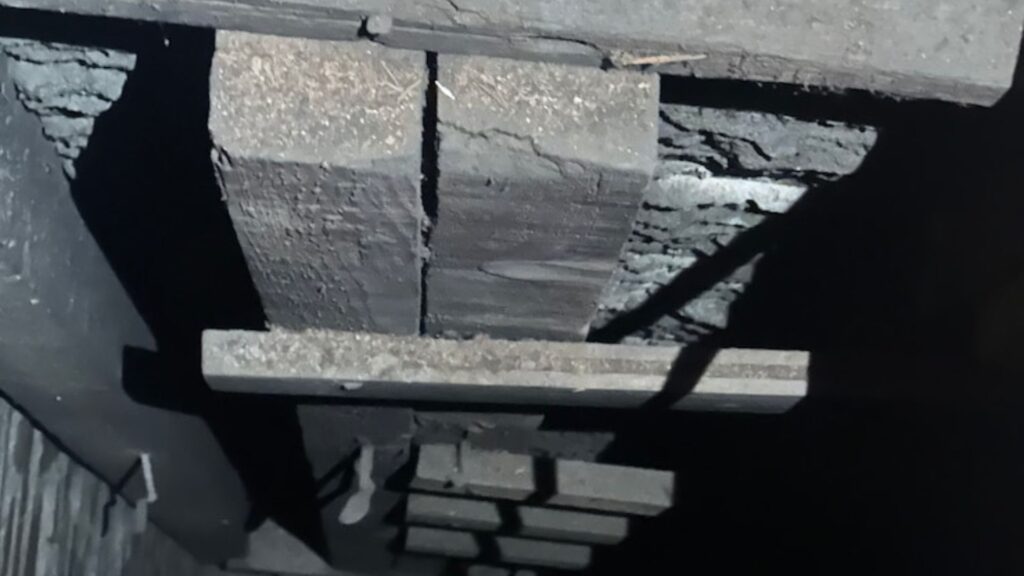
The secret space is hidden behind a chest of drawers on the second floor. For years, visitors walked past the furniture without realizing that one of its shelves concealed a narrow passageway. The hidden opening leads about 15 feet underground, large enough for a person to stand upright.
Museum staff had known about the passageway since the 1930s. However, they did not have enough evidence to officially connect it to the Underground Railroad until now. The discovery came after two years of detailed research.
READ ALSO: https://modernmechanics24.com/post/coal-waste-yields-rare-earth-elements/
Ann Haddad, the museum’s historian, discovered that Joseph Brewster, the man who built and designed the house in the 1830s, was an abolitionist. That discovery prompted a deeper investigation into Brewster’s life, his beliefs, and the building’s architecture.
Camille Czerkowicz, the museum’s Curator and Collections Manager, said the team reached out widely for expert opinions. “I’ve cold-called many academics and said, like, ‘I have this thing, like, will you listen to me talk and I get your feedback on it?’ Just because, you know, it just felt so big that we really wanted to ask and ask and ask,” she stated.
A Dangerous Time in New York
The house was built in the 1830s. Although slavery had officially ended in New York State, the city remained deeply divided. Many residents supported slavery, and violence against Black Americans was common.
Helping freedom seekers escape slavery was illegal. Pro-slavery riots and kidnappings took place in the city. Anyone openly involved in anti-slavery work faced serious danger.
Emily Hill-Wright, the museum’s Director of Operations, explained the risks. “Anyone with a known connection to anti-slavery work or abolition was a target, and your life could be in danger,” she said.
Research revealed that Brewster had strong ties to integrated churches in New York. Church archives showed that he approved the construction of a false floor in one of the church buildings he helped create.
WATCH ALSO: https://modernmechanics24.com/post/boston-dynamics-atlas-balance-agility/
“He sold this house to become an elder at this church, and we learned from church archives that Brewster actually approved the construction of a false floor in the church that he had built,” Hill-Wright said. “And so to me, that was a really compelling piece of evidence, because it showed that this is not just a one-off, that Brewster has a pattern of putting sort of these hiding spaces in buildings that he has constructed.”
This theory strengthened the argument that the hidden passageway inside the Merchant’s House was intentionally built to shelter freedom seekers. The Underground Railroad was a secret network of routes and safe houses. Because of its secrecy, physical evidence is rare.
Many known Underground Railroad sites rely on oral histories or limited written records. Intact physical spaces are extremely uncommon.
Hill-Wright stressed the importance of the find. “By necessity, of course, these spaces were incredibly secretive, and so today, there are very, very, very few intact spaces like this one,” she said. “Many Underground Railroad sites have other types of documentation, whether it’s really strong oral history or, very rarely, there are written records, but it is very rare to have a physical space like ours that is as intact as our space is.”
The museum now considers the Merchant’s House the earliest known site of Underground Railroad activity in New York City.
The discovery also highlights the role of the Black community in leading anti-slavery efforts during that era. Museum officials said that they are continuing research to identify which individuals or organizations might have worked with Brewster.
READ ALSO: https://modernmechanics24.com/post/super-antibody-targets-deadly-sfts/
The site will remain open to the public. Plexiglass will soon be installed around the hidden space, allowing visitors to safely view the Underground Railroad passage.
For decades, the Merchant’s House Museum offered a glimpse into 19th-century domestic life. Now, it adds a powerful new chapter to New York City’s history of courage, secrecy, and resistance.