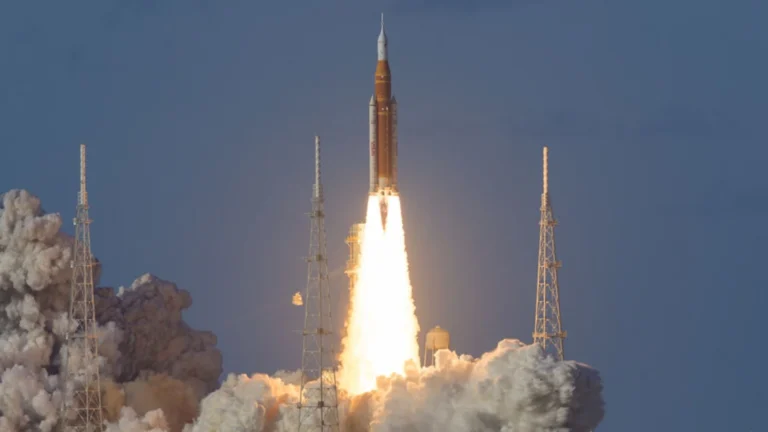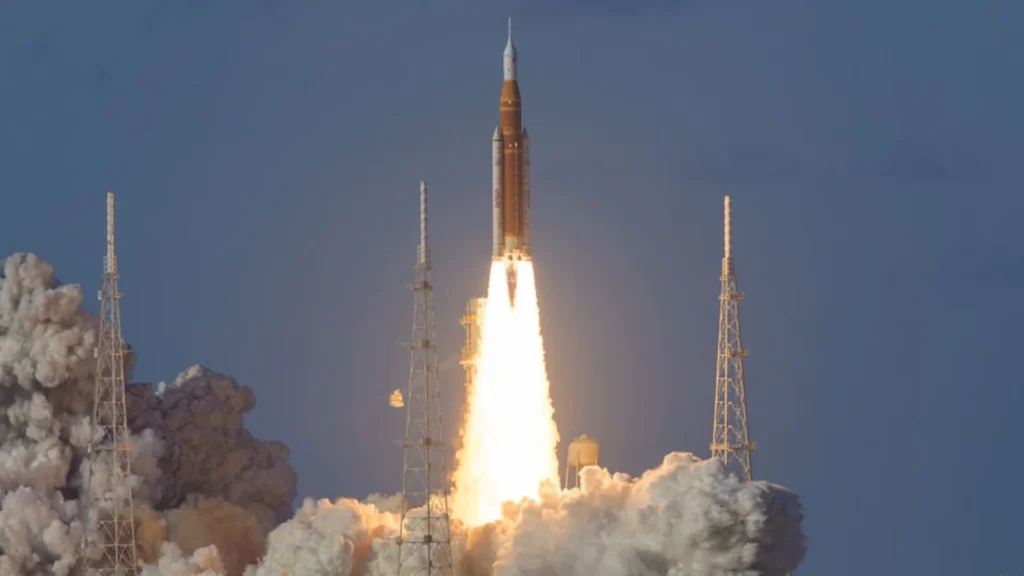
NASA has thrust the Moon back into global focus with its Artemis II mission, sending four astronauts on a historic lunar flyby, the first time humans have ventured toward the Moon in over 50 years.
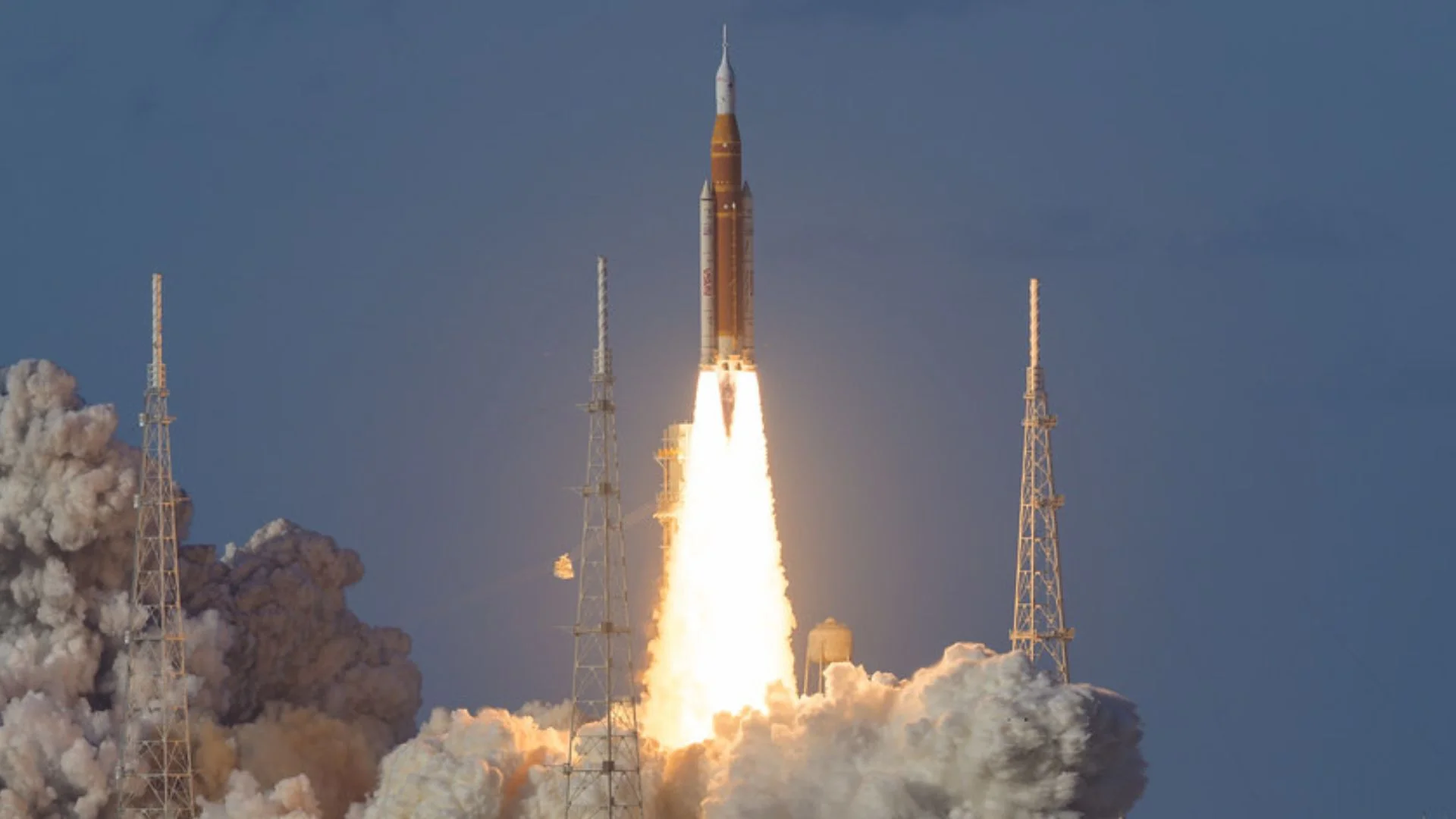
The launch took place from Kennedy Space Center in Florida. At 6:35 p.m. EDT, the powerful Space Launch System (SLS) roared to life from Launch Pad 39B, beginning the journey. Sitting atop it was the Orion spacecraft, carrying a crew that represents both experience and diversity in modern space exploration.
This mission’s objective is to validate key systems that will enable future crewed lunar landings and a sustained presence. By carefully testing life support, safety, and navigation technologies, Artemis II aims to ensure astronauts can return to, stay on, and operate safely around the Moon.
READ ALSO: Hidden Power on Israel F-16 Wings: Cluster Munitions Target Missile Launches
Donald Trump called Artemis II a major milestone, saying it reflects American strength and innovation and builds on his administration’s vision for a lunar return. He emphasized the launch as not just a return but a leadership step toward a long-term human presence beyond Earth.
Artemis II: Four Astronauts, One Historic Journey
The Artemis II crew includes Reid Wiseman, Victor Glover, Christina Koch, and Jeremy Hansen from the Canadian Space Agency. Together, they form the first team to fly aboard Orion with humans on board.
Their mission will last around 10 days. Yet, what truly distinguishes this flight is its significance, which extends far beyond its duration.
NASA Administrator Jared Isaacman said the launch marks a defining moment. He stressed that this mission is not just about revisiting the Moon. It is about building a long-term presence there and preparing for future missions to Mars.
A Test Flight With Bigger Goals
Artemis II is the first crewed mission under NASA’s Artemis program. Its main objective is to test key systems, such as life support, manual flight operations, and deep-space communications, before future missions attempt a lunar landing.
WATCH ALSO: Humanoid Robots Engage in Unscripted Chat for Hours
Soon after reaching space, Orion deployed its solar arrays to generate power. Engineers and astronauts then began checking all major systems.
NASA officials say this mission will test life support systems with a crew for the first time in deep space conditions. It will also assess how the spacecraft performs when handled manually by astronauts.
Amit Kshatriya, NASA’s Associate Administrator, described the mission as a starting point. He said the real test has just begun, and the crew will push the spacecraft to its limits over the next several days.
Around the Moon
About 49 minutes after liftoff, the Space Launch System’s upper stage executed a critical burn, placing the Orion spacecraft into an initial elliptical orbit around Earth. Building on this milestone, a subsequent maneuver is planned to push Orion, named ‘Integrity’ by its crew, into a much higher orbit, extending roughly 46,000 miles beyond the planet. Once this burn is complete, the spacecraft will detach from the upper stage and begin operating independently in space.
Several hours later, a ring attached to the rocket’s upper stage, which is then at a safe distance from Orion, will deploy four CubeSats. These compact satellites, contributed by international partners including Argentina’s Comisión Nacional de Actividades Espaciales, the German Aerospace Center, the Korea Aerospace Agency, and the Saudi Space Agency, are designed to carry out a range of scientific experiments and technology demonstrations.
READ ALSO: Fires and Fallout: 40% of Russia’s Baltic Oil Capacity Hit in Ukraine Attacks
Following the CubeSat deployment, Orion will remain in its high Earth orbit for approximately 24 hours. During this phase, astronauts will conduct a manual piloting demonstration to evaluate the spacecraft’s handling and responsiveness. At the same time, crews aboard the spacecraft and flight controllers at NASA’s Johnson Space Center in Houston will continue rigorous system checks to ensure all onboard functions are performing as expected.
Provided all systems remain in optimal condition after these evaluations, mission control will initiate a translunar injection burn using Orion’s European-built service module. Scheduled for Thursday, April 2, this roughly six-minute engine firing will send the spacecraft toward the Moon. The trajectory is carefully designed to carry the crew around the lunar surface while using the Moon’s gravity to propel them back toward Earth.
A key highlight of the mission will occur during a planned lunar flyby on Monday, April 6. Over several hours, astronauts will capture images and document observations of the Moon’s surface, including rarely seen regions of the far side.
With partial illumination expected during the flyby, elongated shadows will accentuate the Moon’s terrain, revealing details such as ridges, slopes, and crater edges that are often difficult to discern under full illumination. These observations, along with ongoing human health studies such as AVATAR, will provide valuable data for future lunar exploration efforts.
WATCH ALSO: China’s military showcases modern battlefield capabilities in new exercise
Following the successful completion of the flyby, Orion will begin its return journey to Earth, ultimately concluding with a splashdown in the Pacific Ocean.
The completion of Artemis II marks just one step in a much larger NASA initiative. Building on progress from this mission, NASA aims to use the Artemis program to establish a sustainable presence on the Moon. Future missions are slated to attempt landings, set up habitats, and explore resources.
These efforts are also designed to prepare humans for the next major goal, sending astronauts to Mars. With Artemis II now in flight, the journey back to deep space has truly begun.