US defense contractor L3Harris Technologies has reduced production time for critical hypersonic propulsion components by a factor of ten.
This falls under a Department of Defense Manufacturing Technology Program contract managed by the Naval Surface Warfare Center Crane.
The initiative supports the Growing Additive Manufacturing Maturity for Airbreathing Hypersonics challenge, widely known as GAMMA-H. It is a program designed to transition hypersonic propulsion systems from laboratory-scale prototypes to scalable, production-ready hardware.
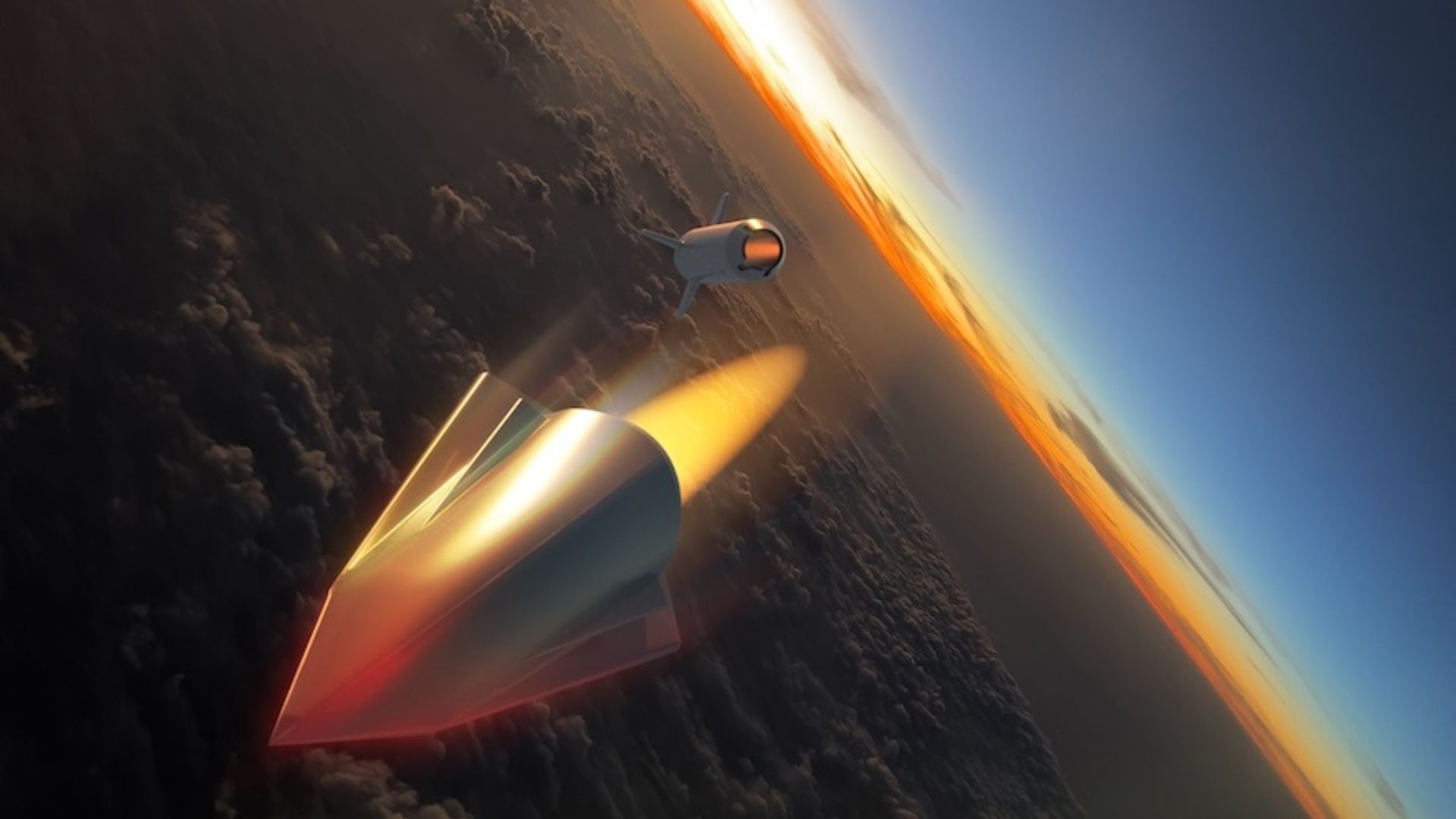
Hypersonic weapons travel at speeds exceeding Mach 5, requiring propulsion systems capable of operating under extreme heat, pressure, and aerodynamic stress. Airbreathing engines such as ramjets and scramjets are central to this capability. They compress incoming air at high speeds without relying solely on onboard oxidizers.
READ ALSO: https://modernmechanics24.com/post/darpas-x-68a-longshot-us-air-combat/
Under GAMMA-H, L3Harris is working to identify and qualify advanced materials, manufacturing equipment, and production processes capable of building these propulsion systems at scale.
“Under GAMMA-H, we have been identifying materials, equipment, and processes capable of building these propulsion systems at scale,” said Scott Alexander, President of Missile Propulsion at L3Harris. “The new equipment and processes we’ve developed have enabled us to reduce the time it takes to 3D-print components by a factor of 10, resulting in higher production rates and lower costs.”
Hypersonic propulsion components demand high-temperature alloys, complex internal cooling channels, and precision geometries that are traditionally difficult and time-consuming to machine. Additive manufacturing, commonly known as 3D printing, enables engineers to build intricate designs layer by layer from powdered metal, reducing assembly steps and material waste.
L3Harris is integrating large-format additive manufacturing systems with robotics, autonomous machinery and optimized digital workflows. The company says this approach creates an end-to-end manufacturing ecosystem for scramjet propulsion, minimizing reliance on extended supply chains.
WATCH ALSO: https://modernmechanics24.com/post/cartoon-robot-learns-kitchen-chores-2/
“We are building the foundation for a factory of the future that will enable us to start with just powdered metal and quickly produce a complete propulsion system,” Alexander said. “By combining steps and simplifying 3D-printing processes, we have reduced the need for expensive and time-consuming machining and post-print processing.”
Traditionally, hypersonic engine components required multiple fabrication stages, including casting, forging, precision machining, and extensive finishing. Each step introduced potential delays, higher costs, and supply chain dependencies.
By consolidating manufacturing stages through additive methods, L3Harris aims to accelerate production while improving consistency and repeatability.
Why GAMMA-H Matters Militarily
From a military perspective, GAMMA-H is not just about engineering efficiency. It addresses a strategic production gap. As global competition in hypersonic weapons intensifies, the US faces the challenge of scaling up manufacturing to meet operational demands.
Hypersonic systems, including air-breathing cruise missiles, require propulsion units capable of sustained high-speed atmospheric flight. Scramjets enable missiles to maintain hypersonic velocity while maneuvering, making them harder to detect and intercept.
READ ALSO: https://modernmechanics24.com/post/bizarre-worlds-first-floating-hotel/
However, producing scramjet engines in meaningful numbers has historically been limited by cost, complexity, and supply chain fragility. GAMMA-H focuses on maturing additive manufacturing technologies so they can transition from experimental builds to reliable, repeatable production lines.
By shortening production timelines tenfold, L3Harris strengthens the industrial base supporting US hypersonic programs. Faster component output could translate into improved readiness, reduced procurement costs and accelerated deployment cycles.
L3Harris maintains a broad portfolio of hypersonic technologies, including ramjets, scramjets, solid rocket motors, warheads, and advanced sensor systems. These technologies support next-generation missile defense and strike capabilities.
The integration of additive manufacturing into propulsion production aligns with broader Department of Defense efforts to modernize defense manufacturing. It also reflects a shift toward digital engineering environments where design, simulation, and fabrication are tightly interconnected.
WATCH ALSO: https://modernmechanics24.com/post/china-humanoid-robot-embroiders-itself/
As GAMMA-H progresses, the success of L3Harris’ advanced manufacturing approach could influence how future high-speed weapons are built, not just faster, but smarter and more resilient to supply disruptions.
In an era where speed defines both battlefield performance and industrial capability, cutting hypersonic engine production time by 90 percent may prove to be as strategically important as the weapons themselves.