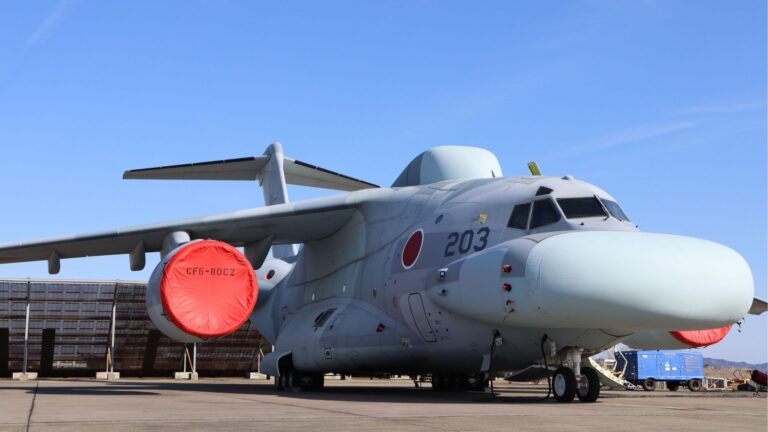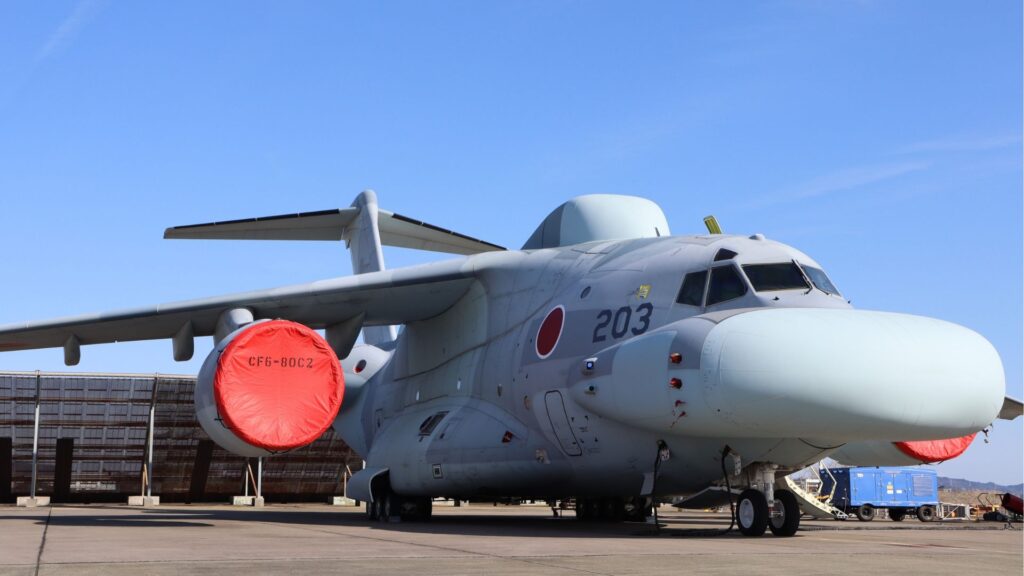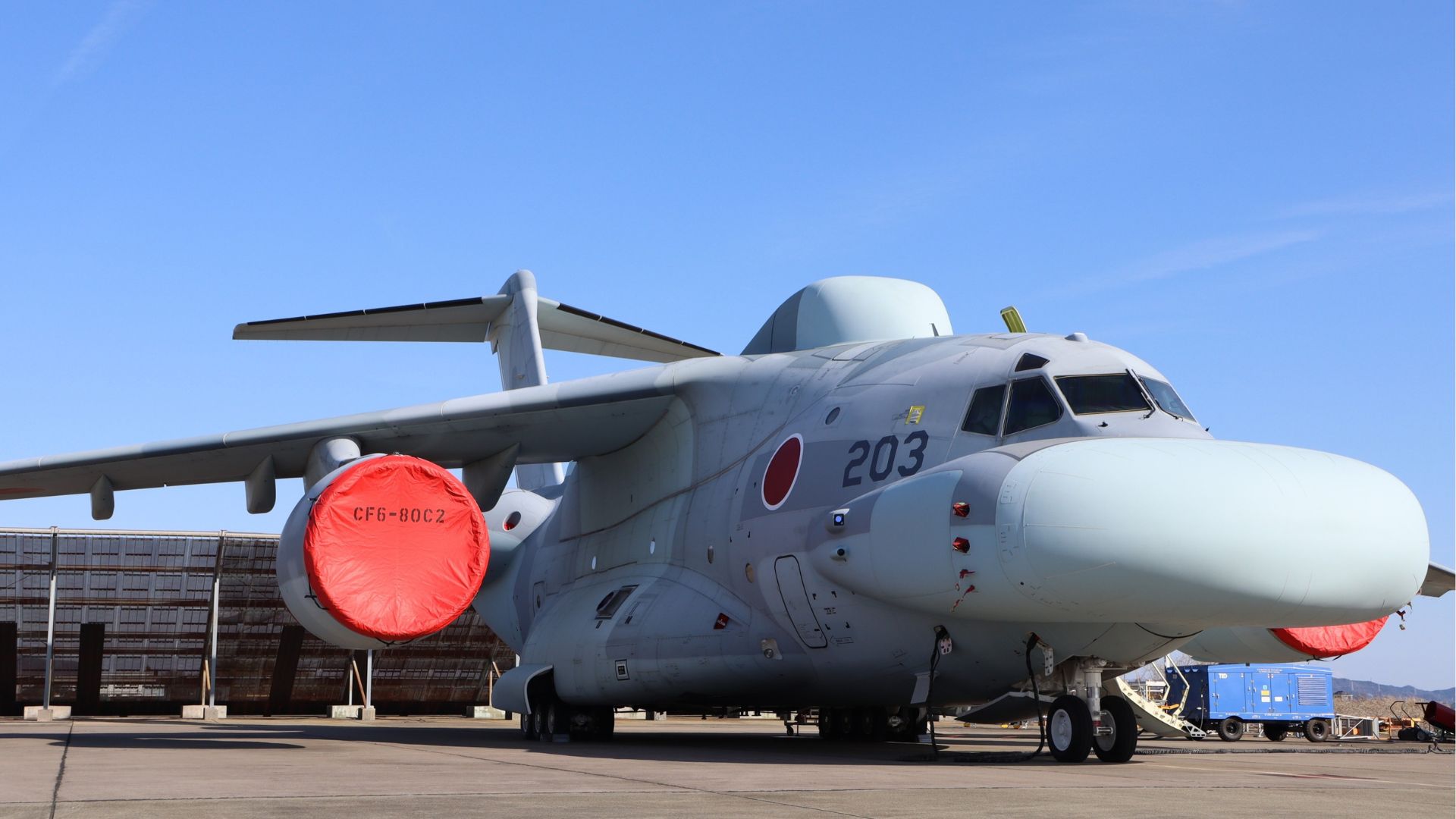
Japan’s aircraft, known as the Kawasaki EC-2, completed its first flight at Gifu Air Base.
While many observers have commented on its strange and bulky appearance, defense experts are focusing on its powerful capabilities in electronic warfare.
Kawasaki EC-2: Aircraft Built on Proven Platform
The EC-2 is the latest addition to the Japan Air Self-Defense Force. It is designed to operate in the electromagnetic spectrum, a critical domain in modern warfare.
Unlike traditional combat aircraft, this jet does not rely solely on weapons. Instead, it uses advanced systems to disrupt enemy radars, communications, and air defense networks from a safe distance.
The aircraft is based on the Kawasaki C-2, a domestically developed twin-engine transport plane. Development of the EC-2 began in 2021 as part of Japan’s efforts to strengthen its defense capabilities amid rising regional tensions. The aircraft that recently flew was originally the third C-2 transport built, later modified extensively for its new role.
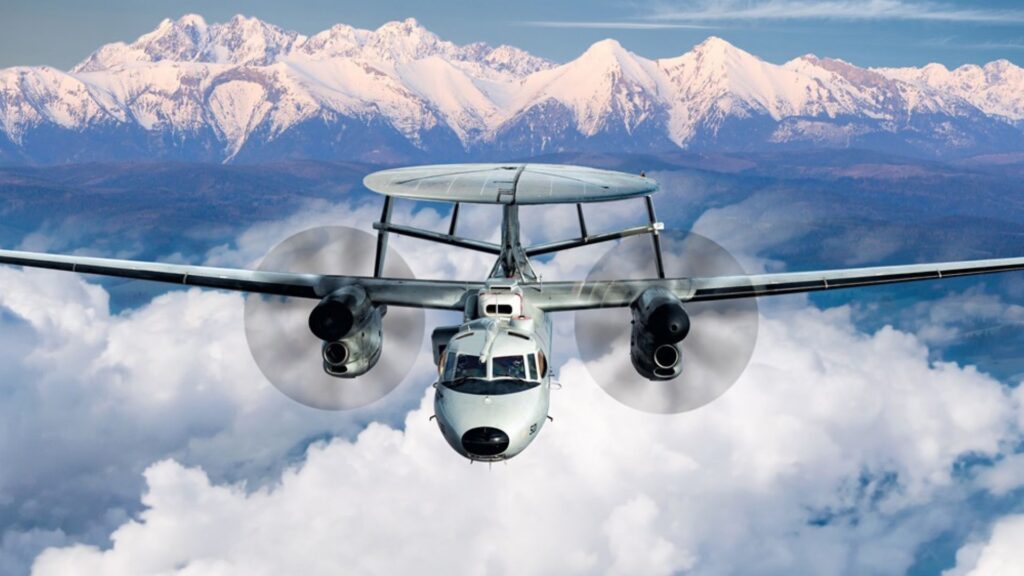
READ ALSO: E-2D Hawkeye: Pentagon Sends ‘Eyes in the Sky’ as Gulf Threats Escalate
The EC-2’s appearance has been widely discussed. It features a large, bulbous nose and several unusual protrusions across its fuselage. These include large fairings mounted on the top and sides of the aircraft.
While these features may seem awkward, they house sophisticated electronic systems. These systems are designed to detect, analyze, and jam enemy signals.
Before its first flight, the EC-2 had already become a subject of curiosity among aviation enthusiasts. Photographers captured images of the aircraft during taxi trials at Gifu Air Base. Until then, its design was known only through official renderings released by Japan’s defense authorities.
Officials from Japan’s Acquisition, Technology & Logistics Agency explained the rationale for selecting the C-2 platform. They said the aircraft was selected after considering flight performance, payload capacity, and cost efficiency. They added that using the C-2 allows Japan to leverage existing infrastructure, making operations more effective.
The C-2 itself is a capable aircraft. It sits between larger aircraft like the Boeing C-17 Globemaster III and smaller ones like the Lockheed C-130 Hercules in terms of size and capability.
READ ALSO: Sun’s Hidden Engine Found 200,000 Kilometers Below Surface; Scientists Track Magnetic Mystery
It is powered by two high-bypass turbofan engines, similar to those used on commercial aircraft such as the Boeing 747. This gives it strong performance and long-range capabilities.
Compared to its predecessor, the EC-2 offers a significant upgrade. It replaces the older Kawasaki EC-1, which was based on the earlier C-1 transport aircraft.
The EC-1 served for many years but was limited in capacity and technology. The new EC-2 benefits from a much larger payload and more advanced systems.
The difference in capacity is notable. The C-2 can carry nearly 80,000 pounds of payload, while the older C-1 could carry only around 26,000 pounds. This allows the EC-2 to host a wide range of electronic warfare equipment.
Some EC-1 systems, such as the J/ALQ-5 electronic countermeasure system, have reportedly been adapted for use in the new aircraft.
The EC-2 is equipped with modern self-defense features as well. Images show missile approach warning sensors installed around the fuselage. These sensors help detect incoming threats and improve the aircraft’s survivability during operations.
WATCH ALSO: World’s largest nuclear fusion research project ITER has reached a new milestone
In combat situations, the EC-2 will play a key role. It is designed to operate from outside the range of enemy air defenses. From this position, it can jam radar systems and disrupt communications.
This can make it difficult for adversaries to detect and track friendly forces. It can also weaken the effectiveness of enemy missile systems.
The development of the EC-2 reflects a broader shift in military strategy. Modern warfare increasingly relies on controlling the electromagnetic spectrum. By disrupting enemy sensors and communications, forces can gain a significant advantage without direct confrontation.
Japan plans to acquire four EC-2 aircraft. This marks a significant increase compared to the single EC-1 used previously. The program is part of a larger investment in intelligence and electronic warfare capabilities.
Around $260 million has been allocated specifically for the EC-2’s development, within a broader $3.2 billion effort to enhance intelligence systems.
WATCH ALSO: Researchers from German have developed a diving robot that can easily collect underwater waste
The EC-2 is not the only specialized variant of the C-2. Another aircraft, the Kawasaki RC-2, is already in service.
The RC-2 is designed for signals intelligence missions. It collects data on enemy radar and communication systems during peacetime operations.
Defense officials suggest that the RC-2 and EC-2 will work together. The RC-2 gathers information on potential threats, creating an electronic order of battle. This data is then used by the EC-2 to target specific systems during operations. This coordinated approach enhances overall effectiveness.
Japan has also explored other roles for the C-2 platform. One idea is to equip the aircraft with long-range missiles. This would allow it to function as a standoff attack platform. While research has been conducted, the current status of this concept remains unclear.
Despite its advantages, the C-2 program has faced challenges. The aircraft is expensive to produce.
Development costs reached approximately $2.3 billion, and each unit costs around $176 million. These high costs have limited production and prevented export success. Japan plans to field a fleet of 16 C-2 aircraft.
The introduction of the EC-2 comes amid growing security concerns in the region. Japan faces increasing military activity from neighboring countries. China has expanded its presence in the East China Sea and the Western Pacific. Its naval and air operations near Japan’s southwestern islands have become more frequent.
North Korea continues to test ballistic missiles capable of reaching Japanese territory. At the same time, Russian military aircraft have increased their activity around Japan’s airspace. Joint patrols involving Chinese and Russian forces have also been observed.
In response to these challenges, Japan is investing in advanced technologies.
Electronic warfare is seen as a vital area for future defense. By developing platforms like the EC-2, Japan aims to strengthen its ability to operate in contested environments.
READ ALSO: Lenovo’s 1000Wh Battery Reveal Signals More Than Just Better Battery Life
Globally, interest in such aircraft is growing. The US has developed systems like the EA-37B Compass Call, while Australia is working on the MC-55A Peregrine. It indicates the increasing importance of electronic warfare in modern conflicts.
Although the EC-2’s unusual design has attracted attention, its true value lies in its capabilities. The aircraft represents a significant step forward for Japan’s defense strategy. It shows how technology is reshaping the nature of warfare.
As the EC-2 undergoes further testing at Gifu Air Base, it will be evaluated for operational readiness. It will become an important asset for the Japan Air Self-Defense Force. Its ability to disrupt enemy systems and support allied operations will play a key role in maintaining regional stability.
Though the EC-2 may not appear attractive, its advanced technology and strategic importance make it a powerful tool in Japan’s defense arsenal.