A colossal iceberg known as A-23A, which calved from Antarctica’s Filchner Ice Shelf in 1986, is displaying spectacular deep-blue meltwater pools in its final days, captured by NASA’s Terra satellite and astronauts on the International Space Station. After covering 4,000 square kilometers—nearly twice the size of Rhode Island—for decades, the berg has dwindled to 1,182 square kilometers and is now breaking apart in the warm waters of the South Atlantic.
For forty years, iceberg A-23A has been a slow-motion titan on a colossal journey. Born when it broke free from Antarctica in 1986, it defied the odds by surviving not for a few years, but for decades, spending nearly 30 years grounded in the shallow Weddell Sea. Now, this frozen relic of a colder era is meeting its inevitable end in a surprisingly beautiful display. Recent satellite and astronaut photos reveal its surface scarred with vast, stunning blue pools of meltwater, a vivid sign that its long voyage is concluding.
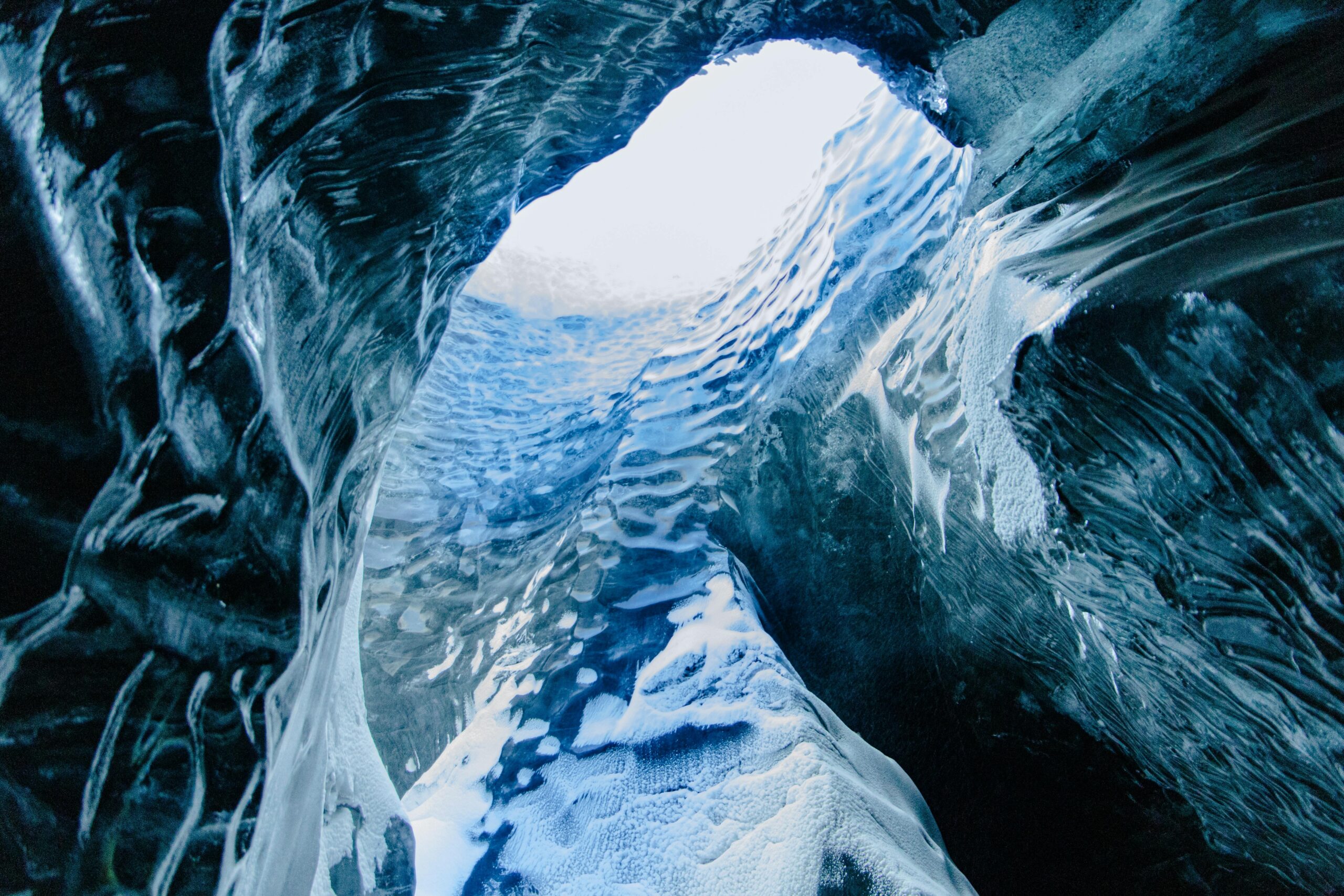
The transformation is both dramatic and scientifically telling. In late December, NASA’s Terra satellite observed the berg now adrift in the open South Atlantic, its surface dotted with extensive azure lakes. The very next day, an astronaut aboard the International Space Station captured even more intricate details. This “blue mush,” as glaciologists call it, forms when summer sunlight melts surface snow and ice, collecting in the berg’s cracks and ancient glacial valleys. “Ted Scambos, a senior researcher at the University of Colorado Boulder, describes the blue mush as proof that the berg is breaking apart right in front of us,” according to the imagery analysis.
READ ALSO: https://modernmechanics24.com/post/space-based-air-traffic-control-worldwide/
The beautiful blue is, ironically, a death knell. The weight of the pooled water increases pressure within the ice, widening fissures and sometimes causing violent blowouts where freshwater plumes erupt into the ocean. One such explosive event is visible in the latest imagery, a clear signal of structural failure. Chris Shuman, a retired scientist from the University of Maryland, who has followed the berg’s journey, confirms it is nearing its end. Now drifting in waters around 3 degrees Celsius (37.4°F) within a region known as an “iceberg graveyard,” A-23A is melting from both above and below.
Its story is one of persistence and slow change. After finally being freed by currents in 2020, it began a slow drift north, narrowly avoiding a collision with South Georgia Island. Since mid-2025, accelerated breakup has shrunk it from its original mammoth size to an area still larger than New York City, but shrinking fast. Researchers believe complete disintegration is now a matter of “days or weeks.”
WATCH ALSO: https://modernmechanics24.com/post/south-korea-showcases-multi-purpose-military-ugv/
The four-decade saga of A-23A has provided an invaluable natural laboratory. Scientists have used satellites to meticulously track its prolonged grounding, its slow-motion escapes, and its eventual decay. This patient observation offers critical insights into how the planet’s largest icebergs behave, transport freshwater, and ultimately influence ocean ecosystems as they dissolve in a warming climate. As the deep blue pools spread and the fissures grow, the world watches the final act of a frozen giant that outlasted generations, its silent breakup a powerful reminder of the slow but relentless processes that reshape our planet.