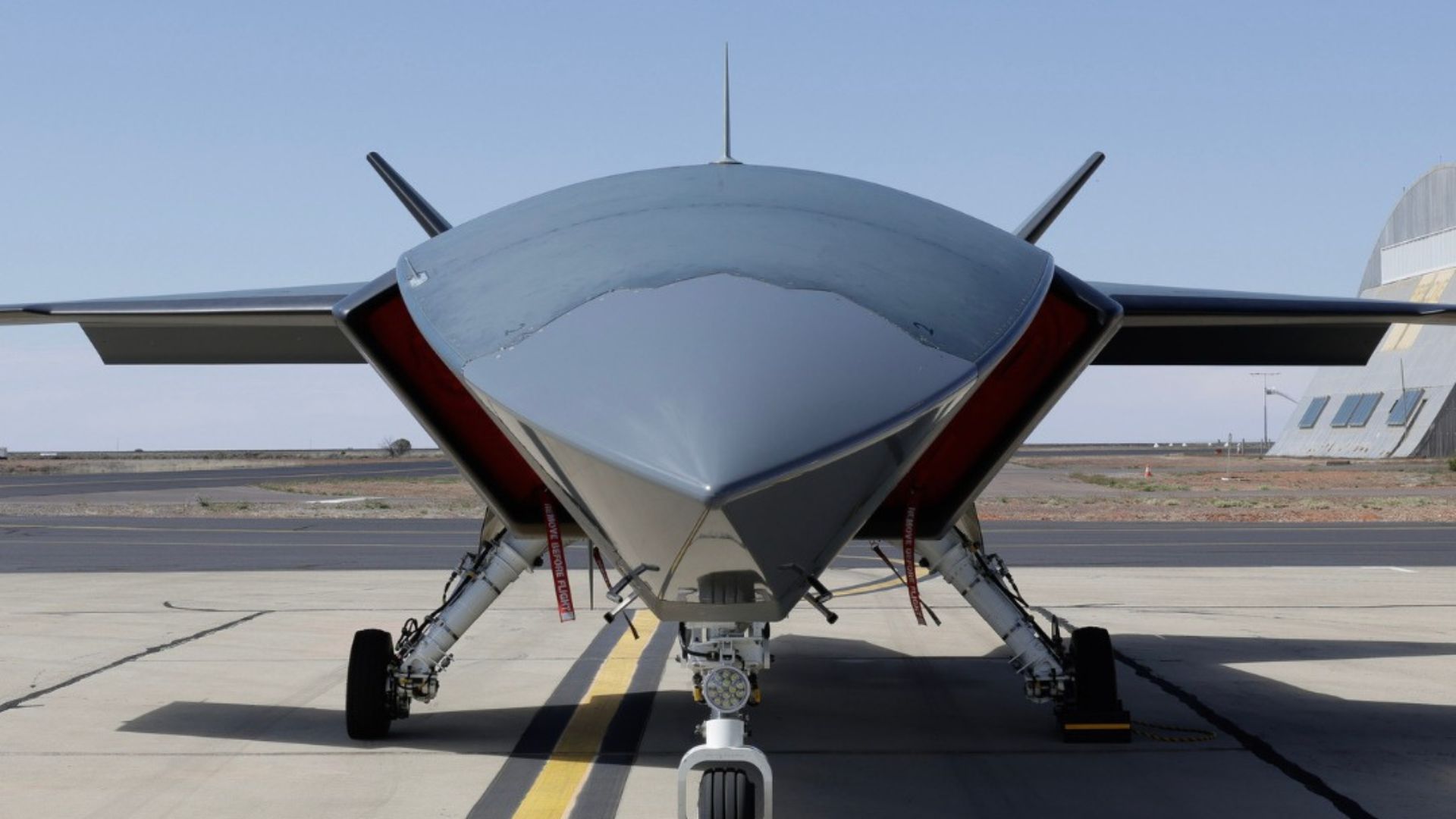
Australia is accelerating development of its loyal wingman combat drones, ordering a fresh batch of MQ-28A Ghost Bat aircraft as it sharpens its focus on long-range deterrence and autonomous airpower.
The Royal Australian Air Force (RAAF) has already been testing eight Block 1 Ghost Bats.
Now, under a new AUS$754 million (US$534 million) contract announced on December 9, 2025, Boeing Defence Australia will deliver seven additional aircraft. The third production tranche includes six Block 2 collaborative combat aircraft (CCA) and the first-ever Block 3 variant.
With the expanded order, Australia is on track to field 10 operational Ghost Bats by 2028.
The first of three previously ordered Block 2 aircraft is currently undergoing ground testing and is expected to take to the skies soon. The latest procurement reflects Canberra’s intent to transition the Ghost Bat from experimental testing into an operational force multiplier.
READ ALSO: https://modernmechanics24.com/post/china-submarine-build-up-raises-concern/
Australia has emerged as one of the leading nations exploring collaborative combat aircraft. That is uncrewed platforms designed to operate alongside crewed fighters, extending their sensor reach, survivability, and weapons capacity.
According to officials, the Ghost Bat is at the center of Australia’s strategy as it responds to growing regional tensions and China’s rapid military modernization.
By integrating autonomous systems, the RAAF aims to project power across vast distances in the Indo-Pacific while reducing risks to pilots.
Recent flight demonstrations highlighted how the Ghost Bat fits into a networked air combat environment.
In one mission, two MQ-28As flew in formation while an E-7A Wedgetail early warning aircraft acted as a battlefield coordinator. The exercise simulated a full air-to-air engagement at representative operational ranges.
“That mission was to go out there against a representative target at a representative range and achieve the find, fix, track, target piece of the air-to-air kill chain,” said Glen Ferguson, MQ-28 Global Program Director at Boeing Defence, speaking at the Singapore Airshow.
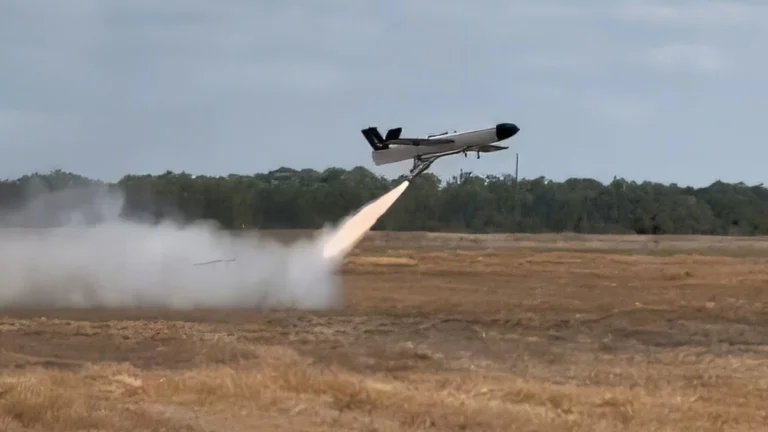
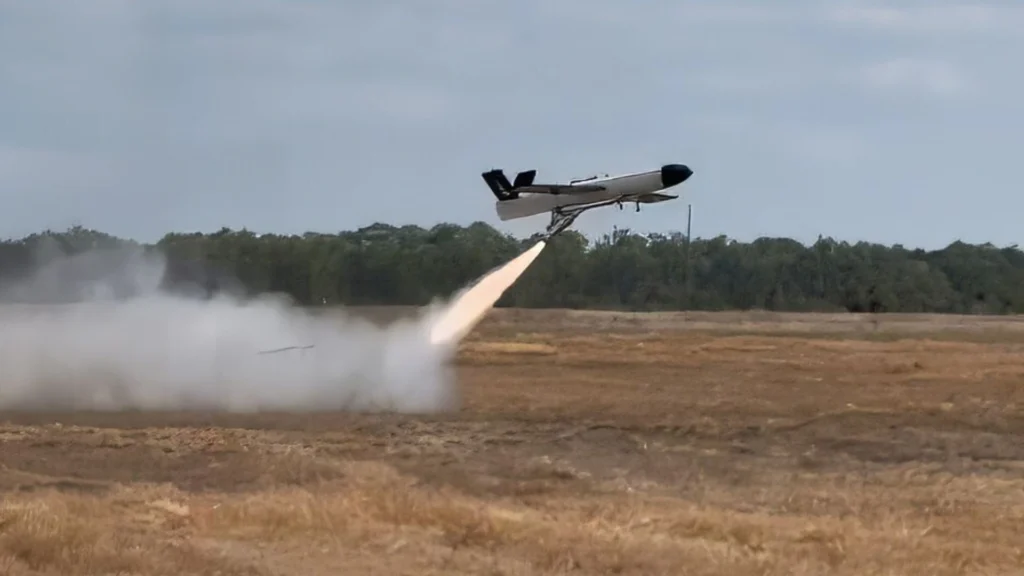
The program reached a milestone on December 8, 2025, when a Ghost Bat conducted its first live missile firing. The drone launched an externally mounted AIM-120 AMRAAM at a Phoenix target drone. Targeting data came from an F/A-18F Super Hornet, while the E-7A provided command and control support.
WATCH ALSO: https://modernmechanics24.com/post/humanoid-robot-towel-folding/
“We did the engage-assessment part of the kill chain, and we did it on purpose to show that all spectrums of the mission can be covered through a mix of crewed and uncrewed teaming,” Ferguson said.
The upcoming Block 3 variant introduces an internal weapons bay capable of carrying either one AMRAAM-sized missile or two GBU-39/B-class precision-guided munitions. Boeing has also tested electronic warfare systems, infrared seekers, and other advanced sensor packages to expand mission flexibility.
Ferguson said that collaborative combat aircraft are not replacements for traditional fighters. Instead, they are designed to complement them.
“The thing about CCAs that we’re learning is they’re not replacement aircraft,” he said.
Australia’s Minister for Defence Industry, Pat Conroy, has outlined an ambitious goal for the force structure. This says there are at least three unmanned platforms for every crewed combat aircraft in service. The approach aims to stretch the effectiveness of Australia’s fighter fleet while lowering operational risk.
READ ALSO: https://modernmechanics24.com/post/europe-hypersonic-missile-vs-oreshnik/
Construction of a dedicated Ghost Bat production facility in Toowoomba, Queensland, is expected to conclude this year. The operations are scheduled to begin in 2027. Local manufacturing underscores Canberra’s commitment to sovereign defense capabilities and advanced aerospace jobs.
Australia wants each Ghost Bat to cost about 10 percent of a crewed combat aircraft. Boeing executives are confident they can meet that affordability target.
“We’re really, really comfortable with our affordability,” Ferguson said. “We’ve built this aircraft from day one to be affordable.”
Exports are also part of Boeing’s long-term strategy. Ferguson confirmed discussions are underway with several potential international partners, including Japan.
Despite its early lead in operational testing, the Ghost Bat faces competition. US-based Anduril Industries has showcased its Fury drone in Australia, while General Atomics continues development of its Gambit family of CCAs.
However, Australia’s steady procurement pace and live-fire demonstrations suggest the Ghost Bat is moving beyond the prototype phase.