Fermi National Accelerator Laboratory is bringing artificial intelligence into the Deep Underground Neutrino Experiment, or DUNE. The AI tools will help scientists analyze particle signals faster, spot rare events and manage the huge detector more efficiently.
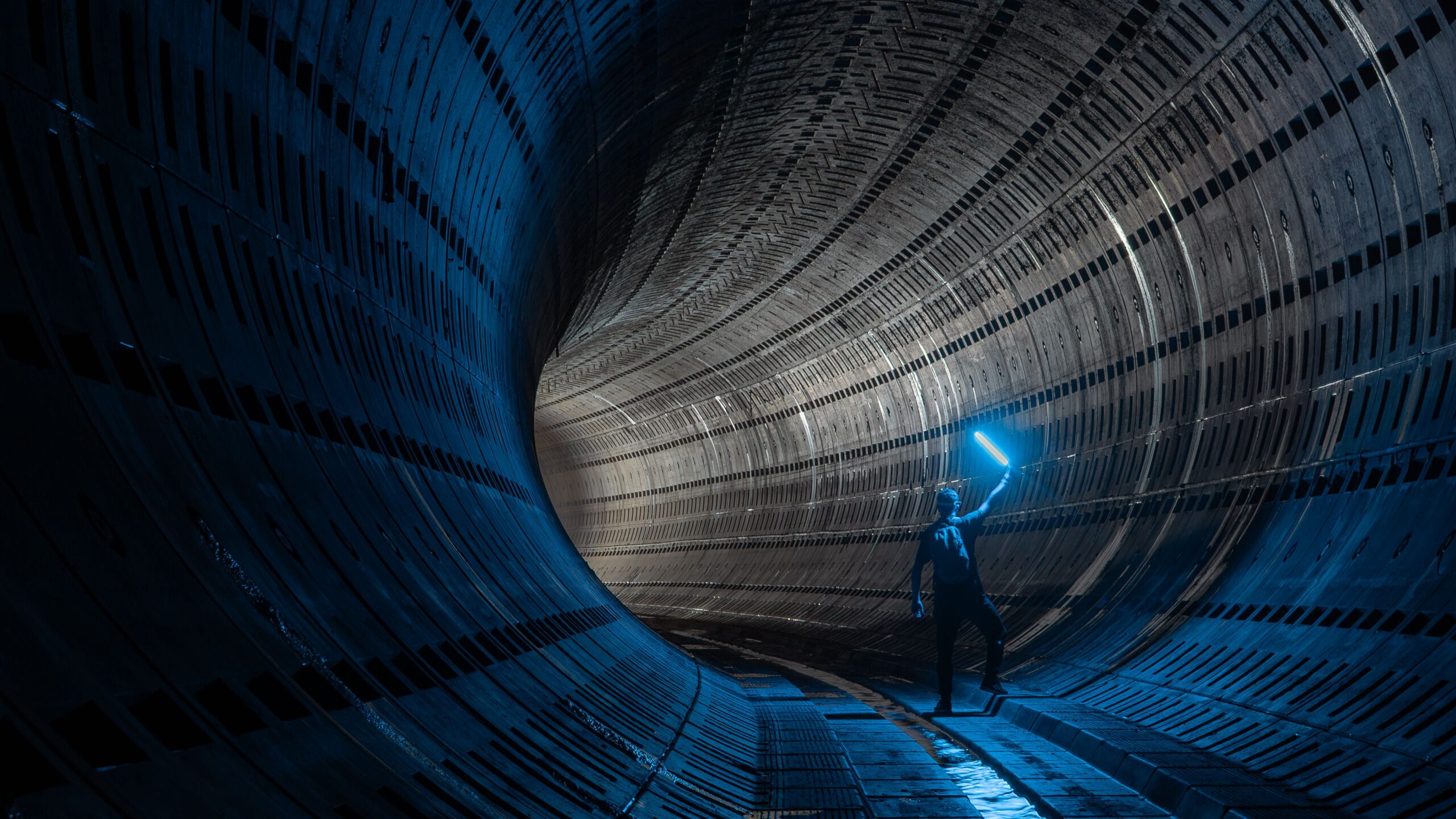
DUNE is being built under the Long-Baseline Neutrino Facility, with a near detector at Fermilab and a much larger detector about a mile underground in South Dakota. Both detectors will use liquid argon to record rare interactions between neutrinos and matter.
Neutrinos are extremely hard to detect because they rarely interact with other matter. Trillions pass through Earth and our bodies every second, so DUNE needs large detectors and advanced software to find the small number of useful signals.
READ ALSO: https://modernmechanics24.com/post/lockheed-martin-expands-missile-defense/
AI will help identify these signals and reconstruct what happened inside the detector. It can follow particle tracks, locate the point where a neutrino interaction occurred and estimate the neutrino’s energy and direction.
The work builds on decades of AI research at Fermilab. Earlier experiments, including NOvA and MicroBooNE, were among the first high-energy physics projects to use deep neural networks to identify particle interactions. DUNE researchers are now developing newer machine-learning methods for its much larger and more detailed data.
AI will also help DUNE search for rare events, including neutrinos from a supernova. A special trigger system can continuously watch the detector and look for a sudden burst of neutrinos. If it finds a possible supernova signal, the system can save data from 10 seconds before and 100 seconds after the event for scientists to study.
This could give astronomers an early warning that a star has exploded. Neutrinos can escape the star more easily than light, so they may reach Earth hours before the visible flash. That early signal could help scientists point telescopes at the right part of the sky.
WATCH ALSO: https://modernmechanics24.com/post/chinese-calligraphy-3d-ground-illusion/
DUNE also faces a major operating challenge. The experiment will contain thousands of components and is expected to produce petabytes of data. Researchers are exploring AI tools that could help operators search technical records for solutions and predict possible detector problems before they occur.
The project could make DUNE faster and easier to operate while improving its ability to study neutrinos. DUNE’s AI program may also become a useful testing ground for machine learning in particle physics and help train the next generation of researchers in AI and science.