An international team of scientists has built a never-before-seen molecule and used a quantum computer to confirm its strange behavior. The molecule’s electrons travel in a corkscrew pattern, a discovery that could open new ways to design materials.
IBM led the research with help from the University of Manchester, Oxford University, ETH Zurich, EPFL and the University of Regensburg. Their findings appear in the journal Science.
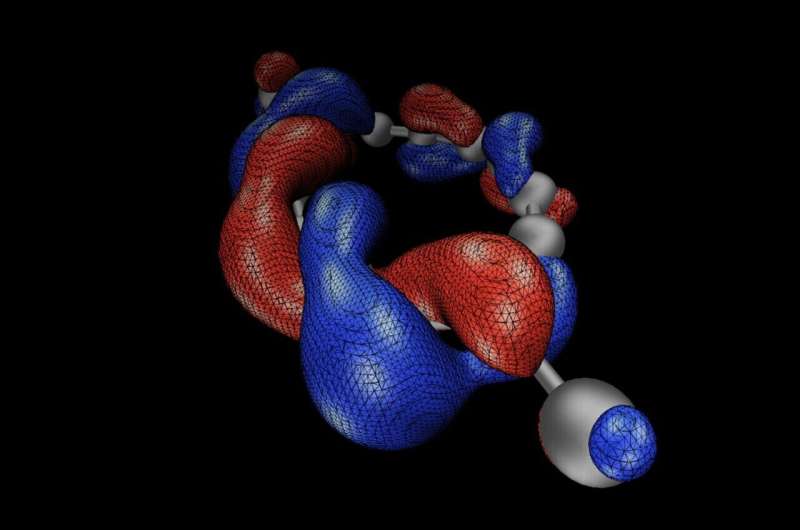
The molecule, named C13Cl2, has an electronic structure that twists 90 degrees with each loop. It takes four complete cycles for the electrons to return to their starting point. Scientists call this a half-Möbius topology, and nothing like it has ever been made or observed before.
“This is a leap towards the dream laid out by renowned physicist Richard Feynman decades ago,” said Alessandro Curioni, IBM Fellow and Director of IBM Research Zurich. The team first designed the molecule, then built it, and finally proved its properties using quantum computing.
READ ALSO: https://modernmechanics24.com/post/space-travel-astronauts-brains-study/
Understanding why the molecule worked required a quantum computer because classical machines cannot easily handle entangled electrons. The researchers used an IBM quantum system to model 32 electrons at once. Traditional computers can only manage about 18 electrons accurately.
Dr. Igor Rončević, a lecturer at the University of Manchester and paper co-author, explained that topology can now become a tool for controlling materials. “The non-trivial topology of this molecule arises from interactions between electrons,” he said. Quantum computers mirror these interactions naturally because their qubits follow quantum rules.
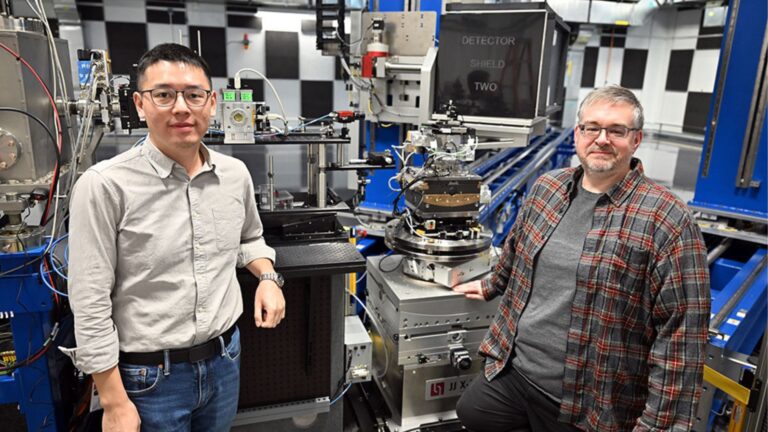
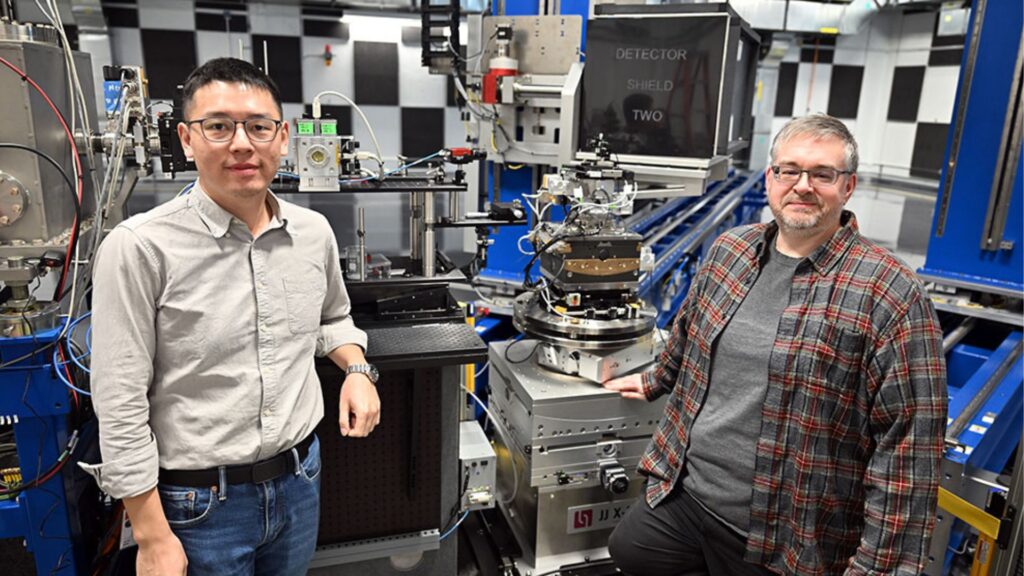
The team built the molecule atom-by-atom at IBM’s lab in Zurich. They worked under ultra-high vacuum at near absolute-zero temperatures, using precise voltage pulses to remove individual atoms. A custom starting material came from Oxford University.
WATCH ALSO: https://modernmechanics24.com/post/china-sets-maglev-700kmh-record/
The molecule can switch between clockwise-twisted, counterclockwise-twisted and untwisted states. This shows that electronic topology is not just something found in nature but can be deliberately engineered under the right conditions.
Scanning tunneling microscopy, invented at IBM in 1981, helped image the structure. Atomic force microscopy also played a role. But confirming the half-Möbius behavior required quantum computing to simulate the helical orbital patterns.
The research demonstrates what IBM calls quantum-centric supercomputing. This approach combines quantum processing units with classical CPUs and GPUs, letting each part solve the problems it handles best.
READ ALSO: https://modernmechanics24.com/post/iran-nuclear-sites-hit-uranium-unclear/
The work builds on decades of IBM nanoscale science. The company invented the scanning tunneling microscope, won a Nobel Prize for it in 1986, and developed atom manipulation techniques in 1989. Now those tools help create molecules that have never existed before.
For now, this remains a lab experiment under extreme conditions. But the ability to engineer electronic topology could eventually lead to new materials, better data storage, or advances in drug design. Quantum computers made this discovery possible, and they are improving quickly.