A new study reveals that airplane contrails form through more complex processes than just soot emissions, challenging long-held scientific assumptions.
The findings, published in Nature, reveal that even when soot emissions drop sharply, contrails can still form in large numbers. This challenges decades of scientific understanding and raises new questions about aviation’s impact on the climate.
The research was led by teams from the German Aerospace Center, working closely with Airbus and CFM International, as well as several academic partners.
For years, scientists believed that soot particles in aircraft exhaust were the main drivers of contrail formation. These particles act as tiny seeds, allowing ice crystals to form when hot exhaust gases mix with cold, humid air at high altitudes. So, the logic seemed simple. Reduce soot, and you reduce contrails.
READ ALSO: NASA Targets 2027 Moon Base, 2028 Nuclear Mars Rocket in Bold Space Roadmap
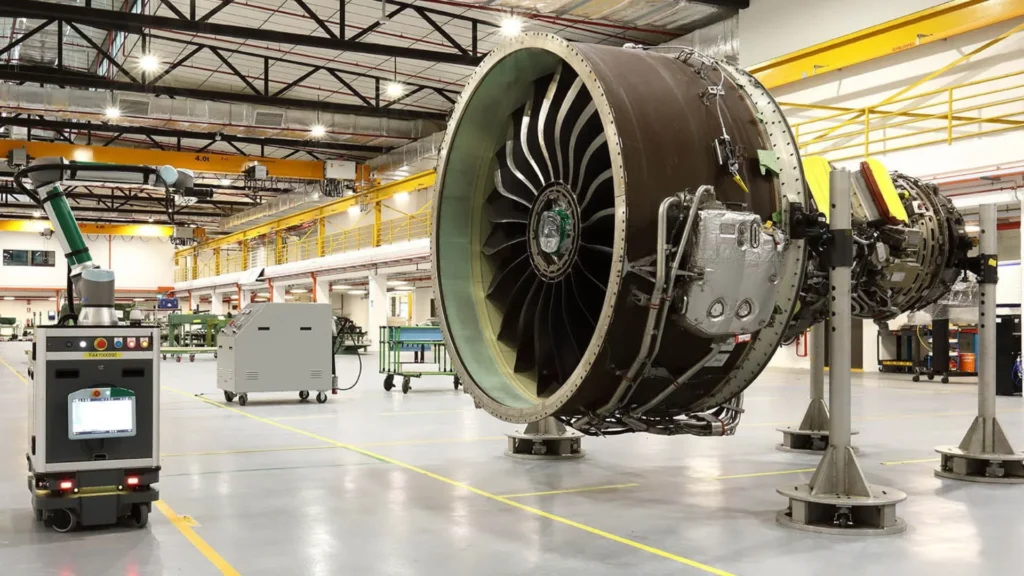
Modern aircraft engines, especially lean-burn engines, are designed to emit much less soot. Ground tests confirmed that these engines significantly cut soot emissions. This led many to expect fewer contrails and a lower climate impact. But real-world data was missing.
Now, for the first time, researchers have measured contrails from these cleaner engines during actual flights. The results tell a very different story.
Real Flights, Real Data
The study was part of the NEOFUELS/VOLCAN campaign conducted in spring 2023. It brought together experts from Johannes Gutenberg University Mainz, the University at Albany, and the French aerospace lab ONERA.
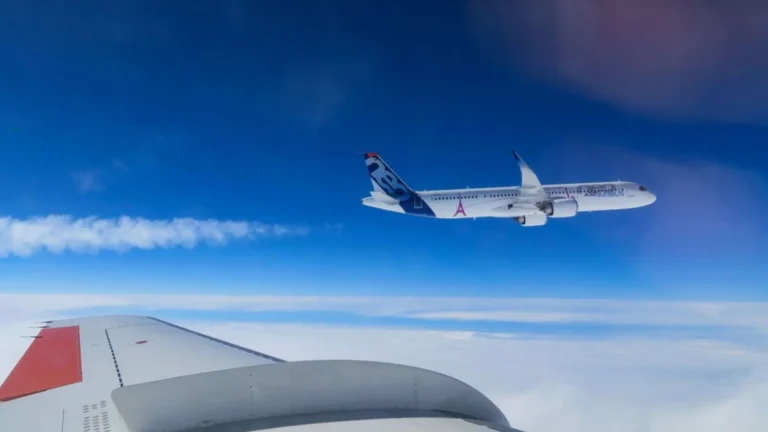
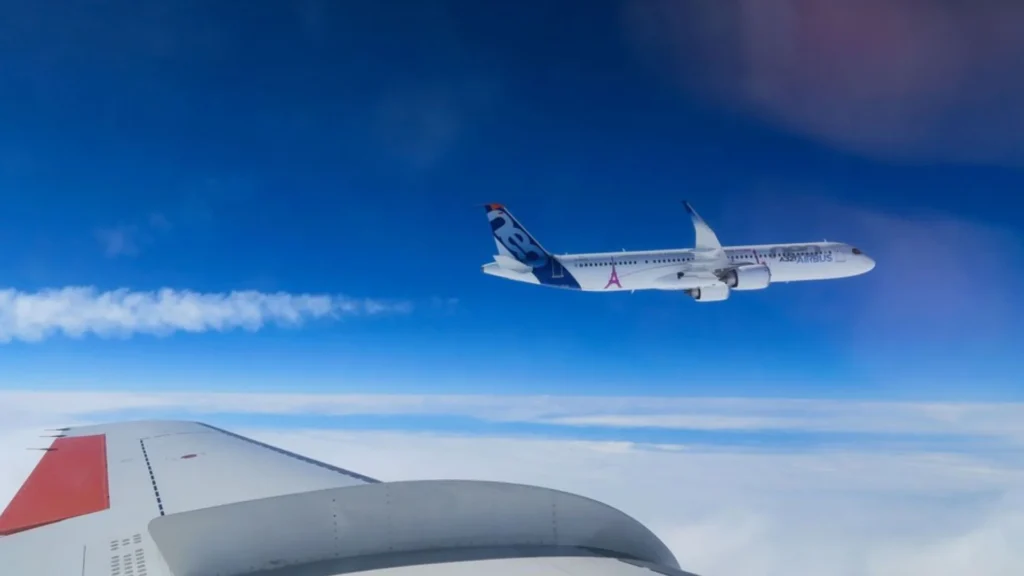
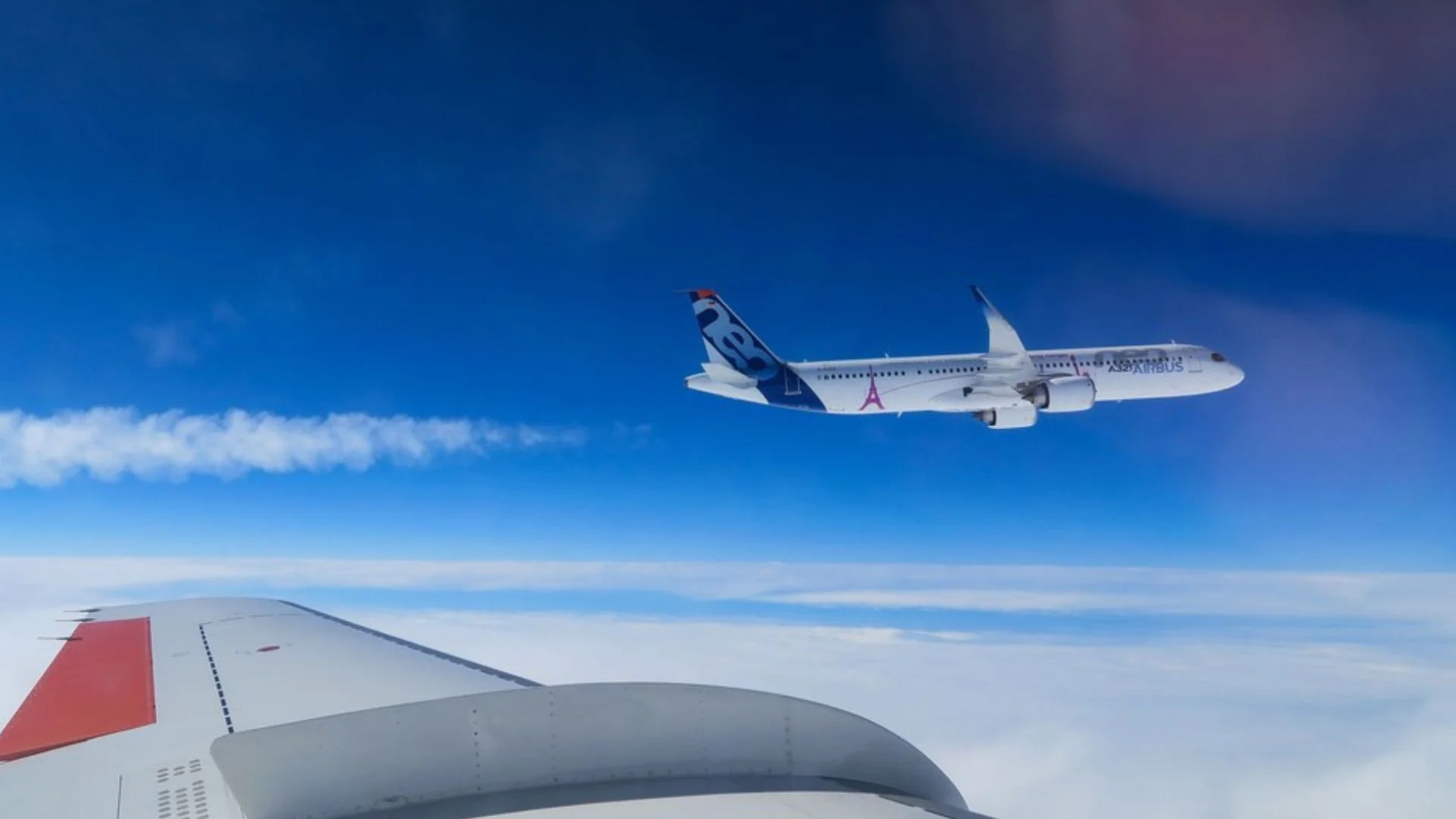
Researchers used a specially equipped Airbus A321neo fitted with CFM LEAP-1A engines. Behind it flew the DLR Falcon 20E, which collected detailed measurements of exhaust gases and particles during cruise conditions.
The flights took place at around 10 kilometers altitude over restricted airspace above the Mediterranean and the Atlantic. In total, the team carried out 15 flights.
During these missions, the Falcon aircraft performed high-speed chase maneuvers. It flew as close as 40 to 250 meters behind the passenger jet to sample fresh exhaust. It also tracked fully formed contrails several kilometers away.
These were not easy operations. They required precision flying and years of experience.
WATCH ALSO: Two humanoid robots hold unscripted conversation for hours
Lean-burn engine operations reduced soot emissions by up to three orders of magnitude compared to traditional rich-burn conditions. This confirmed that modern engines produce much less soot.
But contrails still formed in large numbers. In fact, the number of ice crystals in the contrails was much higher than the number of soot particles detected. This meant that soot alone could not explain what was happening.
Instead, researchers found large amounts of tiny liquid particles forming in the cooling exhaust plume. These particles were made from volatile substances, including organic compounds and lubrication oil vapors.
Their numbers matched those of the ice crystals seen in the contrails. This pointed to a new explanation.
Christiane Voigt, the scientific lead of the project at DLR and JGU, described the moment the team realized something was different.
“The defining moment came when the initial data revealed no soot but plenty of contrail ice crystals,” she said. “We saw immediately that we need to rethink contrail formation to shape the future of aviation.”
Her statement captures the shift in understanding this study has brought.
The Role of Fuel and Particles in Contrails
The research also examined how fuel composition affects contrail formation. Aircraft fuels contain small amounts of sulfur and aromatic compounds. These can influence how particles form in the exhaust.
The study found that fuels with lower sulphur content reduced the number of contrail ice crystals. However, even at very low sulphur levels, other particles took over the role of forming ice crystals.
READ ALSO: Pratt & Whitney Wins $3.8B Pentagon Deal to Supply F135 Engines for Global F-35 Fleet
These included volatile organic compounds and vapors from engine lubrication oils. As soot levels drop, these previously overlooked particles become more important. This means that simply switching to cleaner fuels is not enough to eliminate contrails.
Contrails are more than just visual trails in the sky. They form cirrus clouds that trap heat in the atmosphere, contributing significantly to aviation’s climate impact.
Most current climate models focus mainly on soot particles when predicting contrail formation. But this new research shows that models may be missing key processes.
Specifically, they often do not include ice formation on liquid particles. As a result, they may underestimate the true climate impact of contrails. By adding these newly discovered processes, scientists can improve the accuracy of climate predictions.
The project highlights the importance of collaboration between industry and research institutions. Markus Fischer, a board member for aeronautics at DLR, stressed the value of this teamwork.
“We carried out complex measurement flights and collected a unique dataset,” he said. “We are using these insights to improve engine and climate models for a competitive and climate-compatible aviation future.”
Mark Bentall, Head of Research and Technology Program at Airbus, also emphasized the importance of such efforts.
“These test campaigns help us understand contrails better and guide future technology and operations,” he said. “Collaboration between research and industry helps us move faster on this complex challenge.”
Stefan Müller-Stach from JGU echoed this view.
“The results show excellent cooperation between all partners,” he said. “They give a strong foundation for future work on sustainable aviation.”
What This Means for Aviation
The findings have important implications for the future of flight. Reducing soot emissions remains important, but it is no longer the only factor to consider. Engine designers and fuel developers now need to think about volatile particles as well.
This includes examining fuel composition, combustion methods, and even how lubrication oils are handled in engines. Current regulations mainly focus on gases and solid particles.
The new research suggests that controlling volatile particles should also become a priority. Fuel sulphur levels are already limited to a maximum of 0.3 percent by mass, with typical levels around 0.046 percent today.
WATCH ALSO: China’s military showcases modern battlefield capabilities in new exercise
Further reductions may help reduce contrail formation, but they will not solve the problem alone. Optimizing engine design, especially oil venting systems, may offer another way to limit these emissions.
This study marks a major step forward in understanding contrails. It shows that cleaner engines do not automatically mean fewer contrails. Instead, a hidden world of tiny particles plays a key role.
By uncovering these processes, scientists have opened new paths for reducing aviation’s climate impact. The challenge now is to turn this knowledge into practical solutions. As research continues, the skies above may one day look clearer, not just to the eye, but also for the planet.