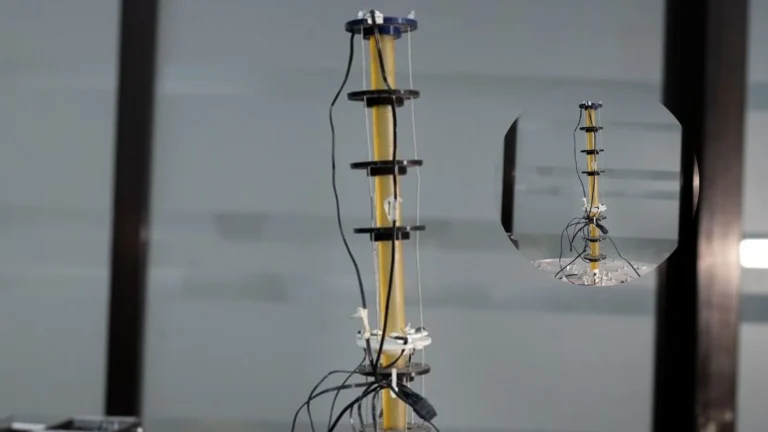
Chinese researchers successfully completed the world’s first in-orbit test of a wireless implantable Brain-computer Interface (BCI) device, marking a major step forward in space neuroscience.
The breakthrough came from a research team at Northwestern Polytechnical University(NPU) in Xi’an, Shaanxi Province. The team confirmed that their device operated steadily in space after being launched aboard a space experiment platform in December. According to the researchers, this mission represents a global first in validating implantable BCI technology under real space conditions.
The BCI system was developed under the leadership of Chang Honglong and Ji Bowen. During the orbital mission, the device functioned in extreme space conditions and continuously collected electroencephalogram (EEG) signals in a simulated body-fluid environment.
The team stated, “The experiment filled a critical international technological gap in the in-orbit validation of implantable BCI systems.” The device generated important data related to signal noise and long-term operational stability. This will help scientists understand how implantable electrodes perform over extended periods in space. Researchers also highlighted the importance of the data for astronaut health.
READ ALSO: https://modernmechanics24.com/post/lasers-probe-darwin-priceless-specimens/
In a social media post, NPU noted that the results will help experts precisely analyze how microgravity affects astronauts’ neural activity. The post added that the findings will provide important technical support for safeguarding astronauts’ brain health during long-duration space missions.
One of the major challenges in BCI development has been the limitations of traditional cortical electrodes. Conventional minimally invasive electrodes often lack flexibility. They may fail to maintain proper contact with brain tissue and can suffer from corrosion or material degradation after long-term implantation.
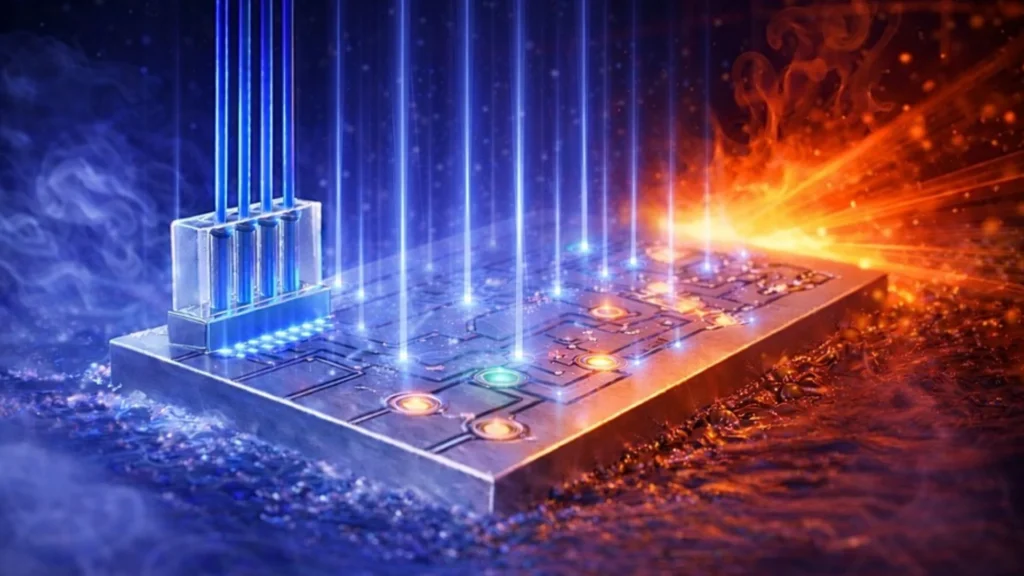
The research team developed a new, flexible electrode array to address these problems. The new system can closely conform to the brain’s soft, curved surface, unlike rigid metal electrodes. Because of its design, it can record high-quality neural signals without harming the cerebral cortex.
According to the university, the flexible electrode lessens the physical strain on brain tissue while enabling high-fidelity signal acquisition. Experiments on animals further illustrated the device’s functionality. The new electrode produced a noticeably more stable signal, according to the research team. Compared with conventional metal electrodes, key performance indicators increased by several hundred times.
WATCH ALSO: https://modernmechanics24.com/post/china-new-massive-battle-tank-live-fire/
In addition to signal stability, the system supports long-term neural stimulation and modulation. Researchers also confirmed that it can safely operate under ultra-high-field magnetic resonance imaging (MRI) conditions, expanding its potential medical applications.
The research has already gained international recognition. The project won the Outstanding Student Paper Presentation Award at the 39th International Conference on Micro Electro Mechanical Systems.
China has identified brain-computer interface technology as a strategic priority. The Recommendations of the Central Committee of the Communist Party of China for Formulating the 15th Five-Year Plan listed BCI among six industries of the future that will receive strong development support over the next five years.
On August 7, 2025, China’s Ministry of Industry and Information Technology, along with six other government departments, issued an implementation guideline to accelerate innovation in the BCI industry.
READ ALSO: https://modernmechanics24.com/post/worlds-first-628ah-storage-station/
The policy outlines clear targets. Authorities plan to expand BCI applications in industrial manufacturing, healthcare, and consumer sectors by 2027.
By 2030, the country aims to build a secure and reliable industrial ecosystem. The plan also seeks to foster two or three globally influential leading enterprises, along with a group of specialized and advanced small and medium-sized companies.
The successful in-orbit test strengthened China’s neurotechnology and space research. As space missions become longer and more complex, understanding how microgravity affects the human brain will be essential.
With this milestone, China opened a new chapter in the intersection of neuroscience and space exploration.