China has advanced modern energy systems by scaling a century-old grid-stabilizing technology and successfully testing a high-voltage synchronous condenser for the first time.
This new version is designed to address the growing pressure on power grids from renewable energy.
According to state-run reports, the 35-kilovolt synchronous condenser was developed by Dongfang Electric Machinery. The system passed its full test on April 10, marking the first time such a machine has reached this voltage level while connecting directly to the grid.
Unlike traditional systems, this condenser does not need a step-up transformer. These transformers are usually required to match voltage levels before electricity enters the grid. By removing this extra step, the new design simplifies the system and reduces both cost and complexity.
READ ALSO: Laser from Supercarrier USS George H.W. Bush: US Navy Tests Drone-Killer LOCUST
China is moving quickly toward renewable energy. It aims to reach peak carbon emissions by 2030 and carbon neutrality by 2060. To meet these goals, the country has been installing large amounts of wind and solar power, especially in northern and western regions where natural resources are strong.
However, renewable energy brings new challenges. Unlike coal or nuclear plants, wind and solar power do not produce a steady flow of electricity. Their output varies with weather conditions. This creates instability in the grid.
Power grids were originally designed for stable, centralized energy sources. As more renewable energy enters the system, the grid struggles to maintain balance. Problems such as voltage swings, frequency changes, and even blackouts can occur.
Experts say the issue is also linked to a loss of inertia. Traditional power plants naturally resist sudden changes in electricity flow. Renewable systems do not provide the same level of resistance, making the grid more sensitive.
“Without enough inertia and reactive power support, grids face higher risks of instability,” said ABB in its analysis.
WATCH ALSO: A South Korean humanoid robot has performed Michael Jackson’s Moonwalk, leaving all viewers stunned
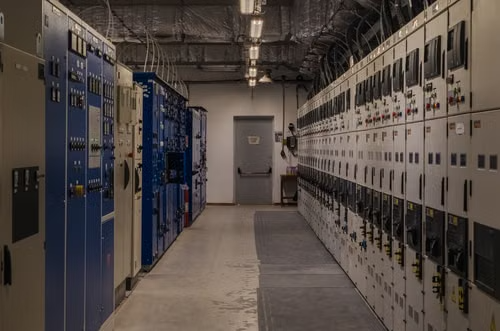
This is where synchronous condensers come in. These are large rotating machines that help control voltage and stabilize power flow. They can also handle reactive power and support the grid during faults or short circuits.
The technology is not new. Synchronous condensers were widely used in the early 20th century, especially in hydroelectric systems. Over time, they were replaced by semiconductor-based solutions, which are smaller and easier to deploy. But now, the energy industry is bringing them back.
Companies like GE Vernova and Baker Hughes have noted that synchronous condensers can address multiple grid problems simultaneously. They offer a level of stability that modern electronic systems struggle to match, especially in renewable-heavy grids.
China’s new design pushes this idea further. The previous voltage limit for such machines was around 27kV. By reaching 35kV, the new condenser sets a global benchmark. More importantly, it connects directly to the grid without additional equipment.
READ ALSO: Binder Fuses Materials Mid-Print for Seamless 3D Parts in Industrial Use
This advancement did not come easily. Engineers had to solve complex problems related to insulation and cooling at high voltage levels. To achieve this, Dongfang worked with top institutions including Tsinghua University and the China Electric Power Research Institute.
The result is a more efficient system. The new condenser can deliver the same short-circuit capacity as two traditional units combined. At the same time, it uses only 45 percent of the power required by older designs.
Cost savings are also significant. By removing the need for step-up transformers and reducing the number of connected devices, the system cuts operation and maintenance costs by about 50 percent.
This development shows how older technologies can find new life when adapted to modern needs. As renewable energy continues to expand, grid stability will become one of the biggest challenges worldwide.
China’s approach suggests that the future of energy may not depend entirely on new inventions. Sometimes it comes from rethinking and rebuilding ideas that have been around for decades.