Chinese Academy of Sciences (CAS) engineers have successfully 3D printed metal parts in space for the first time, a critical leap from laboratory theory to orbital reality. The experiment, conducted at an altitude of 120 kilometers, signals China’s arrival at the global forefront of in-space manufacturing technology essential for future lunar bases and orbital stations.
This isn’t your desktop 3D printer. The groundbreaking experiment was performed by a specialized, retrievable payload developed by the Institute of Mechanics under the Chinese Academy of Sciences (CAS). It hitched a ride to the edge of space aboard a novel spacecraft, marking a pivotal moment for China’s space ambitions. According to the CAS, this mission transitions the nation’s space-based metal additive manufacturing from “ground-based research” to a new phase of “in-space engineering verification.”
So, why is printing metal in space such a big deal? For future long-term missions to the Moon or Mars, astronauts can’t possibly bring every spare part, tool, or structural component from Earth. The launch costs are astronomical, and you can’t predict every repair need. The solution is to manufacture what you need, on-demand, in the environment where you’ll use it. This successful test is a massive step toward that sci-fi reality.
READ ALSO: https://modernmechanics24.com/post/livsmed-korean-ipo-robotic-surgery/
The experiment faced a universe of challenges far beyond Earth-based printing. Professor Wang Gong, a lead scientist on the project, explained the core difficulty: “Gravity on Earth naturally assists in material transport and layer bonding. In microgravity, molten metal behaves unpredictably.” The research team had to overcome a series of core challenges, including stable material transport and forming under microgravity and full-process closed-loop control, stated the CAS.
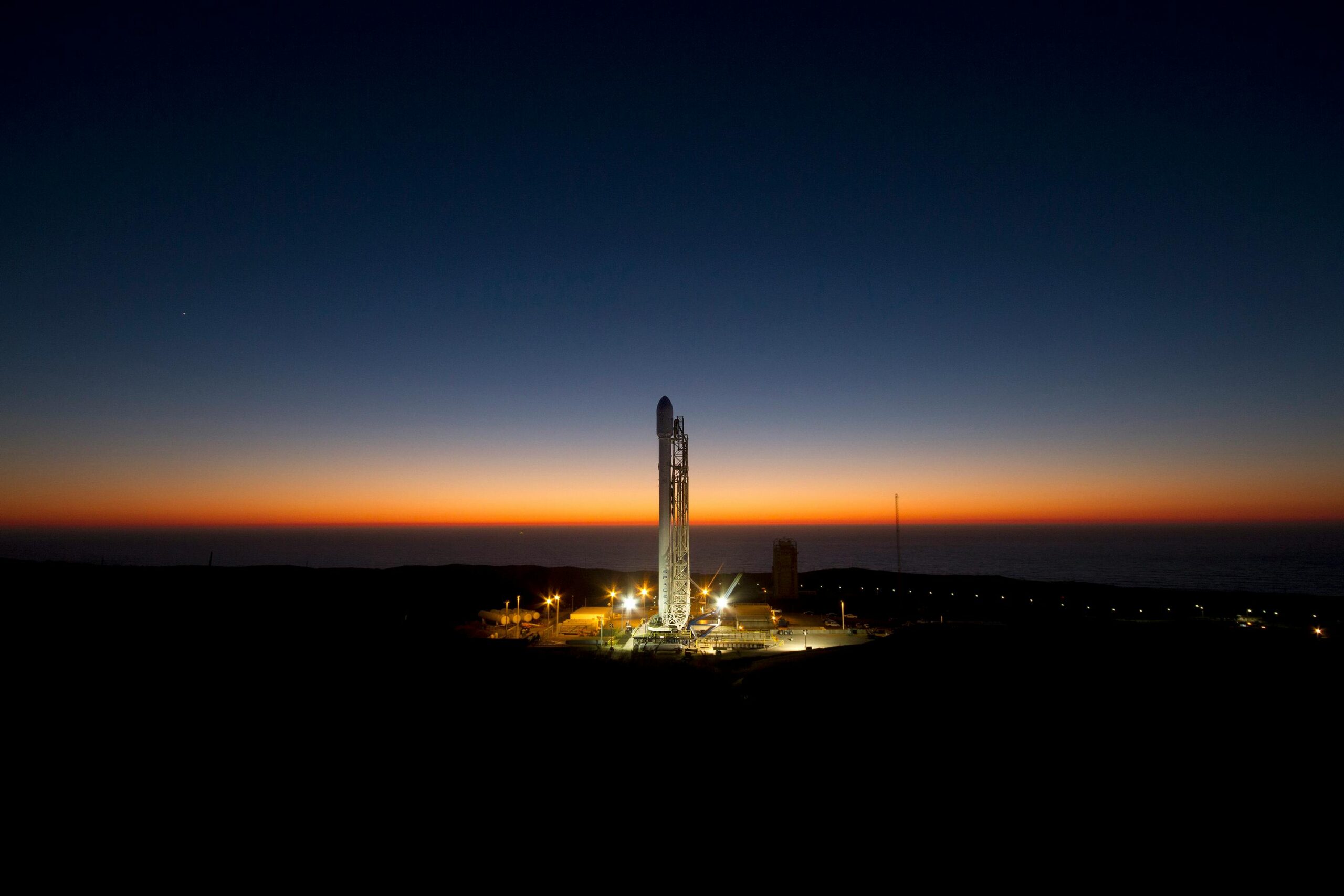
The payload flew on the Lihong-1 Y1, a commercial, recoverable suborbital vehicle developed by CAS Space. After launching from the Jiuquan Satellite Launch Center on January 12, the vehicle crossed the Kármán line—the recognized boundary of space—and initiated the autonomous printing process in microgravity. Following the experiment, the capsule parachuted safely back to Earth, allowing scientists to recover the printed samples and a treasure trove of data.
WATCH ALSO: https://modernmechanics24.com/post/china-6-ton-tiltrotor-first-flight/
Researchers have now obtained invaluable first-hand data on the dynamic characteristics of the melt pool and the geometric precision and mechanical properties of the space-printed parts. This information is gold dust for refining the technology. Wang Yingcheng, deputy chief designer of the Lihong-1 Y1, highlighted the vehicle’s role, noting that “extensive tests are now underway to add crew-life-support and high-reliability escape technologies, which will boost capabilities of low-cost suborbital scientific experiment and possibilities of commercial space tourism.”
This breakthrough is more than a technical checkbox. It strongly propels the development of China’s capability for in-space infrastructure construction. Imagine being able to print large satellite trusses, radiation shields, or habitat components directly in orbit, avoiding the size and weight constraints of rocket fairings. It’s a key enabler for the sustainable, scalable exploration and utilization of space.
READ ALSO: https://modernmechanics24.com/post/zipline-raises-600m-2m-drone-deliveries/
The Lihong-1 Y1, noted for its low launch cost and high flexibility, is proving to be a reliable testbed. On its inaugural flight, it also carried a batch of precious rose seeds for agricultural research, demonstrating its multi-purpose potential. The success of this metal 3D printing mission confirms that China is building not just rockets, but the foundational industrial toolkit for a lasting presence beyond Earth.