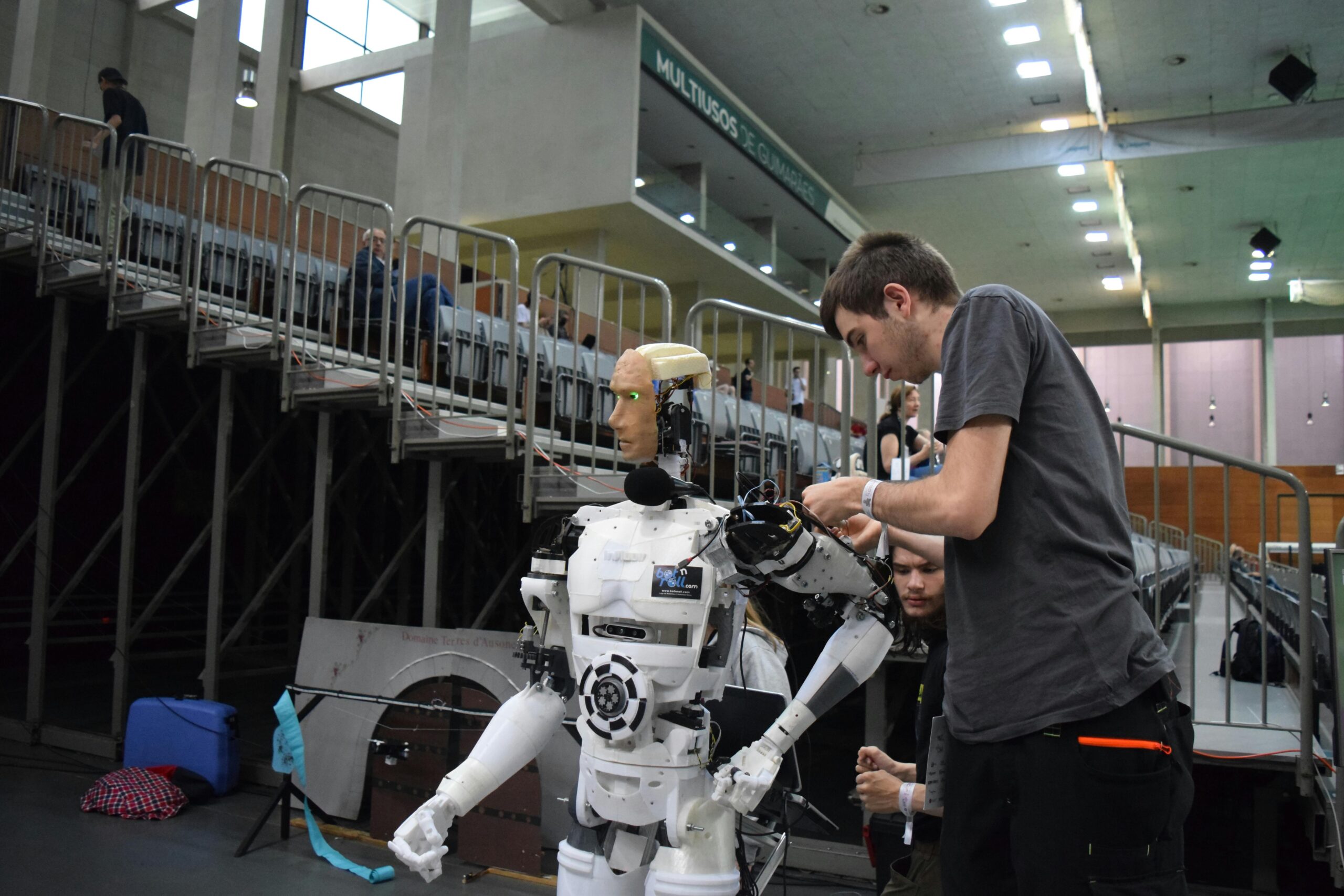
Shanghai-based EYOU Robot Technology Co. has launched the world’s first automated production line for robotic joints, a critical bottleneck component. With an initial annual capacity of 100,000 units and plans to scale to 300,000, this breakthrough marks a pivotal leap from lab prototypes to the era of mass-produced humanoid robots.
Forget the painstaking, hand-tuned assembly of robots in research labs. The dream of affordable, widely available humanoid robots just got a major push toward reality. A Chinese robotics component supplier has solved a fundamental manufacturing hurdle, bringing industrial-scale precision to the most complex and costly parts of a robot: its joints. According to a post on the official WeChat account of Shanghai’s Pudong district government, this line represents a key transition from “technology R&D to large-scale manufacturing.”
Why are joints such a big deal? They are the core of a robot’s power and motion, accounting for nearly half of the total cost of building a humanoid. EYOU Robot Technology Co., the company behind the line, has directly tackled the industry’s long-standing “consistency problem.” Manual assembly leads to variations in performance; automation ensures every joint meets identical high standards. EYOU founder Sun Zeju stated this moves core component manufacturing from the “handcraft workshop” era into the “precision intelligent manufacturing” era.
READ ALSO: https://modernmechanics24.com/post/livsmed-korean-ipo-robotic-surgery/
The capabilities of the new line are impressive. It achieves a first-pass yield exceeding 95 percent while maintaining high performance, a combination that significantly drives down manufacturing costs. This reliability is essential for downstream robot makers. EYOU is already the designated supplier for the A2 series of humanoid robots from Shanghai-based AGIBOT, which claims the title of the world’s first batch of mass-produced humanoids.
Wang Peng, an associate research fellow at the Beijing Academy of Social Sciences, highlighted the broader impact, telling the Global Times that mass-producing joints will slash costs and accelerate the penetration of humanoids from factories into consumer markets. He pointed to China’s overwhelming edge in areas like a complete manufacturing supply chain and abundant application scenarios as key factors solidifying its leading position.
WATCH ALSO: https://modernmechanics24.com/post/us-hits-isis-terrorists-nigeria/
This manufacturing breakthrough aligns with rapid progress at the national level. Zhang Yunming, vice minister of the Ministry of Industry and Information Technology (MIIT), recently noted that China’s humanoid robots have rapidly progressed from learning to stand and walk to the new phase of “performing on stage, competing on the track, being used in homes and working in factories.” The scale is staggering: by 2025, China hosted over 140 humanoid robot companies and had seen more than 330 product releases.
The launch is more than an industrial milestone; it’s the foundational step for an embodied AI future. By providing “downstream complete-machine companies with unprecedented production capacity assurance,” as stated in the Pudong government post, EYOU isn’t just making parts—it’s building the infrastructure for an entire industry. The path from a single, backflipping lab robot to thousands of helpful androids in homes and workplaces is now clearer, powered by joints rolling off an automated line in Shanghai.
READ ALSO: https://modernmechanics24.com/post/hanwha-babcock-canada-jobs-partnership/