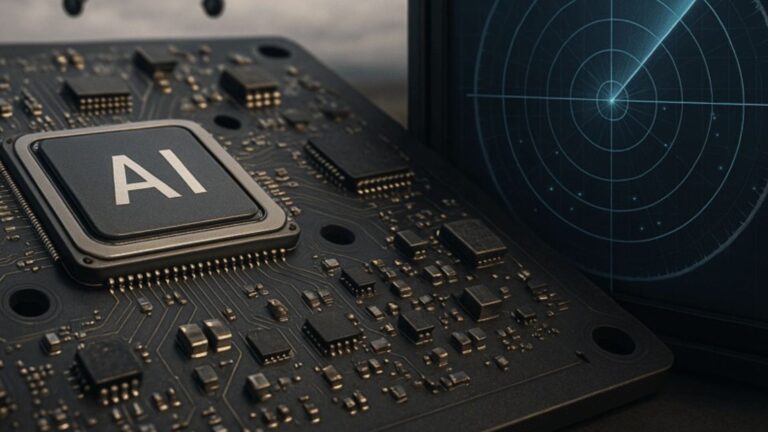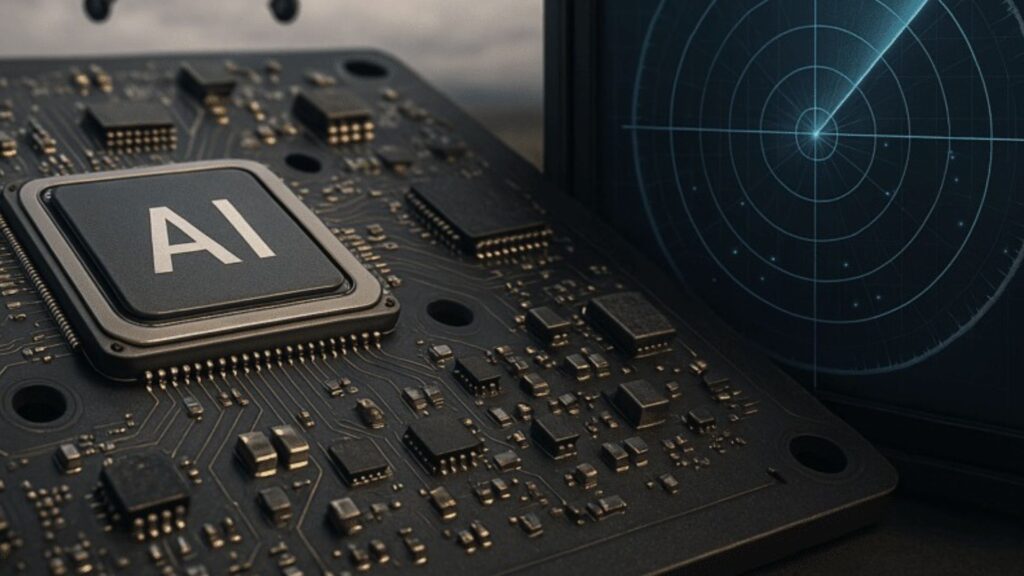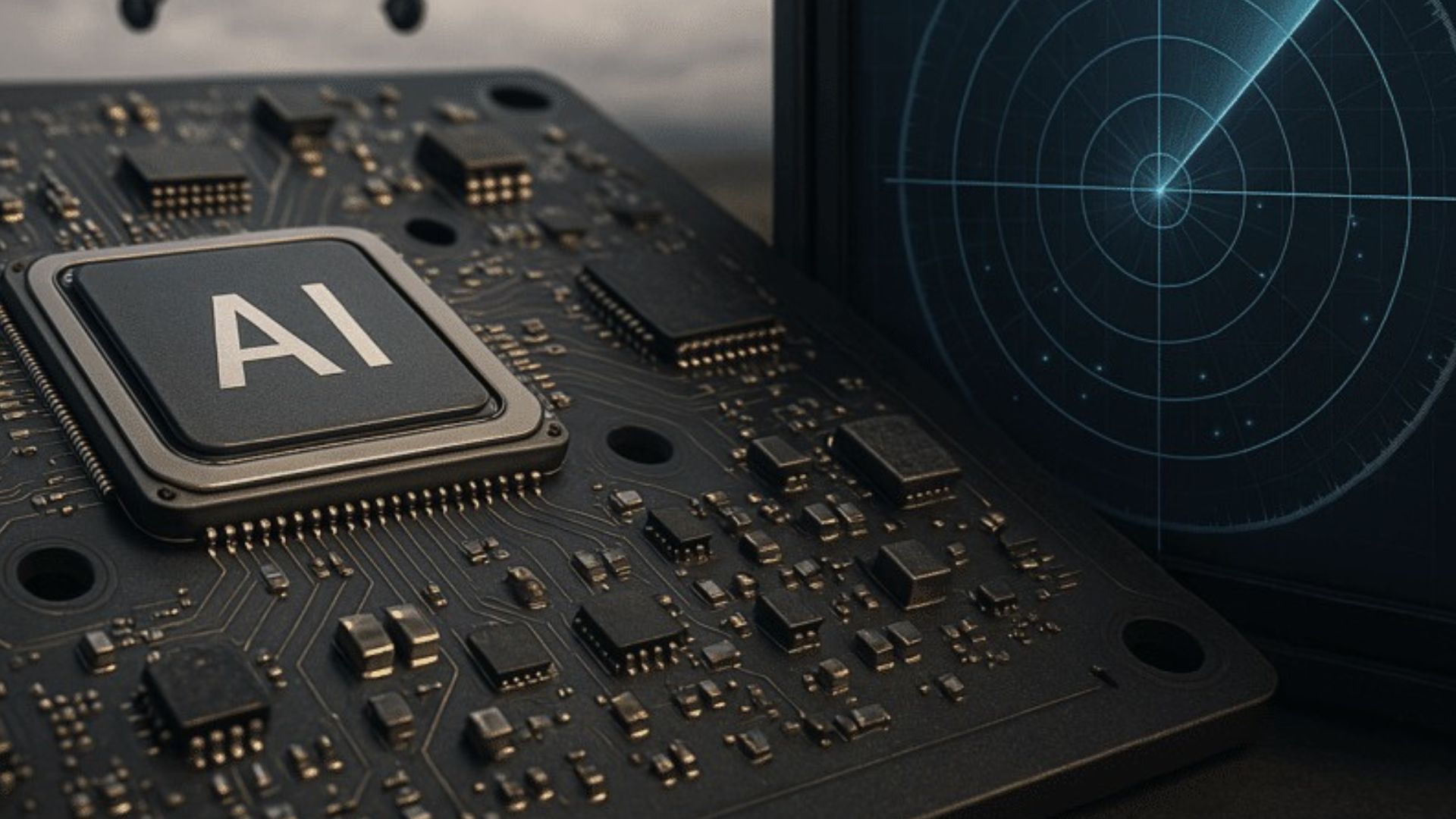
China is using artificial intelligence (AI) to improve radar systems to better detect large numbers of low-altitude drones, a senior Chinese military scientist has revealed.
Xu Jin, a leading air-defense radar expert, said the technology significantly enhances radar detection, particularly against drone swarms. He shared the details during an interview with the South China Morning Post while attending Beijing’s annual two sessions political meetings.
Xu serves as chief engineer for early warning and detection at the 38th Research Institute of the state-owned China Electronics Technology Group Corporation. The institute plays a key role in developing China’s air-defence radar technologies.
According to Xu, modern battlefields increasingly rely on large numbers of inexpensive attack drones. These drones often fly at low altitudes and operate in coordinated swarms, making them difficult for traditional radar systems to track.
“When inexpensive suicide drones are deployed, their numbers are usually quite large,” Xu said. “They are difficult to distinguish and detect completely.”
READ ALSO: Terrific ‘Black Rain’ Falls On Iran After US-Israel hit Tehran’s Oil Fields
He added that some drones are capable of coordinating with each other and dividing tasks during attacks.
“This creates enormous processing pressure for traditional radar detection systems,” Xu explained.
The growing threat of drone swarms has become evident in the ongoing conflict between the US and Iran, which began late last month. Both sides have used large numbers of low-cost suicide drones in attacks.
The US has deployed its Low-Cost Unmanned Combat Attack System (LUCAS), a one-way attack drone designed for swarm operations and dynamic target identification.
The system was reportedly developed after engineers studied a captured Iranian Shahed-136 drone during earlier confrontations.
The Shahed-136 drone has already demonstrated its effectiveness in the conflict. It successfully struck the headquarters of the US Fifth Fleet in Bahrain and the US consulate in Dubai.
China is closely monitoring these developments and strengthening its own counter-drone capabilities.
WATCH ALSO: China’s military showcases modern battlefield capabilities in new exercise
Beijing is also concerned about potential drone swarm strategies in a future conflict around Taiwan. In 2024, Admiral Samuel Paparo, head of the US Indo-Pacific Command, warned that the US could deploy thousands of unmanned submarines, ships, and aerial drones in response to any Chinese military action against Taiwan.
China views Taiwan as part of its territory and has repeatedly stated it will reunify the island with the mainland, by force if necessary.
Reflecting these concerns, China’s new five-year development plan for 2026–2030 calls for faster development of unmanned combat systems and counter-drone technologies.
The plan also stresses stronger management of low-altitude airspace and increased research into low-cost drone defence technologies.
Xu said China is already developing advanced radar techniques such as inverse synthetic aperture radar. This technology enables radars to observe flying objects from multiple angles and collect more detailed data.
The system can help operators identify the characteristics of aerial targets and even distinguish decoy drones from real attackers.
READ ALSO: Artemis II Back on Track: NASA Targets April 1 Launch for First Crewed Moon Flight in 50 Years
However, detecting drones flying close to the ground remains a major challenge. Radar signals often get mixed with clutter from terrain, buildings, rain, or sea surfaces.
When many drones appear at once, the radar must process a massive amount of data to separate real targets from background interference.
“A large number of drones creates pressure and makes clutter detection more difficult,” Xu said.
He noted that AI has significantly improved radar performance during tests. After extensive training, AI systems can now identify and track many moving or hovering drones while calculating their flight paths.
“Many countries are exploring the use of AI in radar,” Xu said. “The technology is still developing, and it is not perfect yet. But the improvement we are seeing is astonishing.”
WATCH ALSO: http://Buildroid AI expanding simulation-first robotic platform to multiple US sites
Other countries are also working on similar technologies. In October 2024, Italy’s Fincantieri Group signed an agreement with Qatar’s Barzan Holdings to jointly develop Omega360, a short-range anti-drone radar system.
According to the companies, the system uses AI algorithms to detect drone threats. The first operational units are expected to be produced by the end of this year.