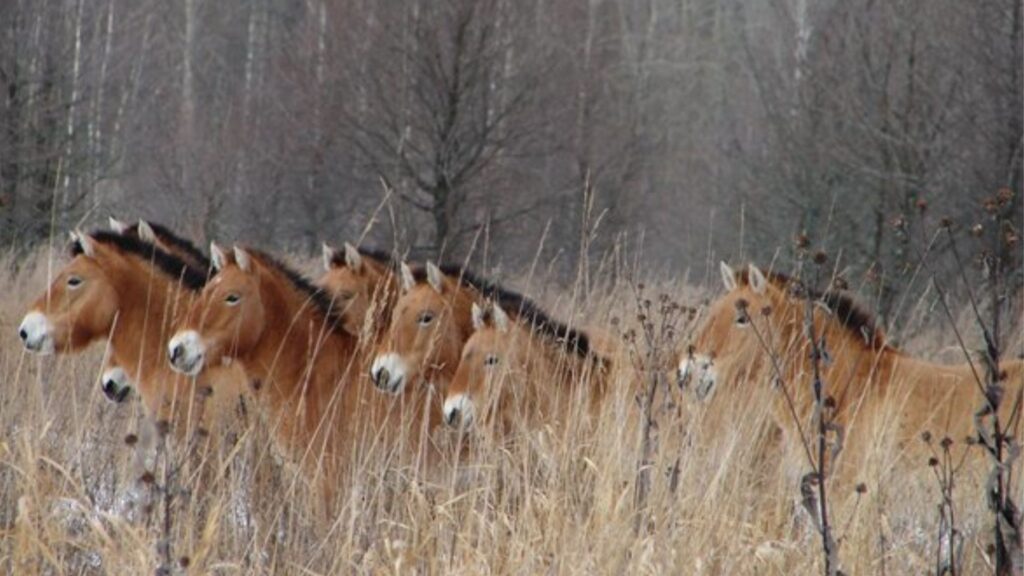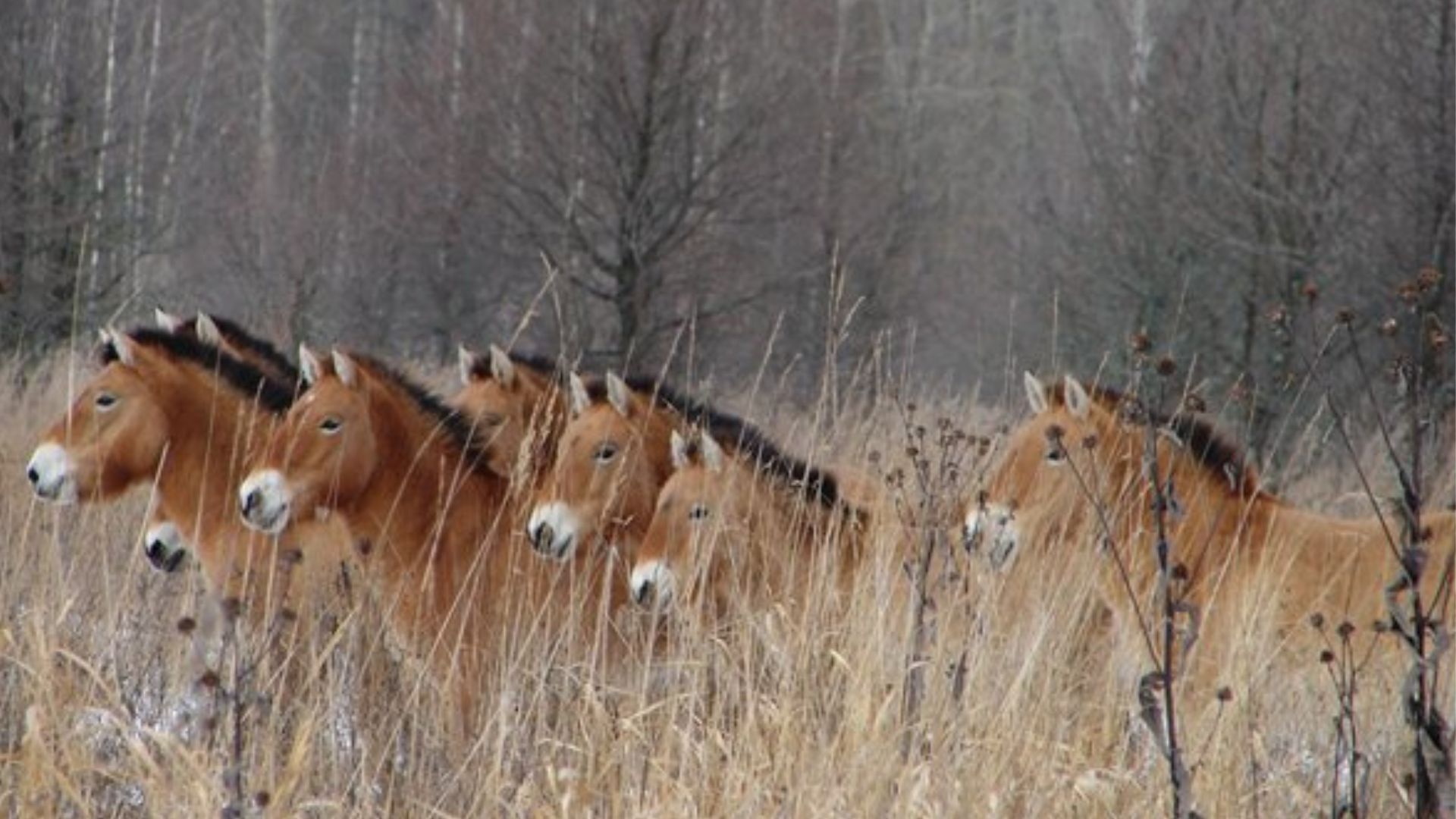
The Chernobyl Exclusion Zone, once synonymous with nuclear catastrophe, has become an unlikely refuge for one of the world’s rarest horse species.
Nearly four decades after the 1986 disaster, scientists said Przewalski’s horses are not just surviving in the radiation-affected landscape but steadily expanding their presence.
Often described as the last wild horse species, Przewalski’s horse was reintroduced to the exclusion zone between 1998 and 2004. Conservationists released 36 horses into the restricted territory, hoping the absence of human activity would provide a safe breeding ground. Now, that decision appears to be paying off.
Researchers monitoring the population, particularly in Belarus’s Polesie State Radioecological Reserve, report significant growth and unexpected behavioral adaptations.
READ ALSO: https://modernmechanics24.com/post/china-overtakes-us-in-hypersonic-arms/
The population nearly doubled within four years. That number alone was not enough to guarantee long-term sustainability. That’s why scientists now believe the horses have found ways to thrive in their new environment.
Peter Schlichting of Arizona State University, who leads recent research efforts, said maintaining genetic diversity remains critical. “When the size of a population is reduced, it loses natural variation,” Schlichting explained. “Conservation programs aim to preserve as much diversity as possible and prevent inbreeding, ensuring the population can withstand environmental change and survive long term.”
One of the most surprising findings involves how the horses are using remnants of human infrastructure. Motion-activated cameras installed across abandoned farm buildings revealed that the animals frequently shelter inside old barns and structures.
“Our results show that Przewalski’s horses routinely use abandoned buildings in the zone,” James Beasley, associate professor at the University of Georgia, said.“These structures serve as focal points for research and management because they help us collect critical data on age distribution, sex ratios, population size, and genetic structure.”
The camera traps recorded horses 35 times at nine of 10 monitored buildings during the winter months. In summer, sightings increased dramatically, with 149 recorded visits across eight monitored structures. In many cases, horses spent more than five consecutive hours inside the buildings. They rely on them for protection from harsh weather.
The barns have also become shared spaces. Researchers documented brown hares, red deer, moose, wild boar, red foxes, raccoon dogs, Eurasian lynx, wolves, and several bird and bat species using the same structures. The findings reinforce earlier research suggesting that, despite lingering radiation, wildlife populations in the zone are abundant.
WATCH ALSO: https://modernmechanics24.com/post/humanoid-robots-engage-chat-unscripted/
A 2015 study concluded that the exclusion zone supports a thriving mammal community, even after decades of chronic radiation exposure. Scientists emphasize that while radiation may affect individual animals, the broader ecosystem has rebounded in the absence of human disturbance.
The 1986 explosion at the Chernobyl nuclear power plant forced more than 116,000 residents to evacuate permanently. Poor reactor design and operational errors triggered one of the worst nuclear disasters in history. It had contaminated vast areas of Ukraine and Belarus. Over time, as radiation levels declined and human activity faded, forests reclaimed farmland, and wildlife returned.
Research in the region faces ongoing challenges. Wildfires since 2020 have disrupted ecological studies and stirred up contaminated soil. In early 2022, the Russian occupation of parts of the zone during the Russo-Ukrainian War halted several monitoring programs. Ukrainian scientists have since proposed expanded geospatial tracking systems to better understand wildlife movement across both sides of the border.
Authorities also reported a landmine-related fatality involving a Przewalski’s horse in June 2025. It highlighted the risks that remain in the militarized landscape.
Despite these drawbacks, researchers said the horses’ resilience offers powerful insight into ecological recovery. Future studies, particularly on the Ukrainian side of the exclusion zone, aim to assess genetic health and long-term viability.