The aviation sector is under increasing pressure to reduce greenhouse gas emissions. Air travel remains one of the hardest industries to decarbonize because aircraft require energy-dense fuels for long-distance flights. Sustainable aviation fuel(SAF) has emerged as one of the leading options for lowering the industry’s carbon footprint.
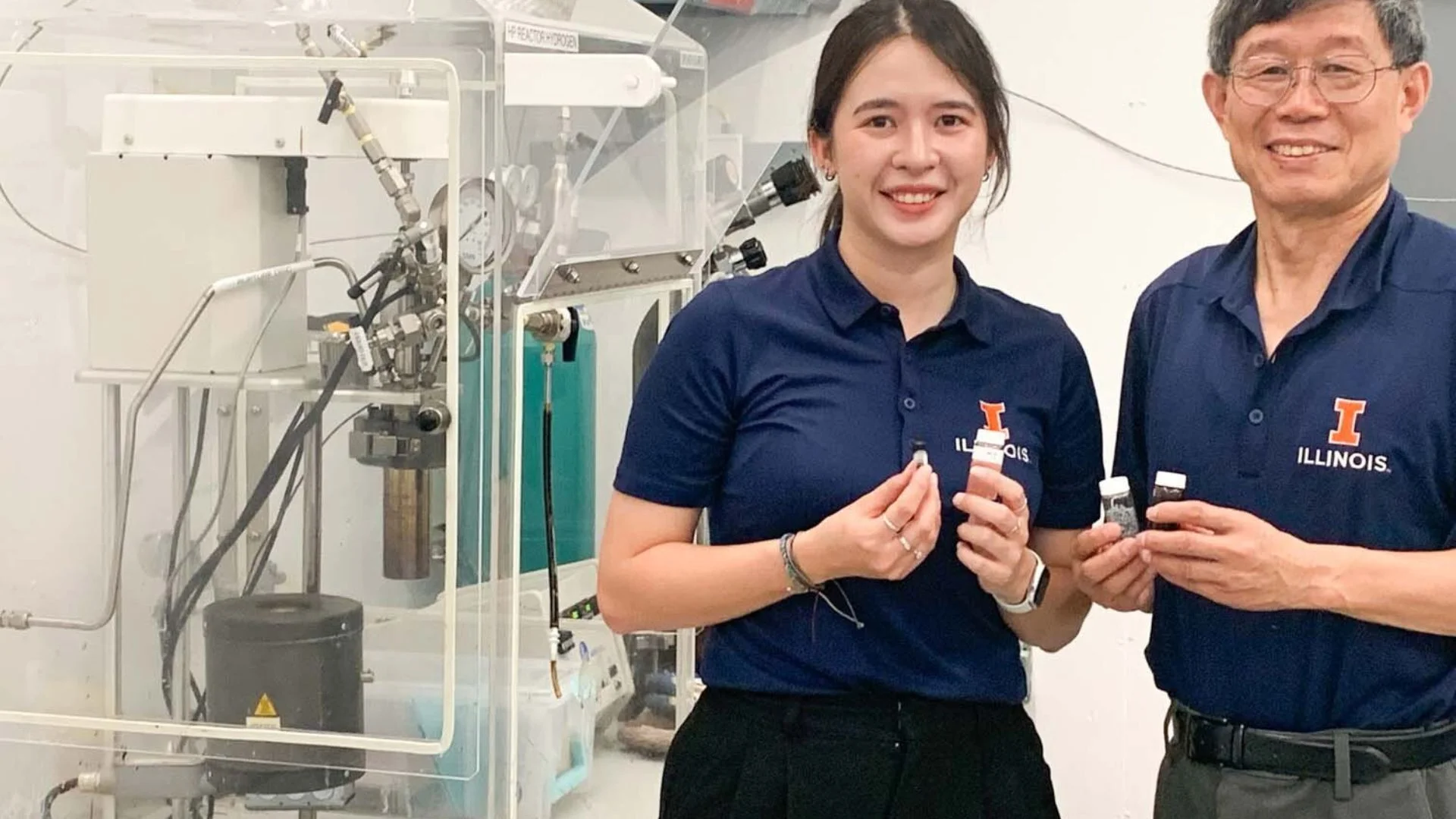
A team of researchers from the University of Illinois Urbana-Champaign has introduced a new approach to producing sustainable aviation fuel from food waste. Their findings were published in the journal Nature Sustainability. The study focuses on both the technical performance and economic viability of the process.
The researchers designed a system that converts discarded food into a fuel suitable for aviation. Instead of relying entirely on fossil fuels, the method uses waste materials that would otherwise be discarded. This creates an opportunity to support a circular economy while reducing environmental impacts.
How Food Waste Becomes Sustainable Aviation Fuel
The process begins with hydrothermal liquefaction, also known as HTL. This technology uses heat and pressure to convert wet organic waste into a crude oil-like substance. The process mimics the natural formation of petroleum but completes the transformation in a much shorter time.
Food waste is particularly well-suited for HTL because it contains significant amounts of organic material and moisture. Unlike some biofuel technologies, HTL does not require extensive drying before processing. This makes it attractive for handling large volumes of urban organic waste.
READ ALSO: Georgia Tech’s COBALT Turns Smartphones Into Robotic Arm Controllers for Global AI Training
After producing biocrude oil, the researchers refine it into aviation fuel. Earlier versions of the process relied on intensive catalytic treatment to improve fuel quality. The new study introduces a simpler approach that depends more heavily on distillation, a common industrial separation method.
Distillation works by heating a liquid and separating its components based on their boiling points. This technique is already widely used in petroleum refineries worldwide. By increasing the role of distillation, researchers reduced processing complexity and improved economic feasibility.
The resulting fuel does not, on its own, fully match the quality of conventional jet fuel. For this reason, researchers blend it with standard aviation fuel before use. Their tests focused on a mixture containing 50% sustainable aviation fuel and 50% conventional jet fuel.
The approach is similar to how ethanol is blended with gasoline for road vehicles. According to the research team, blending makes practical sense because producing enough SAF to completely replace fossil jet fuel remains a major challenge. Lower blend levels, such as 10% or 20%, are also expected to be feasible.
Meeting Aviation Standards and Handling Waste Streams
Aviation fuel must meet strict performance and safety requirements. The research team evaluated key fuel properties to ensure compatibility with standards established by the American Society for Testing and Materials and the Federal Aviation Administration. These standards help guarantee safe operation in aircraft engines.
The work remains at an early stage of development. Researchers are currently producing several liters of upgraded fuel in laboratory facilities. This volume is sufficient for engine testing and further evaluation.
The next phase involves testing the fuel in diesel engines before advancing to jet engine trials. These experiments will provide important information about performance under real operating conditions. Successful testing is essential before larger-scale deployment becomes possible.
READ ALSO: Scientists discover genes to grow bigger tomatoes and eggplants
One major challenge lies outside the refining process itself. Collecting food waste and transporting it for recovery remain significant logistical hurdles. Today, much of this waste ends up in landfills or wastewater treatment facilities.
The HTL process offers flexibility because it can also use treated wastewater-derived materials as feedstock. This expands the range of waste resources that can be converted into fuel. It also supports efforts to recover value from existing waste management systems.
Carbon Emissions, Costs and Future Potential
The HTL process produces a liquid byproduct known as the HTL aqueous phase (HTL-AP). This stream contains nutrients but also includes compounds that require treatment before disposal or reuse. Managing this byproduct is an important part of making the overall process sustainable.
To address the issue, researchers investigated electrochemical treatment technology. This system helps recover useful nutrients and acids from the waste stream. Recovered materials can create additional value and reduce environmental impacts.
The team analyzed three different scenarios for handling HTL-AP. One involved sending the byproduct to a centralized wastewater treatment facility. Another used electrochemical treatment, while a third explored future improvements in the technology.
Their economic analysis showed that the current electrochemical treatment significantly increases costs. Capital expenses and operating requirements nearly tripled the cost per gallon compared with the baseline approach. However, researchers expect future technological improvements to lower these costs substantially.
The study also examined environmental performance through global warming potential assessments. This measurement estimates the extent to which greenhouse gas emissions contribute to climate change. The results indicated that both the baseline process and improved future treatment systems can achieve negative carbon emissions.
WATCH ALSO: American company’s next-generation ejection seat offers a 92% survivability rate
Negative carbon emissions occur when a system removes or offsets more carbon than it releases. This outcome strengthens the environmental case for converting waste into fuel. It also aligns with broader efforts to reduce emissions from transportation and waste management sectors.
The aviation industry is seeking scalable fuel alternatives that are compatible with existing infrastructure and aircraft designs. Sustainable aviation fuel is widely viewed as one of the most practical near-term solutions. Technologies that use food waste offer an additional advantage by addressing two environmental challenges simultaneously.
By transforming discarded organic material into aviation fuel, researchers have outlined a pathway that supports cleaner transportation and smarter waste management. As testing continues and production methods improve, food waste-derived SAF could become an important part of the aviation industry’s transition toward lower-emission flight.