NASA’s next Artemis mission, Artemis II, will be the first crewed flight of the Artemis programme.
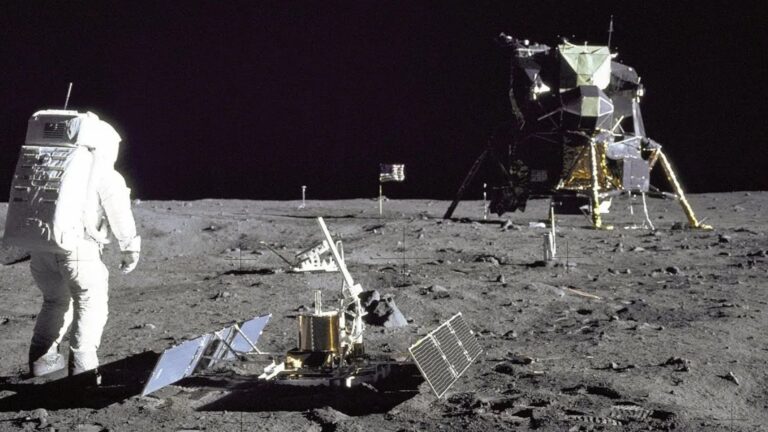
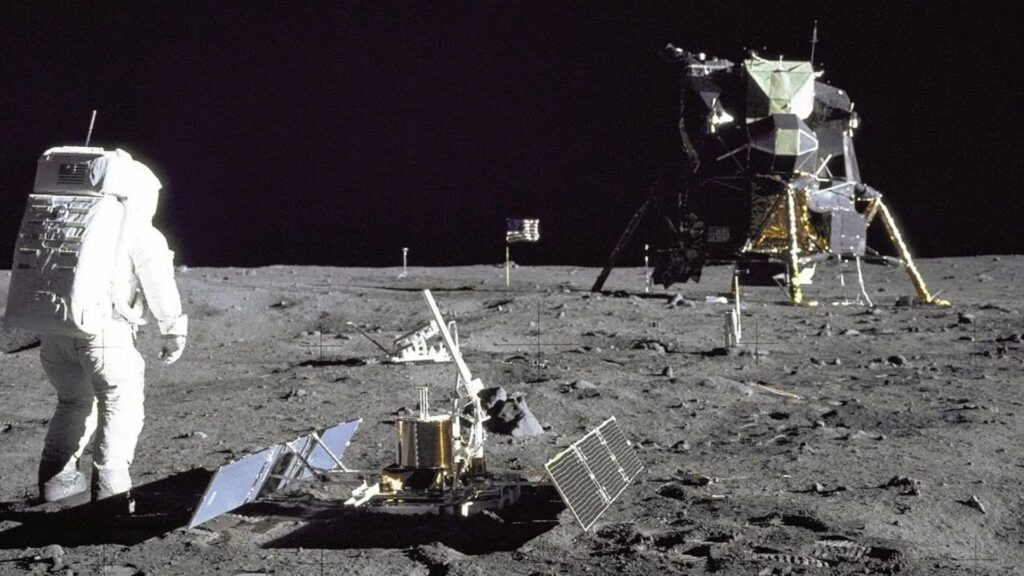
Marking a historic milestone in humanity’s return to deep space, humans for the first time will travel beyond low Earth orbit since Apollo 17 in 1972.
After the success of the uncrewed Artemis I mission in 2022, Artemis II will send four astronauts around the Moon aboard the Space Launch System (SLS) rocket and the Orion spacecraft, validating systems critical for long-term lunar exploration and future missions to Mars.
Initially, Artemis II is designed as a test flight, but its importance goes far beyond technical checks. The mission will demonstrate that NASA’s new deep-space transportation system is ready to safely carry astronauts on extended journeys. Its success will be a key requirement for establishing a sustained human presence on the Moon under the Artemis programme.
Technically, All Set?
NASA recently completed a wet dress rehearsal for Artemis II on February 3, a crucial test that simulates launch-day fueling and countdown operations.
During this rehearsal, engineers found higher hydrogen gas concentrations near the tail service mast umbilical, a critical interface between the SLS rocket and ground systems. Later, technicians replaced two seals on the fueling lines and began a detailed analysis of the removed components to determine the cause of the issue.
READ ALSO: https://modernmechanics24.com/post/trash-to-sustainable-jet-fuel-daily/
The tail service masts, each standing about three stories tall, supply cryogenic propellants and electrical connections to the SLS core stage. These structures include quick-disconnect systems that must separate flawlessly at liftoff.
After draining the rocket’s cryogenic propellant, teams inspected and replaced the interface plates and seals. Reconnecting the interfaces is expected to be completed by February 9. Then, one additional testing is planned at NASA’s Stennis Space Center in Mississippi to evaluate the performance of the repaired components.
NASA engineers are also reviewing options to test the repair work before proceeding with the next wet dress rehearsal, ensuring the seals perform as expected under operational conditions.
Although March remains the earliest potential window, NASA will finalize the firm launch date only after a successful rehearsal and a full data review.
WATCH ALSO: https://modernmechanics24.com/post/chinese-firm-unveils-humanoid-robot-that-mimics-meditation/
Next Operational Rehearsal
Based on the previous session, NASA has refined several operational procedures for the upcoming wet dress rehearsal. The Orion crew module hatch will be closed prior to the test, more closely mirroring launch-day conditions.
The closeout crew, responsible for assisting astronauts into their seats and closing the hatches on launch day, will not be deployed to the launch pad during the rehearsal.
Additionally, the crew access arm will remain in place throughout the test. Engineers have already demonstrated that the ground launch sequencer can retract it during the final phase of the countdown.
NASA has also added 30 minutes to each of the two planned countdown holds, increasing the total countdown duration by 1 hour. This additional margin allows for troubleshooting without affecting the astronauts’ launch-day timeline.
READ ALSO: https://modernmechanics24.com/post/china-analog-ai-chip-china-12x-faster/
The Artemis II Crew
Four astronauts will fly on Artemis II, representing both NASA and its international partners. NASA astronauts Reid Wiseman will serve as commander, with Victor Glover as pilot and Christina Koch as mission specialist. Joining them is Jeremy Hansen of the Canadian Space Agency, marking the first time a Canadian astronaut will travel to the Moon.
Since emerging from quarantine, the crew has continued intensive training, focusing on Orion spacecraft systems and mission procedures. They are reviewing detailed plans for each flight day, ensuring they are fully prepared to execute the mission’s objectives and respond to potential contingencies.
Mission Objectives
Artemis II will not land on the Moon. Instead, the mission will send the Orion spacecraft on a free-return trajectory around the Moon. It will loop behind the lunar far side before returning to Earth. This profile will test navigation, communications, life-support systems, and crew operations under deep-space conditions.
The mission will also validate Orion’s heat shield during high-speed return into Earth’s atmosphere, a critical capability for future lunar and Mars missions. By lifting humans aboard the SLS and Orion for the first time, Artemis II will confirm that all systems operate as designed when carrying crew.
WATCH ALSO: https://modernmechanics24.com/post/china-unitree-launches-h2-humanoid/
A Bridge to Future Moon
Artemis II is a stepping stone toward Artemis III with an aim to land astronauts on the lunar surface near the Moon’s south pole later. The data collected from Artemis II will shape mission planning, safety standards, and system upgrades needed for surface operations and long-duration stays.
Along with this, Artemis II supports NASA’s broader vision of human exploration of Mars. By testing deep-space systems, international collaboration, and operational concepts, the mission lays the groundwork for even more ambitious
journeys.
Amid NASA’s final preparations and analysis, Artemis II stands as a symbol of renewed human exploration. It represents not just a return to the Moon, but the beginning of a new era, the Artemis Generation, poised to explore deeper into space than ever before.