A powerful new laser system is changing how space missions talk to Earth. Onboard NASA’s Orion spacecraft, this technology is already sending sharper videos and faster data from near the Moon.
The system is called the Orion Artemis II Optical Communications System(O2O). It works very differently from the radio signals used in older missions. Instead of using radio waves, O2O sends data using beams of infrared light.
This simple shift makes a big difference. Light can carry far more information than radio waves. That means clearer images, smoother video, and faster transmission. The system can send data at speeds of up to 260 megabits per second. That is much faster than the communication systems used during earlier lunar missions.
For decades, NASA depended on microwave communication. These signals operate at gigahertz frequencies and connect spacecraft to Earth via large antennas. Even today, the Orion capsule still uses this system as its main communication method. It links to the Near Space Network and the Deep Space Network, which are spread across the globe.
READ ALSO: MirrorBot Reveals What Happens When Strangers Finally Look Up
But the new laser system is a major upgrade. It allows scientists and engineers to receive much more data in less time.
Greg Heckler, a deputy program manager in NASA’s SCaN program, explained this shift clearly. He said NASA has used microwave communication since its early days. Now, the move to optical systems opens a new era of high-speed space communication.
This breakthrough did not happen overnight. NASA and MIT Lincoln Laboratory have spent more than 20 years developing this technology.
Several earlier missions tested the idea. In 2013, the Lunar Laser Communication Demonstration achieved record speeds between the Moon and Earth. Later, experiments like the TeraByte Infrared Delivery (TBIRD) and the Deep Space Optical Communications (DSOC) system pushed the limits even further.
For more than two years, a similar optical system has also been running on the International Space Station. Each test improved speed, distance, and reliability.
Heckler described O2O as the final step in this long journey. He said every mission has set new records, and this system is the crown jewel of all those efforts.
WATCH ALSO: Chinese humanoid robot plays basketball with almost human-like accuracy
While the laser system sends data, a wide range of cameras captures it. The Orion spacecraft carries at least 28 cameras. These are placed both inside and outside the spacecraft. They record every moment of the journey.
Astronauts use high-end cameras like the Nikon D5 and Nikon Z9. These cameras are known for their sharp images and strong performance in tough conditions. They help capture detailed photos for scientific study.
For action shots and wide views, the crew uses GoPro HERO4 Black cameras. These are ideal for recording movement inside the cabin and outside views of the space.
For the first time in lunar missions, NASA has also allowed astronauts to carry personal smartphones. The crew is using iPhone 17 Pro Max devices to take photos and videos.
These phones underwent rigorous testing before approval. Engineers checked their performance in microgravity. They also tested heat control and battery safety to ensure they posed no risk.
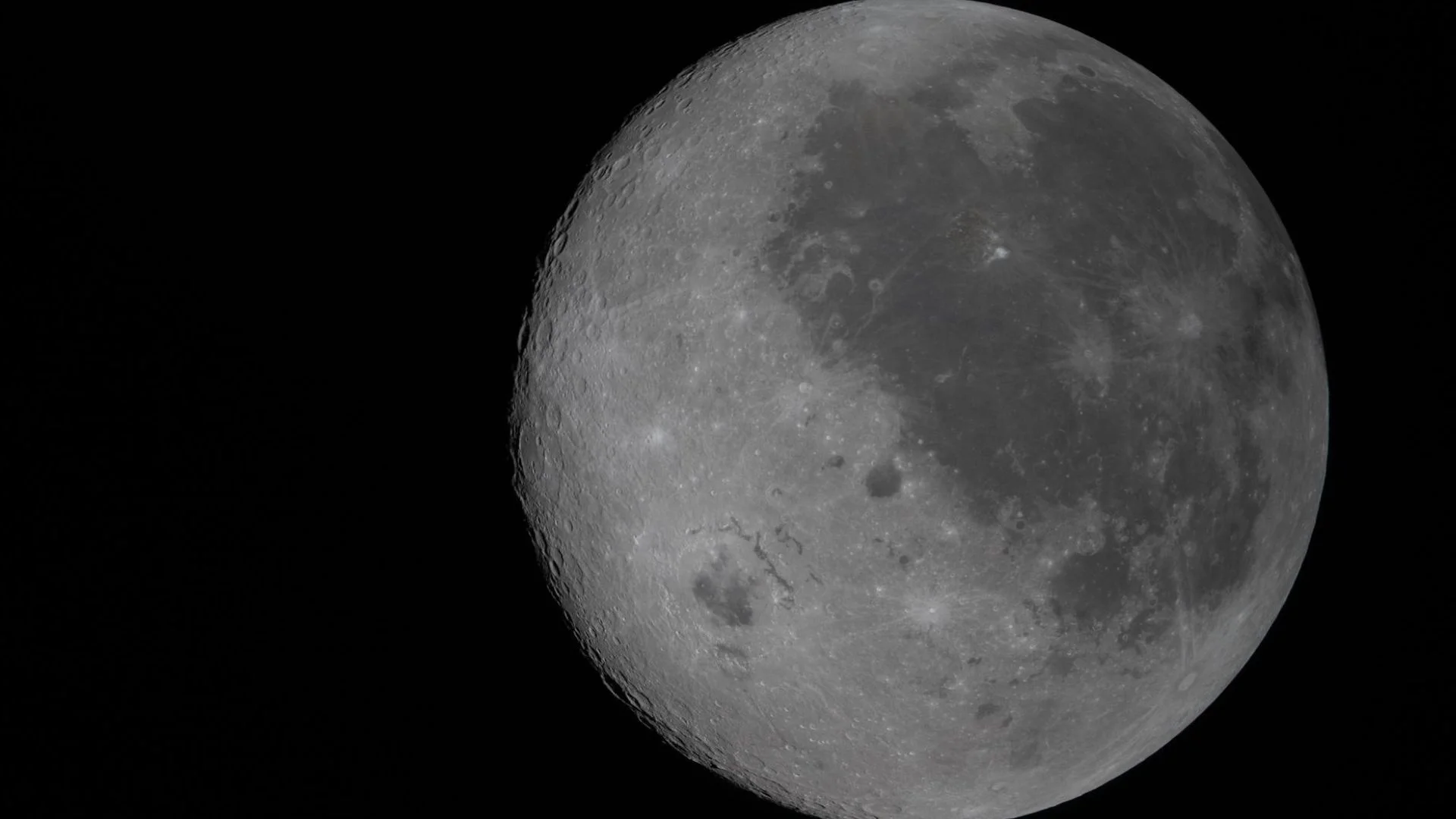
During the April 6, 2026, flyby, astronauts focused on several key targets. One major goal is to capture the Moon’s far side. This region is rarely seen directly by humans. The crew is taking high-resolution images of craters, ridges, and ancient lava flows.
They are also photographing Earth from deep space. These images show the planet’s curved horizon, glowing city lights, and even auroras. Such views often create what astronauts call the overview effect, a powerful emotional experience of seeing Earth from afar.
READ ALSO: ASU Air Muscles Let Robots Lift 100x Weight; No Wires, No Limits, Just Power
The cameras are also helping scientists on Earth. Images taken with different lenses are being used for geological analysis. Experts at NASA’s Johnson Space Center study these visuals to better understand the Moon’s surface.
A New Era of Space Laser Communication
The Artemis II mission shows how far space technology has come. In the Apollo era, images from the Moon took time to reach Earth. Today, thanks to laser communication, high-quality video can be transmitted almost instantly.
The combination of powerful cameras and fast laser links is transforming space exploration. It allows scientists to see more, learn faster, and respond in real time. As Artemis II continues its journey, this technology is not just supporting the mission; it is shaping the future of human exploration of deep space.