A small team at the U.S. Air Force’s Ninth Air Force (Air Forces Central) Battle Lab at Shaw Air Force Base is taking an innovative, grassroots approach to drone warfare: designing, 3D printing, and building its own fleet of low-cost drones. Their work, ranging from surveillance to drone-on-drone defense, directly supports a new Pentagon mandate to rapidly adopt and dominate unmanned technology.
The drone revolution on display in Ukraine has fundamentally reshaped modern combat, and the U.S. military is racing to adapt. A key driver of this shift was U.S. Secretary of War Pete Hegseth’s memorandum signed on July 10, 2025, titled “Unleashing U.S. Military Drone Dominance.” The memo, which identified drones as the “biggest battlefield innovation in a generation,” delegated procurement authority directly to warfighters to cut through bureaucracy. At the forefront of this charge is a modest but ingenious unit in South Carolina.
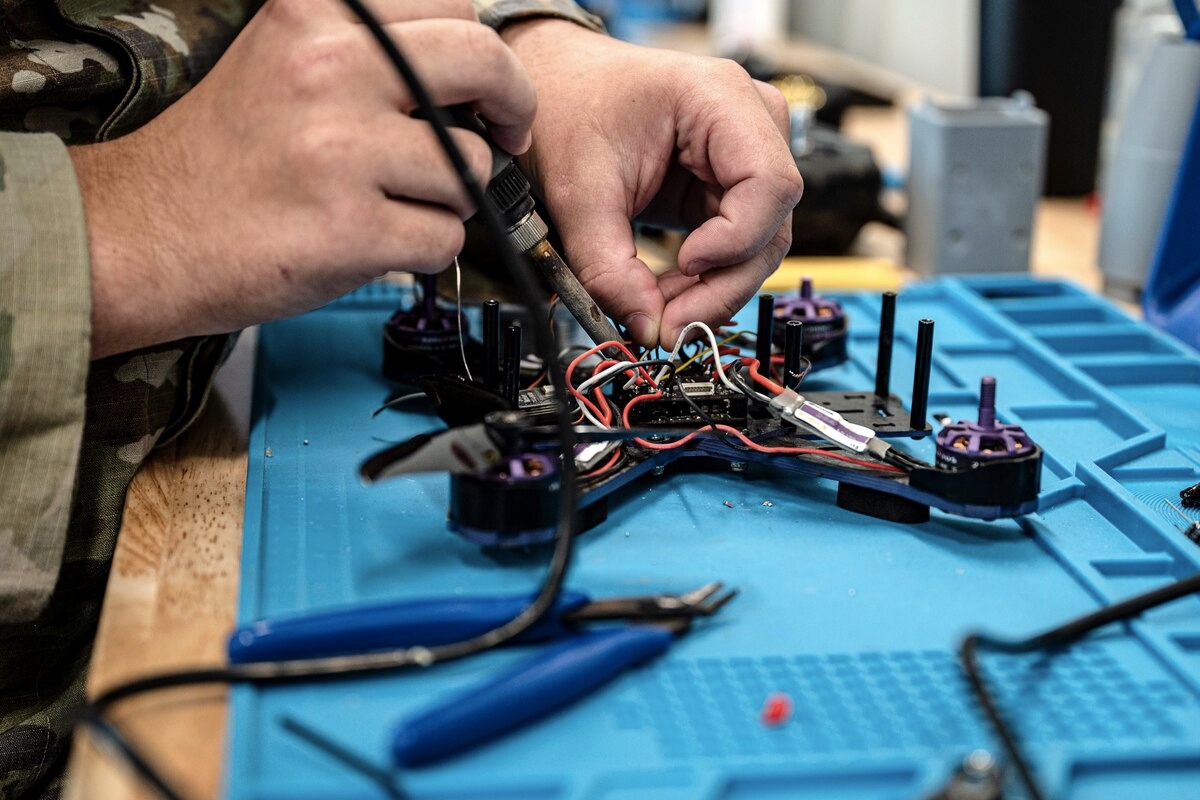
The Ninth Air Force (Air Forces Central) Battle Lab at Shaw Air Force Base has embraced a do-it-yourself ethos to build operational drones at a fraction of traditional cost. “We’re trying to challenge established norms to find out how drones–the future of warfare–fit into traditional tactics and doctrine,” said Master Sgt. Darren Heller, the lab’s senior enlisted leader. The team studies commercial models, 3D prints components they can, and purchases the rest, experimenting with designs from standard quadcopters to rocket-shaped speed drones.
READ ALSO: https://modernmechanics24.com/post/arf-hypersonic-technology-test-success/
This hands-on approach is about more than just hardware; it’s about cultivating vital skills and knowledge within the ranks. “The whole idea is to show these drones can be designed and built by our Airmen,” Heller explained. “Trial and error, and learning, the knowledge that comes with that is worth more than the drone itself.” The lab operates with just three permanent members, supplemented by a rotating team of four enlisted software engineers who learn soldering, 3D rendering, and flight operation on the job.
The financial and tactical advantages are clear. When a part fails on a multi-million dollar system, it’s a major logistical event. When a 3D-printed drone chassis that costs $3 to produce breaks, the team simply iterates and improves the design. This culture accepts high failure rates as a pathway to innovation. “We’re satisfied with 80 percent failure and 20 percent success,” Heller stated. The critical step is getting those successful designs into the hands of Airmen in the U.S. Central Command (CENTCOM) area of responsibility for real-world testing and feedback.
To identify natural talent for this new frontier, the lab recently held a drone simulator challenge at Shaw. Top performers were added to a roster for advanced training, capitalizing on the innate dexterity of a generation raised on video games. “Young Airmen nowadays are just better with technology… Their learning curve is a lot less steep,” Heller observed.
READ ALSO: https://modernmechanics24.com/post/worlds-largest-ice-snow-theme-park-china/
This initiative represents a bottom-up transformation in how the Air Force develops and fields capabilities. By empowering Airmen to be creators, not just operators, the AFCENT Battle Lab is rapidly prototyping the future of attritable, multi-role drones for ISR, electronic warfare, supply delivery, and air-to-air defense. It’s a pragmatic response to an urgent threat, ensuring that the next generation of Airmen is equipped to dominate an increasingly unmanned battlespace.