Northwestern Polytechnic University (NPU) scientists have successfully tested an autonomous aerial refuelling system that could double the effective strike range of China’s heavy-duty Jiu Tian drone platform. This breakthrough in vision-based navigation, reported by the South China Morning Post (SCMP), brings major U.S. coastal cities into plausible reach for AI-guided drone swarms.
Imagine a scenario where defensive systems are not challenged by a handful of missiles, but by hundreds of AI-piloted kamikaze drones launching just off the coastline. This is the strategic shift enabled by a recent, critical leap in unmanned technology from China. The team at Northwestern Polytechnical University, a key institution in China’s advanced weapons development, has moved this concept closer to reality.
The breakthrough, detailed in a paper in the journal Systems Engineering and Electronics, centered on a high-stakes test. Two unmanned aerial vehicles (UAVs) flew in high-speed formation, where one autonomously located and docked with the other’s refuelling basket, or drogue. What makes this feat remarkable is the extreme conditions under which it succeeded—intense sunlight, glare, and even partial visual obstruction didn’t stop it.
READ ALSO: https://modernmechanics24.com/post/ford-ev-batteries-power-data-centers/
Leading the project was Professor Bu Shuhui from NPU’s School of Aeronautics. His team engineered a sophisticated vision-based navigation system that solved the precision problem of mid-air docking. They mounted a dual-camera system on the receiver drone and equipped the tanker’s drogue with eight near-infrared LEDs. An AI-powered deep learning algorithm then processed the visual data to guide the probe into the basket with incredible accuracy.
“Two aircraft kept formation flight … the receiver aircraft used the visual system to detect the drogue and calculate relative pose, and successfully completed the docking,” Professor Bu and his colleagues wrote. Their system achieved a detection success rate of over 99 percent with centimetre-level positioning accuracy, even when sunlight flooded the camera or up to two LEDs were blocked, according to the SCMP report.
Why does this technical achievement carry such heavy strategic weight? The answer lies in its application to the Jiu Tian drone, a platform NPU helped develop. With a stated range of 7,000km (4,350 miles), Jiu Tian cannot reach the continental U.S. from Chinese bases. However, a single, autonomous mid-air refueling could extend its radius to cover cities like Washington, New York, and Miami.
WATCH ALSO:https://modernmechanics24.com/post/us-giant-robot-fights-wildfires/
The implications are profound. Most U.S. military planning assumes long-range strikes would come from fixed-site missiles or bombers. A fleet of refuelable Jiu Tian drones, each capable of carrying over 200 loitering munitions, presents a radically different challenge. They could launch devastating swarm attacks from international waters, potentially overwhelming traditional air defence networks.
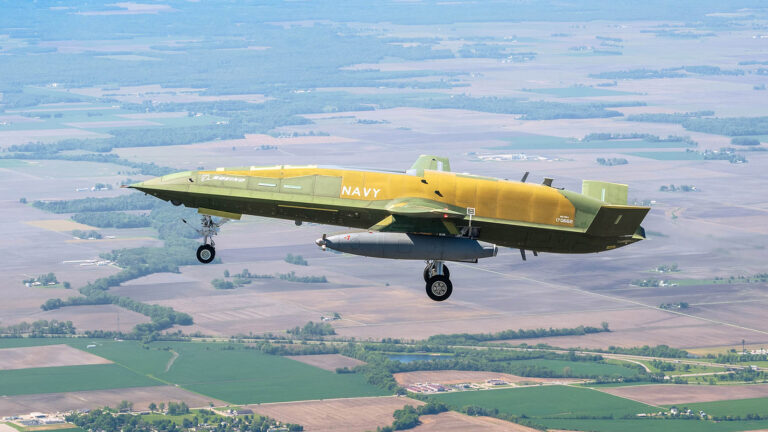
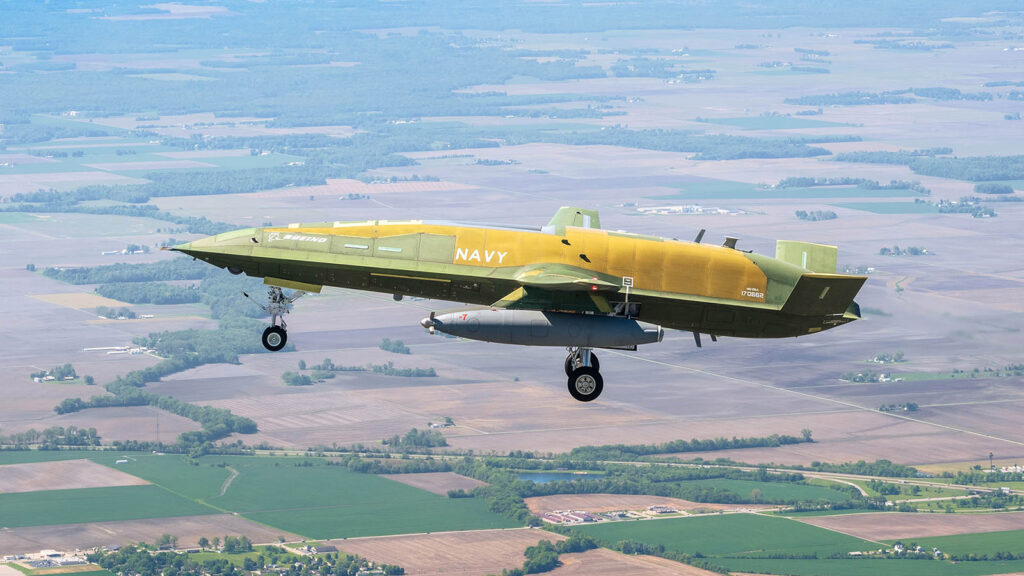
This advancement underscores NPU’s pivotal role in China’s military-civil fusion strategy. The university, which is under U.S. sanctions for its work on hypersonic weapons and other systems, is pushing autonomy forward. While the U.S. is developing tanker drones like the MQ-25 Stingray, its focus remains largely on supporting manned aircraft. China’s progress points toward a future of fully autonomous, ultra-long-endurance unmanned strike packages.
The sentiment from Chinese scientific circles is unequivocal. He Zhibin, a revered space scientist, stated at a recent conference that the Jiu Tian is a “sword aiming at the throat of warmongers, especially those in the United States.” With this autonomous refueling milestone, that strategic blade has been honed to reach much, much farther.
READ ALSO: https://modernmechanics24.com/post/us-completes-upgraded-w88-sub-warhead/