Argonne National Laboratory in the United States is using artificial intelligence (AI) and supercomputing to speed up scientific research. At a recent public lecture, researchers explained how these technologies are helping them study the universe, develop better battery materials, and identify genetic links to diseases. One project completed more than 6,000 battery experiments in just five months.
The US Department of Energy’s Argonne National Laboratory shared its latest work during an OutLoud public lecture on September 17. The event, titled “The Next Frontier: How AI Is Reshaping Discovery at Argonne,” brought together researchers to discuss how AI is changing scientific work.
Argonne Lab uses AI and supercomputers to speed up scientific research
Argonne has a long history in advanced computing, dating back to the 1940s. Today, its Argonne Leadership Computing Facility houses Aurora, a powerful supercomputer used for AI, simulations, and large-scale data analysis.
Researchers explained that scientific AI is different from everyday tools used to answer questions or create images. At Argonne, AI helps process huge amounts of data, test ideas, and identify patterns. Scientists still need to check the results and decide what they mean.
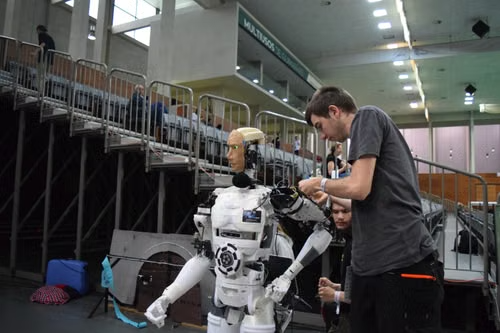
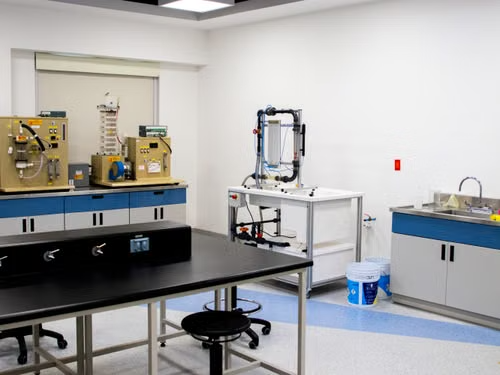
One major example comes from battery research. Argonne’s Robotic Autonomous Platforms for Innovative Discovery (RAPID) laboratories combine robotics, AI, and machine learning to run experiments with limited human involvement. Researchers completed more than 6,000 battery experiments in five months, a process that could have taken five to eight years using traditional methods.
Laboratory is also using AI to study the universe
The laboratory is also using AI to study the universe. Researchers ran a large cosmological simulation on the Frontier supercomputer at Oak Ridge National Laboratory. The project modelled the universe’s development from its early stages to the present and generated an estimated 15 petabytes of data. AI and machine learning will also help scientists analyse the enormous amount of information expected from the Vera C. Rubin Observatory’s survey of the sky.
In healthcare research, Argonne scientists are using supercomputing to study genetic links to diseases. One study analysed data from more than 900,000 patients and identified 187 genetic variants associated with prostate cancer risk in African American men. Another large analysis that once took 14 days on a supercomputer could reportedly be completed in two days using newer AI-enabled computing systems.
The laboratory is also contributing to the US Department of Energy’s Genesis Mission, a national initiative launched in 2025 to connect supercomputers, research facilities, and AI systems. Argonne is leading nine selected research projects and participating in dozens of others.
However, researchers stressed that AI still requires human oversight. Scientists must verify results, check for errors, and protect sensitive medical information. Argonne’s next steps include developing more capable laboratory robots and improving AI systems that can support complex research tasks.