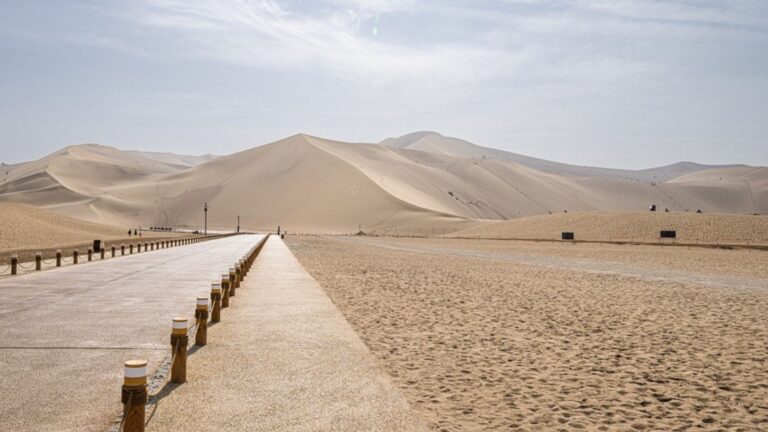
China’s Fuman Oilfield has produced more than 26 million tons of oil and gas from ultra-deep formations beneath the Taklimakan Desert.
The production milestone comes as engineers push exploration deeper into the Tarim Basin, one of China’s major oil and gas regions. The latest work also includes recovering rock cores from more than 8,000 meters underground.
The Fuman Oilfield sits on the northern edge of the Taklimakan Desert in Xinjiang, in northwest China. China National Petroleum Corp. (CNPC) operates it through its Tarim Oilfield operations. The company said production from formations deeper than 6,000 meters has now reached more than 26.86 million tons of combined oil and gas equivalent.
The total includes 20.36 million tons of crude oil and 8.15 billion cubic meters of natural gas. These volumes have come from ultra-deep reservoirs beneath the desert, where drilling conditions are more difficult than in shallower fields. CNPC engineer Lu Zhongyuan provided the figures in comments reported by China Central Television (CCTV).
Fuman has become a major production area for ultra-deep hydrocarbons in the Tarim Basin. According to the reported data, the field now has 485 ultra-deep wells. Of these, 133 wells have each produced more than 100,000 tons of oil and gas, while 464 wells have each produced more than 10,000 tons.
Drilling Reaches Deeper Layers
The latest exploration work has taken engineers beyond the 8,000-meter mark. At the Zhentan-1 well, workers recently recovered rock cores from 8,080 meters beneath the Tarim Basin. The samples are believed to have remained buried for about 500 million years.
The recovery marks the first time China has obtained a core sample from more than 8,000 meters in the northwestern Tarim Basin. Rock cores provide direct samples of underground formations that drilling teams are investigating. Scientists can use them to study the rocks and assess their potential to contain oil and natural gas.
Xu Yanan, director of the Tarim Oilfield project at CNPC, said the samples will help engineers assess hydrocarbon generation potential below 8,000 meters. The analysis will examine factors such as the thickness of oil and gas layers and their maturity level. This information can help determine how deep formations formed and how much hydrocarbon potential they retain.
READ ALSO: https://modernmechanics24.com/post/h2scan-hydrogen-monitoring-batteries/
Tarim Basin Holds Major Reserves
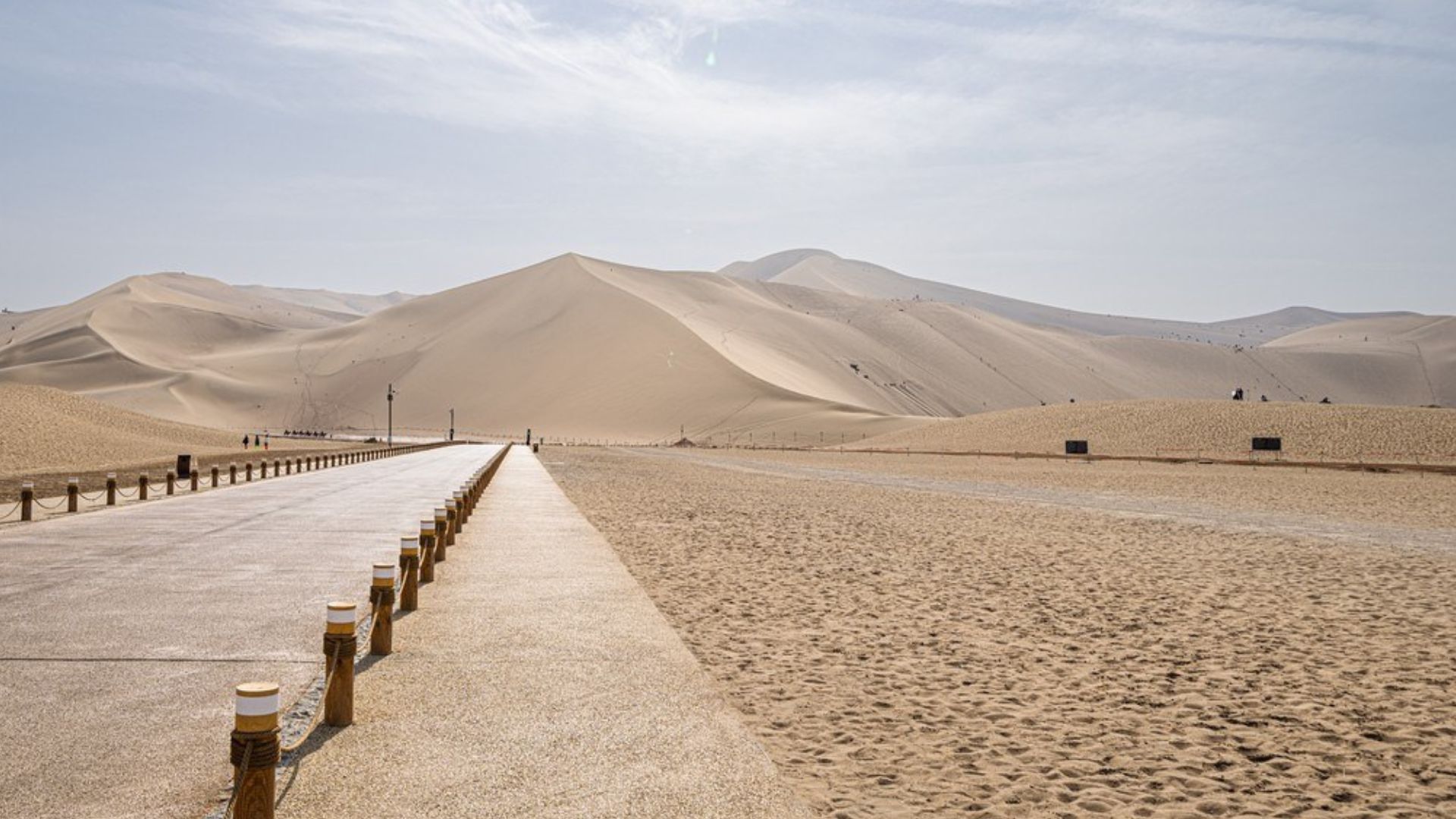
The Taklimakan Desert occupies much of the Tarim Basin in southern Xinjiang. The basin is a large inland geological region with extensive sedimentary formations that contain oil and natural gas. Some of its most productive reservoirs lie at depths exceeding 6,000 meters.
China has already proven more than 5 billion tons of oil and gas reserves in the Tarim Basin. More than half of those reserves are located in ultra-deep formations below 6,000 meters. This makes deep geological structures an important part of China’s efforts to maintain and increase domestic hydrocarbon production.
Producing from these depths requires wells that can withstand high temperatures, pressure and complex underground conditions. Drilling also involves navigating formations that can vary sharply over relatively short distances. The experience gained at Fuman is therefore relevant to other ultra-deep projects across the Tarim region.
Expanding China’s Deep Energy Base
The Fuman milestone comes as Tarim Oilfield increases its focus on ultra-deep resources beneath the Taklimakan Desert. The field has already become China’s largest desert oilfield and a major ultra-deep hydrocarbon production base. Its growing well network shows how production has expanded from individual deep wells into a large operating area.
Recovering the 8,080-meter core adds a separate exploration dimension to that production effort. Direct samples from such depths give researchers material to study the age, structure, and hydrocarbon potential of the underlying rocks. Further analysis will help determine how these formations fit into the Tarim Basin’s broader petroleum system.
The results also show the scale of China’s deep-resource activity in a difficult desert environment. As existing wells continue producing, deeper exploration is providing additional data on formations that were previously harder to assess. Combining production records with new geological samples will guide future exploration and development across the Tarim Basin.